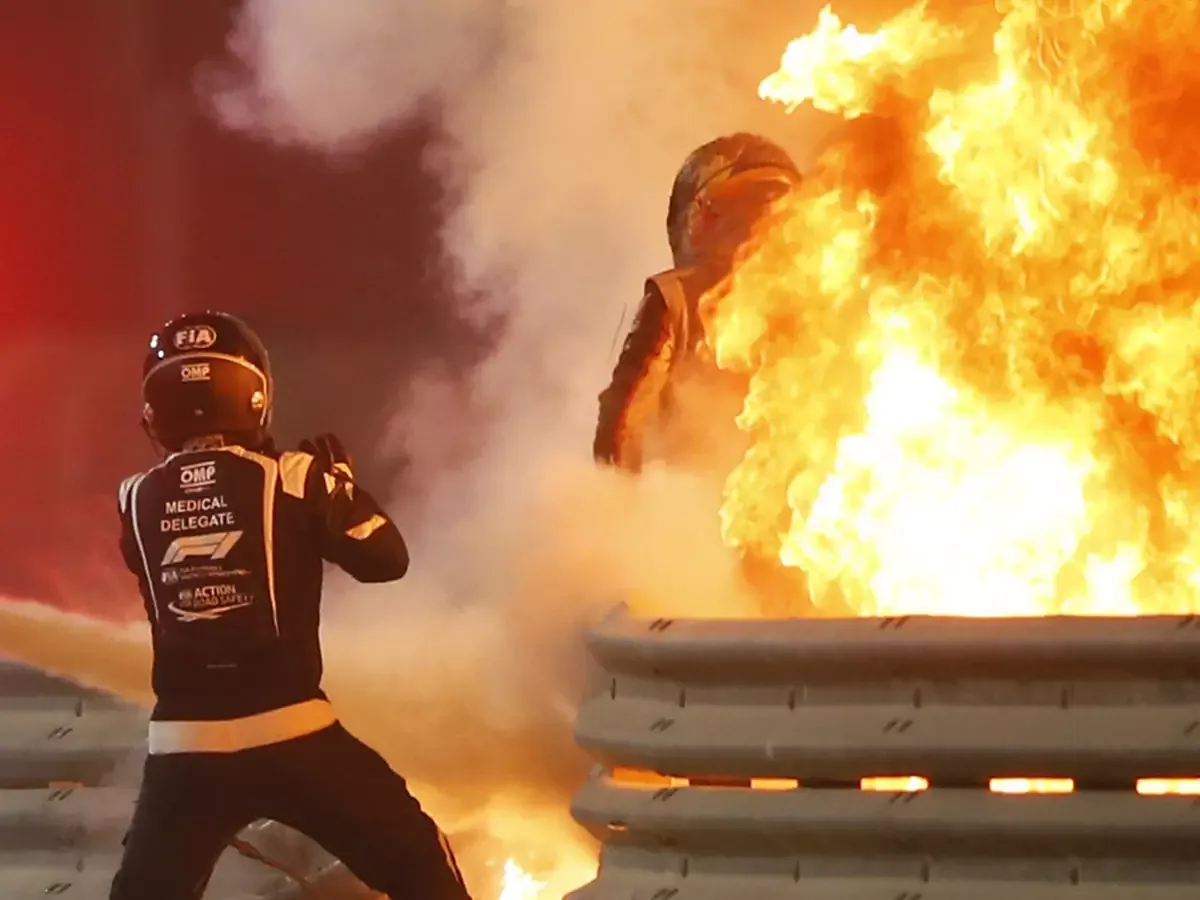
(Motorsport-Total.com) – These are images that have been burned into the collective memory of Formula 1: The fireball of Bahrain 2020. Five years later, Ayao Komatsu, then lead engineer at Haas and now team principal, looked back on those seconds in a remarkable conversation on the “High Performance” podcast. His descriptions reveal new, haunting details about Romain Grosjean’s struggle for survival.
Read more Drive to Survive: Trailer reveals drama of the 2025 Formula 1 season
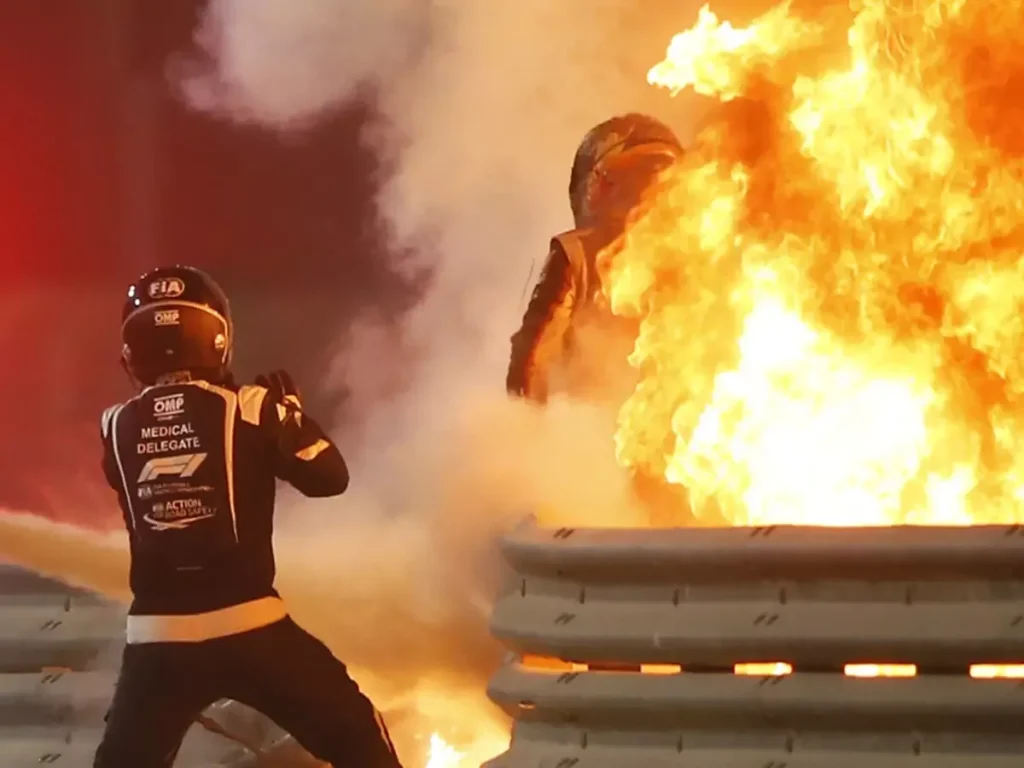
Komatsu was sitting at the pit wall at the start of the race. When he realized which car had hit the guardrail, he went into a state of shock. “When I realized it was Romain, I immediately thought: ‘He can’t be alive anymore,'” said the Japanese. Komatsu refrained from pressing the radio button. Given the violence of the impact and the immediate fire, any attempt at contact seemed futile to him.
The burned racing shoe in the wreck
Komatsu’s account becomes particularly vivid when he spoke about the inspection of the wreck in the days after the accident. It wasn’t just the sight of the destroyed monocoque that haunted him, but above all the smell. “That smell of burnt vinyl and rubber is just terrible,” Komatsu remembered. “When you see that survival cell, you can’t imagine anyone coming out of there alive.”
A detail in the footwell of the burned-out Haas only then made the engineer realize the physical force Grosjean had to use to free himself. “When the chassis came back, Romain’s left racing shoe was still wedged behind the pedals,” Komatsu explained.
The team principal reconstructed the process in the cockpit: Grosjean’s left foot had become jammed during the impact. To escape the inferno, the Frenchman had to forcibly pull his foot out of the tightly laced racing boot. “We’re talking about applying the force to tear a tightly laced boot off the foot – that’s easily enough to dislocate your ankle. But he had to do it.”
Back into the fire to survive
Komatsu, who later gained access to the onboard footage that was withheld from the public, was deeply impressed by his driver’s rational actions in the midst of the disaster: “Every single decision he made in the cockpit was correct. If he had made one wrong decision or taken five to ten seconds longer, he would have been dead.”
Read more Lifelong privilege: Jenson Button talks about special Formula 1 bonus
The analysis of the data and images showed Komatsu a crucial moment: when Grosjean realized he was stuck, he didn’t panic and try to pull further upwards. “He had to push himself back down into the seat to get leverage and pull his leg out,” Komatsu explained.
Grosjean’s fire accident in Bahrain: The 15 most spectacular photos
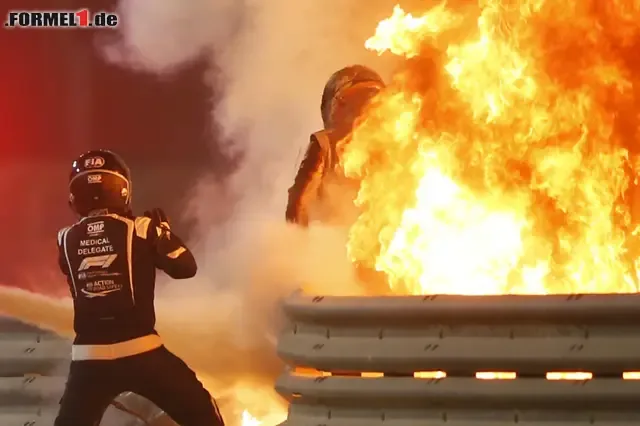
In doing so, Grosjean supported himself with his hands directly in the fire on the Halo bar. “He put his hand right into the flames to push himself up.” The remarkable thing according to Komatsu: In later conversations, Grosjean revealed that his brain had completely blocked out the fire at that moment. “His survival instinct blocked his perception of his surroundings. He only realized later that he was sitting in the middle of a fireball.”
“He never gave up”
The uncertainty at the pit wall felt like an eternity back then. Even when the message “Romain is out” came over the radio, Komatsu initially refused to believe it. “I asked: ‘Are you sure?’ I just couldn’t believe it.” Only when he saw Grosjean in the medical center and he gave him a “thumbs up” did the tension ease.
Together with Kevin Magnussen, Komatsu later visited his driver in the hospital. “Kevin hadn’t seen him yet and told me: ‘I still can’t believe he’s alive, we have to go to the hospital.’ We both felt the same way.”
For Komatsu, the accident is the ultimate proof of Grosjean’s willpower. He also told this to Grosjean’s wife Marion, who insisted on seeing the unreleased footage. “You can see in this video that he never gave up. Not for himself, but for his wife and his children. He tried everything until the very last second.”
Read more Nico Hülkenberg: How things really stand with Audi