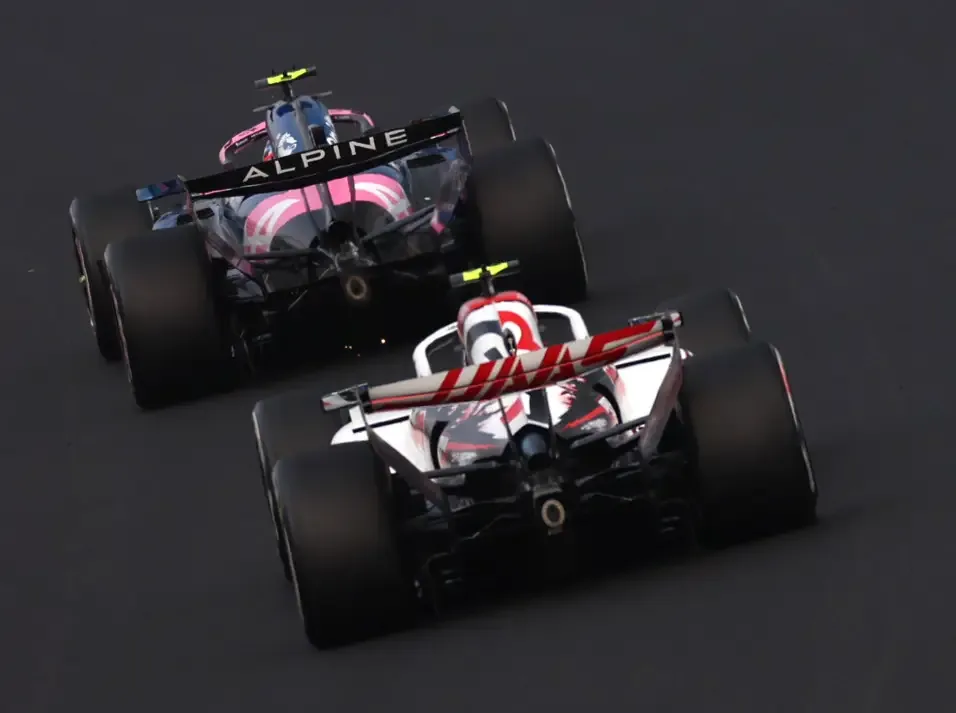
(Motorsport-Total.com) – Oliver Bearman’s accident at the Japanese Grand Prix on Sunday came as no surprise to many in the Formula 1 paddock. The drivers were largely in agreement that a similar scenario with the new cars was bound to happen at some point.
Read more Sold-out race in Japan: 315.000 see next Antonelli victory
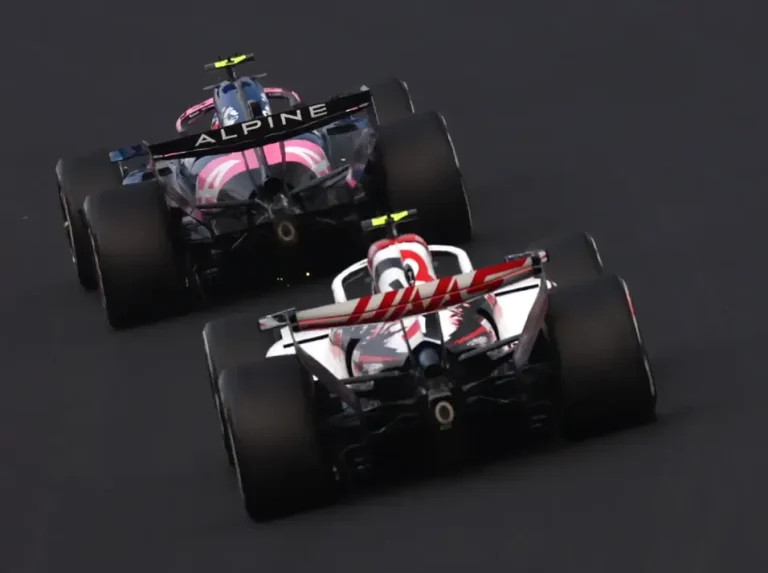
The speed difference between Bearman and Franco Colapinto in the Spoon curve at Suzuka triggered the accident, in which Bearman hit hard. Although he was visibly limping when leaving his car, he was lucky and suffered no further injuries other than a bruise on his right knee.
Colapinto himself had also already nearly experienced an accident this year when he narrowly avoided Liam Lawson’s slow Racing Bulls car at the start of the season opener in Melbourne.
While most drivers were unhappy with the speed differences at the start, especially after Melbourne, some had already warned that one could encounter cars with significantly higher speeds and activated straight-mode.
Carlos Sainz described the situation after Melbourne as “tricky,” but apparently the FIA was satisfied with the regulations in race trim. After the starts were seemingly “solved” by the introduction of the five-second holding phase, the qualifying issue was at the top of the priority list.
Bearman accident confirmed fears
However, Bearman’s accident clearly showed the problems that can arise when two drivers are on the same section of track with vastly different speeds. A difference of 45 km/h between Bearman and Colapinto surprised both.
As macabre as it sounds: The Briton’s accident could have been the best possible scenario for Formula 1, as it exposed a central problem that requires immediate attention – and that, without anyone being seriously injured. Nevertheless, it would have been completely avoidable.
Already in the first week of testing in Bahrain, McLaren team principal Andrea Stella had pointed out that the differences in closing speeds could be problematic. His statements at the time later proved to be extremely prescient.
“We also identified overtaking as a point that requires attention, and the fact that there could be cars following another while the car in front might be lifting off to harvest energy,” Stella explained after the first week of testing in Sakhir.
“This is not an ideal situation when following closely and can lead to racing situations like we have seen a few times: [Mark] Webber in Valencia 2010, [Riccardo] Patrese in Portugal [1992] and several others that we definitely don’t want to see in Formula 1 anymore,” said Stella.
Why the Super-Clip played no role in Japan
After Bearman’s accident, the McLaren team principal reaffirmed his view and expressed displeasure that the championship’s governing bodies had not proactively taken up earlier discussions in the Technical Advisory Committee.
Read more Unknown persons steal 413.793 F1 bars from KitKat
At the same time, however, Stella also believes that there is no simple silver bullet to avoid situations where two cars travel on the same section of track with vastly different speeds.
At its core, the situation is as follows: Each team wants to deploy its energy at different points on the track. Since there were three crucial deployment areas in Suzuka – the section to the Spoon curve, the passage to 130R, and the way to Turn 1 – each team basically had to choose one of these sections to deploy its battery energy.
Suzuka: The driver ratings from Marc Surer and the editorial team
This created the speed differences: Bearman used his boost on the way to the Spoon curve for the short-term power surge of 350 kW, whereas Colapinto did not.
One possible solution would be to raise the Super-Clip limit from 250 kW to 350 kW, as this reduces the need for lift-and-coast phases. Faster energy recovery would shorten the time cars travel slower at the end of straights.
However, in the specific case of Bearman/Colapinto, this would have changed little, as the Argentine was already traveling at full throttle anyway.
Slower cars for more safety?
Stella emphasizes: “We need to look at the data. The teams should share information about what happened with Colapinto’s and Oliver’s cars. Basically, the 350 kW Super-Clip was introduced to avoid drivers having to lift-and-coast, because that creates even larger speed differences to the following car.”
“We have the expertise and the engineers, and the necessary variables exist to take action. I think this will be a topic addressed in the meetings between the FIA, the teams, and Formula 1 during the break.”
So what solutions – apart from adjusting the Super-Clip parameters – are conceivable? Stella suggested giving teams more freedom in energy usage over a lap to better balance out differences.
Another possibility would be to reduce the electrical power to 250 kW. While this would lower the overall speed, it would also significantly reduce energy consumption. This would allow teams to distribute their energy more evenly across the track, which would smooth out speed differences, provided the maximum recuperation rate remains at 350 kW.
The unplanned spring break comes at a good time for Formula 1 and its decision-makers, as they can analyze the first three races and make possible adjustments to the most obvious weaknesses of the 2026 regulations. An additional challenge will be ensuring that possible solutions are not politicized.
Read more Papaya Accents: Piastri’s Bespoke McLaren 750S Revealed