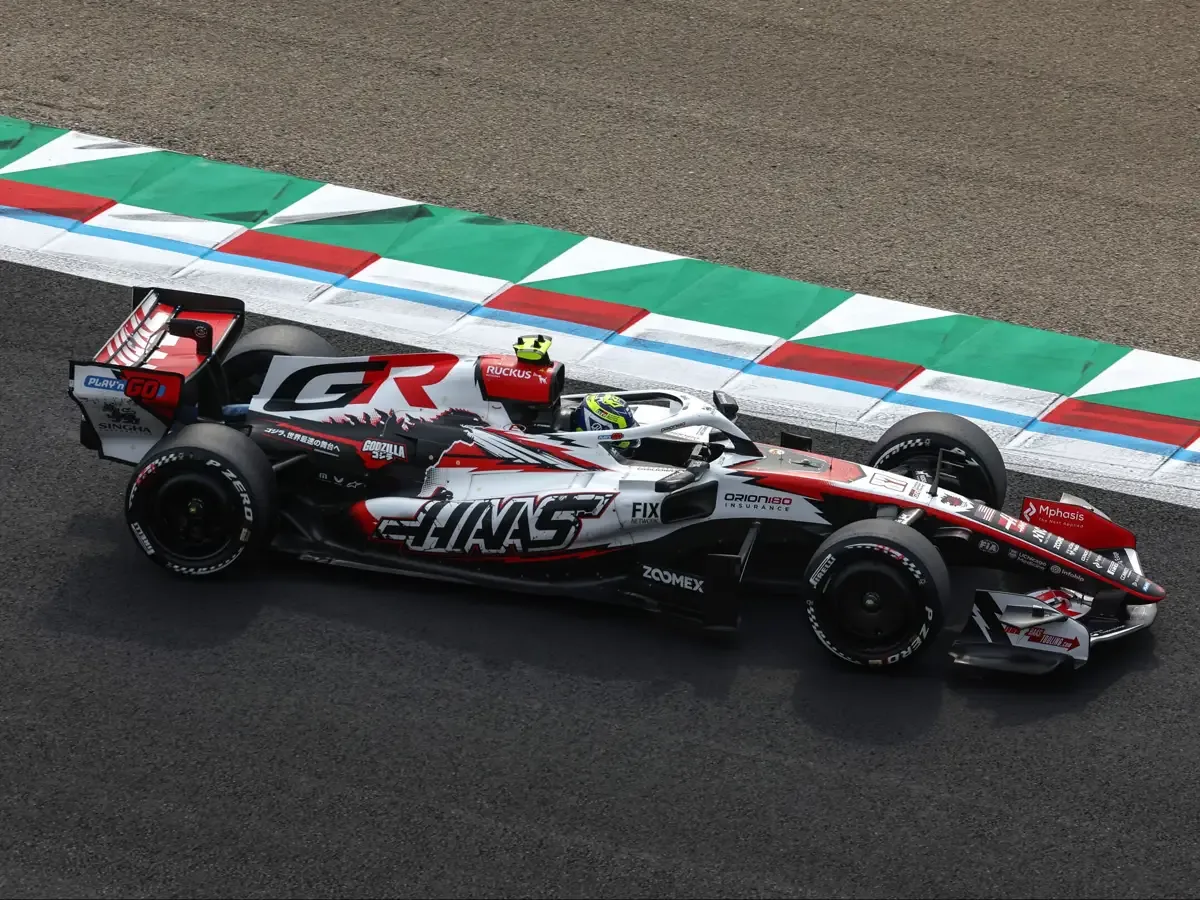
(Motorsport-Total.com) – No one could have blamed anyone for not having much confidence in Haas as a midfield force at the start of 2026. Haas finished the 2025 season in eighth place – the result of a close, season-long battle with Racing Bulls, Aston Martin and Sauber.
Read more «Unusual»: Coulthard criticizes Verstappen’s reporter dismissal
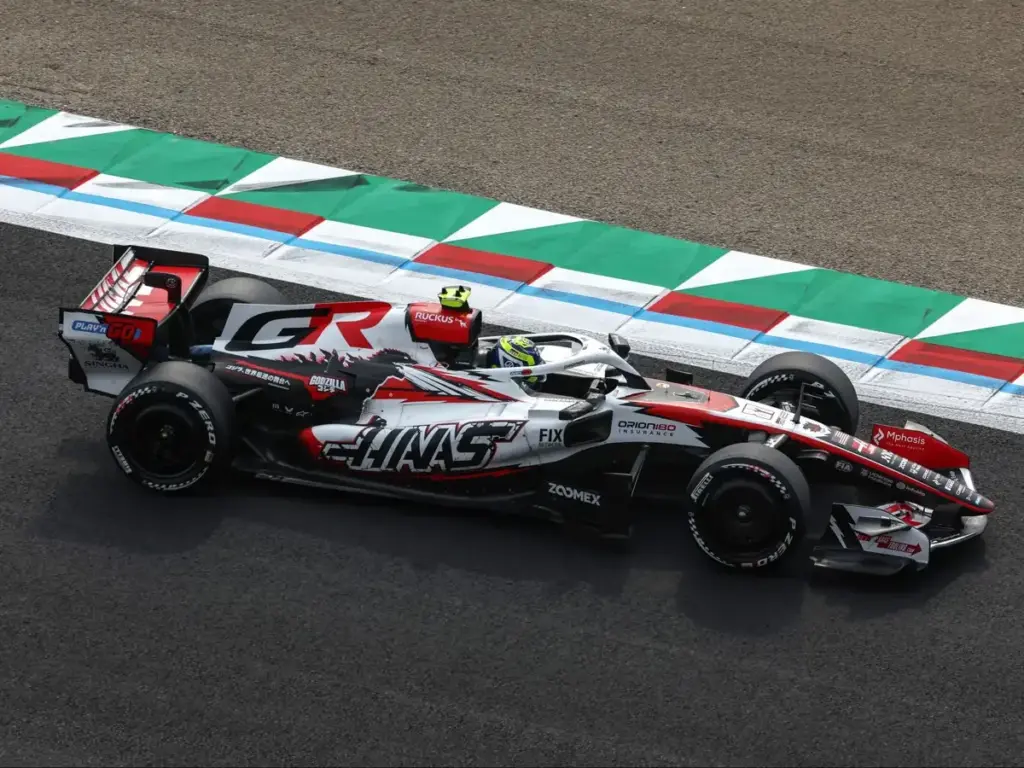
Just as storms on the open sea pose a much greater threat to smaller boats, a smaller racing team is also significantly more vulnerable to a complete regulatory realignment.
But after a sample of three very different race tracks, Haas has caught favorable winds and maneuvered itself into fourth place in the constructors’ championship. This puts the team ahead of both its usual midfield rivals and Red Bull.
This is particularly impressive considering that Mercedes customers Williams and Alpine put all their eggs in the 2026 basket. Whether Haas will stay there is another question, but the snapshot at the beginning of 2026 shows that Formula 1’s smallest team has a strong foundation to build on.
Haas was under no illusions about the challenge ahead. As team principal Ayao Komatsu explains, the team had to make radical decisions about where to focus its relatively limited resources – especially given the additional headaches caused by the complex new power units.
Priorities instead of extra work
“As far as the people on the car are concerned, the numbers don’t really change for us,” says Komatsu. “But there simply has to be a clear distribution of who takes care of what, which is very different from last year.”
“You have to set priorities. You can’t just ask people to do ten more things without making cuts elsewhere, right? So the capacity bandwidth is limited. That’s much easier said than done, but you have to focus on the basics.”
“If you forget the basics because you’re trying to fixate on certain things and get tunnel vision, you’re going to miss something big. And by the time you notice your mistake, qualifying is over. Then it’s too late. You’ve lost half a second. Seriously, yes. That’s the scary part,” says the Japanese.
Suzuka: The driver ratings from Marc Surer and the editorial team
Haas had to shake off the rust in Australia after a sluggish start in Friday practice, but was able to react in qualifying. What doesn’t help is the fact that Haas won’t have access to its own simulator until the middle of the year, which shifts more workload onto the trackside team.
However, Haas has proven that it is capable of reacting agilely to problems. This was already seen last year when they arrived in Australia with a fundamental floor problem in fast corners and were able to quickly mitigate it for the next races.
Komatsu sees much of this efficient problem-solving mentality in how the team identified and solved problems during pre-season testing and how it recovered from the slow start on Friday in Melbourne.
After a seventh place for Bearman “Down Under,” the Ferrari junior talent took fifth place in China, which catapulted Haas up the standings.
Japan was more difficult: Esteban Ocon took a point, while Bearman suffered a heavy crash in the race. But the general mood in the team is encouraging, as many of the potential pitfalls of the new regulations have been avoided.
Read more «Want to achieve even more»: Why the Ferrari team principal is confident
Car with a strong foundation
“Yes, it’s extremely encouraging,” says Komatsu. “These new regulations are a huge, huge challenge for everyone, as you can see across the pit lane. We are the smallest team, and we also really pushed development towards the end of last year. Just getting the car ready for the shakedown week in Barcelona was a huge challenge.”
“Every single year we work better together as a team, we learn from the mistakes of previous years. The way this car, the VF-26, is produced – it’s far from perfect, but it has consistent characteristics. That doesn’t happen overnight either,” he emphasizes.
“I don’t think we could have imagined a better start to the season, but now the real challenge is this development war. Being the smallest team, we have a hard time, but I think as long as we keep our focus, continue to work together and maintain this open dialogue and transparency, we can continue to develop the car.”
The strong foundation of the 2026 car helps to mitigate some of Haas’s deep-seated limitations, including limited simulator time for the drivers. It also allows the trackside team to focus on the biggest performance factor to date: how teams optimize energy deployment on their power unit.
“When we put the car on track, there’s still fine-tuning to be done, but it’s not like the drivers are saying in FP1 that the car is undriveable or unstable,” Komatsu emphasizes. “Imagine if it were like that, then it would have been very, very difficult for us to get everything under one roof – aero characteristics, deployment setup, and tires.”
“That’s not the case. Because the car has a strong foundation, we can really focus on where we still have catching up to do: getting the best out of our power unit with our deployment strategy.”
Ferrari engine as an early advantage?
“We’re actually fighting against four power unit manufacturers here, right? We fought against a Racing Bulls with a Red Bull-Ford, against an Audi, and then against Pierre Gasly’s Alpine with the Mercedes. When we race against these guys, we see clearly different deployment capabilities and strategies, so we had to learn that very, very quickly.”
Ferrari’s power unit is clearly not yet at the level of Mercedes, but it seems to be more of an open book to its customers than the Silver Arrows – perhaps because Ferrari feels less threatened by its customers than Mercedes does by reigning world champion McLaren.
“I have to say that Ferrari has been incredibly open and helpful to us regarding the deployment strategy, giving us as much information as possible to help us,” says Bearman. “I think that’s a different situation we have with Ferrari compared to McLaren and Mercedes.”
Formula 1 Quiz
What is the Haas F1 team’s podium finish rate in Formula 1?
Test yourself now in the Formula 1 quiz and compare yourself with other users
Has this different approach flattered Haas’s results? After a bumpy start in Australia with its Mercedes engine, Alpine has made great strides and is now much closer to getting the best out of what appears to be a fundamentally good car.
According to Komatsu, however, the differences between the cars and power units will continue to fluctuate from track to track. The pecking order in Miami, where the cars will suffer less from energy shortages, could therefore look very different from the reality in Suzuka. It is also the site of the first major wave of upgrades across the field.
“I think it’s really track-dependent,” he says. “It’s all very close between us, Alpine, Audi, and the Racing Bulls. We are very, very close together. So I think whoever has the better preparation for a race weekend, whoever gets up to speed immediately in FP1, can swing the pendulum to the top of the midfield.”
Read more Aston Martin stresses: No «peace deal» with Honda necessary