
(Motorsport-Total.com) – Was tire manufacturer Pirelli too conservative in the first races of the 2026 season? One could say so, after all, all three Grands Prix this year were won with only one pit stop, which was also always completed under the safety car (or its virtual variant).
Read more Why Lambiase’s move to McLaren continues a trend

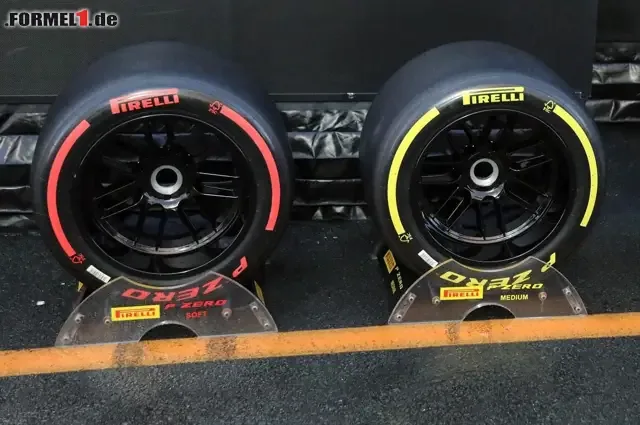
Pirelli has also recognized this and announces that it will use softer compounds for future races than in previous years. This has not been the case so far. In Japan, for example, the hardest compounds C1 to C3 were packed again, although it was already apparent in 2025 that the race could have been completed on mediums without any problems back then.
Now, one must give Pirelli credit for the fact that the choice of compounds for the first races was made before the season and there was no reliable data with the new cars. Therefore, they preferred to play it safe, but it was quickly realized that the new generation of cars no longer takes such a toll on the tires.
“The energy level they transfer to the tires is slightly lower than expected,” says former Pirelli Formula 1 boss Mario Isola. Although the vehicles are not far off from last year in terms of lap times, “obviously the energy level being put in is slightly lower.”
One reason is that the drivers are going significantly slower through the corners, which is related to energy management because drivers lift off the throttle much earlier to charge their batteries – this was also difficult for Pirelli to calculate in advance.
“Energy management was extremely difficult to factor in,” Isola confirms. “I don’t want to say the simulations were unreliable, but it was also extremely difficult for the teams to provide us with simulations that were close to what we then found.”
Development difficult to predict
“There is another point: when we ask them for simulations for the following year, we ask them for simulations with the best estimate of the loads at the end of the season. We use six reference tracks for this, but for these six tracks, we ask them to simulate the load and speeds expected for the end of the season,” says the Italian.
“Why is that? Because we have to design a tire that lasts the whole season. We cannot change the construction of the tire or the compounds during the season. So we are interested in understanding where the upper limit for load and speed lies.”
The most interesting tire facts for the 2025 Formula 1 season
“And for this reason, it is also very difficult for them to give us simulations for every single track, depending on when the race takes place.”
Read more F1 start numbers 2026: Who drives with which number and why?
This led to Pirelli being a bit too conservative at the start of the season, but that can be fixed for the upcoming races. “This means that – even without graining – we can consider going one step softer for some future races,” says Isola.
“Especially for races on, let’s say, very demanding tracks where we plan to use C1, 2, and 3, we can switch to C2, 3, and 4 there. And for the others where we have C2, 3, and 4, we can go to 3, 4, 5.”
Pirelli would have liked to have C6
The problem in the case of Australia, however, was that the softest allocation had already been used there. Going one step softer was not possible because no C6 tire exists, although Pirelli would have liked to have it.
“For low-load tracks where we already use the C5, we have no more room for maneuver. That’s why I said at the beginning of last year that we would like to keep the C6 in the range to have more flexibility,” he says.
“But unfortunately, during testing, we didn’t find a suitable C6 that sat in the right place on the graph between lap time and degradation.”
With the further development of the cars, however, it could also happen that Pirelli no longer needs to react, as the cars become faster and the loads on the tires increase again. “So it could also happen that the same compounds in the second half of the season are better tailored to what we really need,” says Isola.
“Maybe we don’t have to act at all – take Qatar. Qatar is a good example of a race at the end of the season with C1, C2 and C3. I can’t tell you yet whether we need to change the allocation for Qatar to C2, C3 and C4 because we don’t have enough data from the current cars yet to understand the development rate.”
Read more Rookie Arvid Lindblad: «Why should there be pressure?»