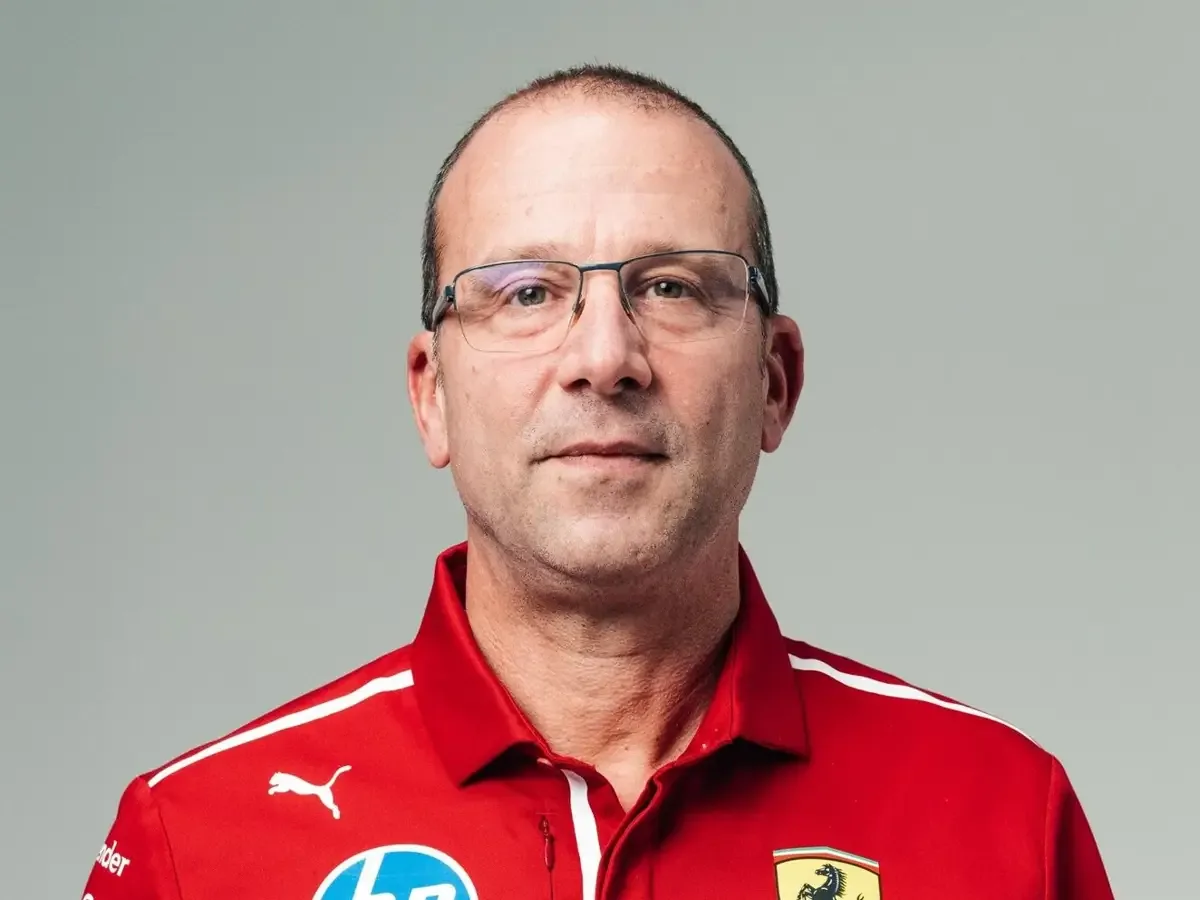
(Motorsport-Total.com) – Calm is currently only outwardly present in Maranello. Ferrari’s factory is teeming with work, ideas, and programs that the Reds want to implement for the Miami Grand Prix to continue their pursuit of Formula 1 leader Mercedes.
Read more Analysis: Are the announced rule changes sufficient?
One has to go directly into the factory, as the Italian edition of Motorsport.com has done, to immediately understand that the “break” in April has not affected the team’s work dynamics at all.
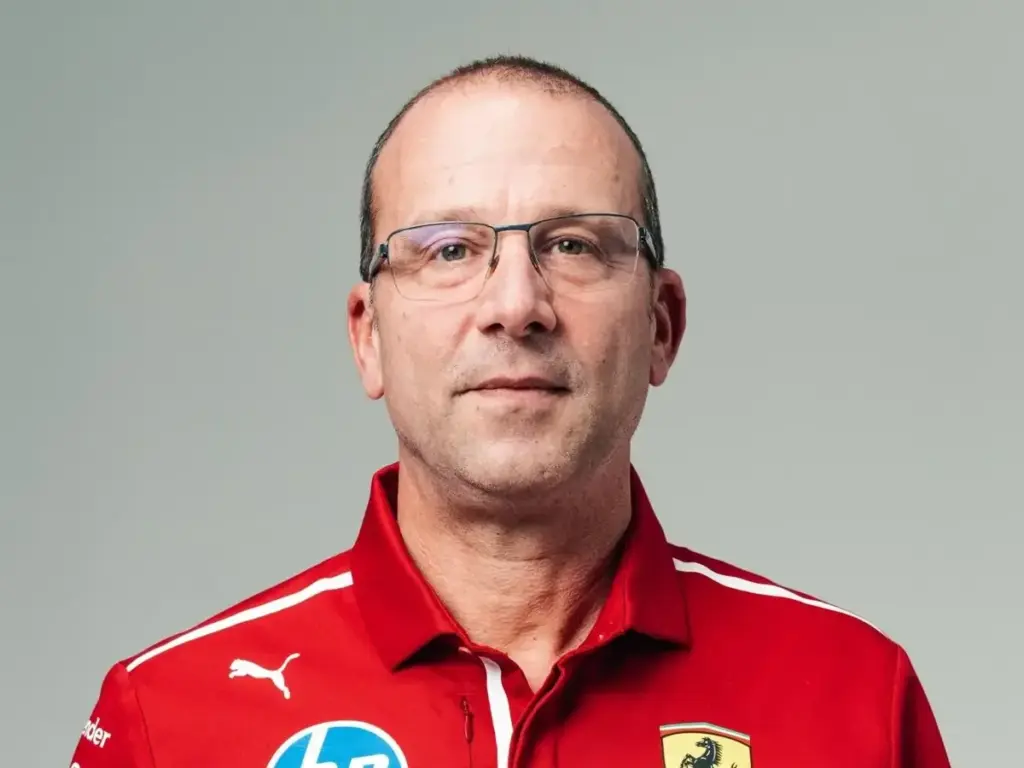
Ferrari’s Technical Director Loic Serra exclusively told our editorial team what is not visible from the outside, and what the Italian team is doing during the month-long racing break to be ready for the return of the premier class in Florida.
Question: “Loic, a month without races seems like a break, but we know it’s not. How has the work in the factory changed during this time?”
Loic Serra: “Not so much, because your development plan doesn’t come about in a week or a month. It’s something you set a long time ago. So you essentially follow your plan. It doesn’t really affect you if one or two races are missing.”
Question: “Would it have been better to go to Bahrain with part of the update, or is it better to have more time for fine-tuning, even if you then have to test everything together in Miami?”
Serra: “One possible answer is this: If you think about the SF-26, we started developing the car at the beginning of 2025, and then you spend a year or more developing it without testing anything, without actually driving the car.”
“What you learn comes from the work in winter, the virtual development. So you bring a car to the track that you have never driven before. If you look at it that way and compare it to the absence of two races, I say that’s a small thing. It’s clear that the more you drive, the more you learn, and that applies to everyone. But to say that this affects or risks the development approach, I don’t believe so.”
Question: “A colleague from another team I spoke to last week said they had an update ready for Bahrain. So they’re using it in Miami, but at the same time, the next one for Montreal is already ready. So they’re using an update for just one weekend. Is Ferrari’s plan different? Don’t you have this problem?”
Serra: “If you see development as non-linear… I’m not sure I understand that logic, because the impact on costs is quite significant.”
“So if you bring parts to Miami and then another step to Canada, it depends on how big the developments are. If they are small, incremental developments, I understand that, and maybe someone does it that way. But not necessarily in terms of packages, but rather incremental developments. That would make perfect sense.”
Question: “Does the correlation of data between track and simulator suffer from the absence of races?”
Serra: “As I said before: The more kilometers you do, the more you learn about your car, about the tires, about the overall package. So if you drive less, this learning process doesn’t happen. In a way, it freezes the correlation for a while, for two or three weeks. But it’s just a freeze. And it doesn’t prevent you from developing based on what you’ve learned so far. It’s simply a small interruption in the learning rhythm for correlation.”
Question: “Does this period change the nature of the updates? More aggressive perhaps, or more experimental?”
Serra: “Not so much. In practice, you have a development plan and you follow it. So there’s no real notion of ‘more aggressive’ or ‘more experimental’. That’s not the point. It’s more that you have the development plan, but there’s planning and what you discover. But in no way does that change what you find, because not driving doesn’t really change what you discover or don’t discover in the factory. So it doesn’t change your approach.”
Question: “Has this month without races offered any opportunities? Which area is the most interesting?”
Serra: “I would say there were overall opportunities in performance. When you look at development, you don’t really say: ‘Okay, just this one area.’ Development concerns everything, the overall compromise that you continue to develop.”
“And if you look at the different elements that contribute to performance, in truth, you cannot work in isolation. Because if you change something, it has an impact on the rest of the car. So you never consider them as separate developments. They are always part of a large compromise that takes everything into account.”
Crashingly failed: These Formula 1 major projects were never successful
Question: “We are waiting for a decision from the Formula 1 Commission regarding possible changes. I don’t want to go into the details of the changes, but I imagine that every team is now waiting for something that could influence their work plan. Does this change anything?”
Serra: “You can see it from the perspective of the rules, but also from the perspective of the competitors. What you’re saying is the same mechanism that kicks in when you see something on another car and think: ‘Oh, interesting, maybe this direction…’ It’s the same.”
Read more Coulthard: Red Bull is in a dilemma over Lambiase’s move
“So we have to make sure that we can react appropriately to everything. And that’s the difficulty, because you don’t want to rush a decision. You have to make sure that what you’re doing makes sense for the coming months, that it doesn’t corner you because you haven’t considered the big picture.”
“And if one thing changes, often something else changes right after. So you have to make sure you move carefully. There are no real expectations. It’s more that in this business, we stay grounded and make sure we understand where we’re going and why.”
Question: “So nothing can happen either?”
Serra: “Nothing can happen. Sometimes you just act because, compared to the rest of the field, you see an area where you can make good progress. But it’s not decided by a rule change, but by a change of direction. A general change of direction.”
Question: “I spoke with Matteo Togninalli earlier, and he said that this is usually a time when teams start the project for next year. Does the time without races help in this regard?”
Serra: “I know that from the outside it seems like a free period, but it’s not. The program is exactly the same.”
“If you were to look at people’s calendars, you would see that what we’re doing on next year’s car and the current one was planned. And as I said: We plan the direction we’re going. We don’t know the future, so we stick to our plan and get the maximum out of it. But it’s not like you suddenly have more free time. On the factory side, you don’t.”
Formula 1 Quiz
Under which flag does/did the Ferrari team compete in F1?
Test yourself now in the Formula 1 Quiz and compare yourself with other users
Question: “You said that without more time on track, you have to make maximum use of the existing data. Can you use this period to delve deeper into the analysis?”
Serra: “You have more time. When you do correlation work, the inputs are frozen. But in practice, you continue to work with the previous dataset and explore it more. From this perspective, you therefore have more time to dedicate yourself to a dataset, because it accompanies you for the next two weeks. Instead of saying: ‘Okay, I’m moving on to the next one because I have a new sample from a new race.”
Question: “And in your area, if you had to give a percentage, how many work strictly on race-by-race analysis? And how many follow a predefined plan?”
Serra: “I won’t give a number.”
Question: “Okay, but there are different roles…”
Serra: “Not only are there different roles, but it is essential to keep the two areas separate. If you don’t, the short-term tends to eat up the long-term. It always happens that way. Urgency always takes over or consumes resources.”
“So the only way to keep everything under control is to strictly separate these activities. It’s not that people can’t talk to each other. Of course, they talk every day. But you have to make sure that those responsible for the medium-term don’t jump to the short-term, because otherwise the medium-term disappears.”
“The point is that, as we said before, everything depends on what you plan. What you bring in three months and so on. And that only happens if you’ve done your work from the beginning without interruptions, or with as few as possible, while integrating what you learn day by day on the racetrack or during tests.”
Question: “My last question is about the data. We know how important every single kilometer is in Formula 1. Does missing two races affect your work, since you don’t have the data from Bahrain and Jeddah that you had planned at the start of the season?”
Serra: “In Bahrain, we drove for testing, so we have a good idea of what’s happening.”
“For Jeddah, it’s true: you’re missing some data points on these tires, under these conditions, on such a track, with this layout and a different grip level. Practically, it’s a big puzzle, and you’re missing this puzzle piece. You’ll find part of it in the next race or in the combination of the next ones, but this piece is definitely missing.”
Read more Ex-Williams Formula 1 driver: «In the end, I just didn’t want to anymore»