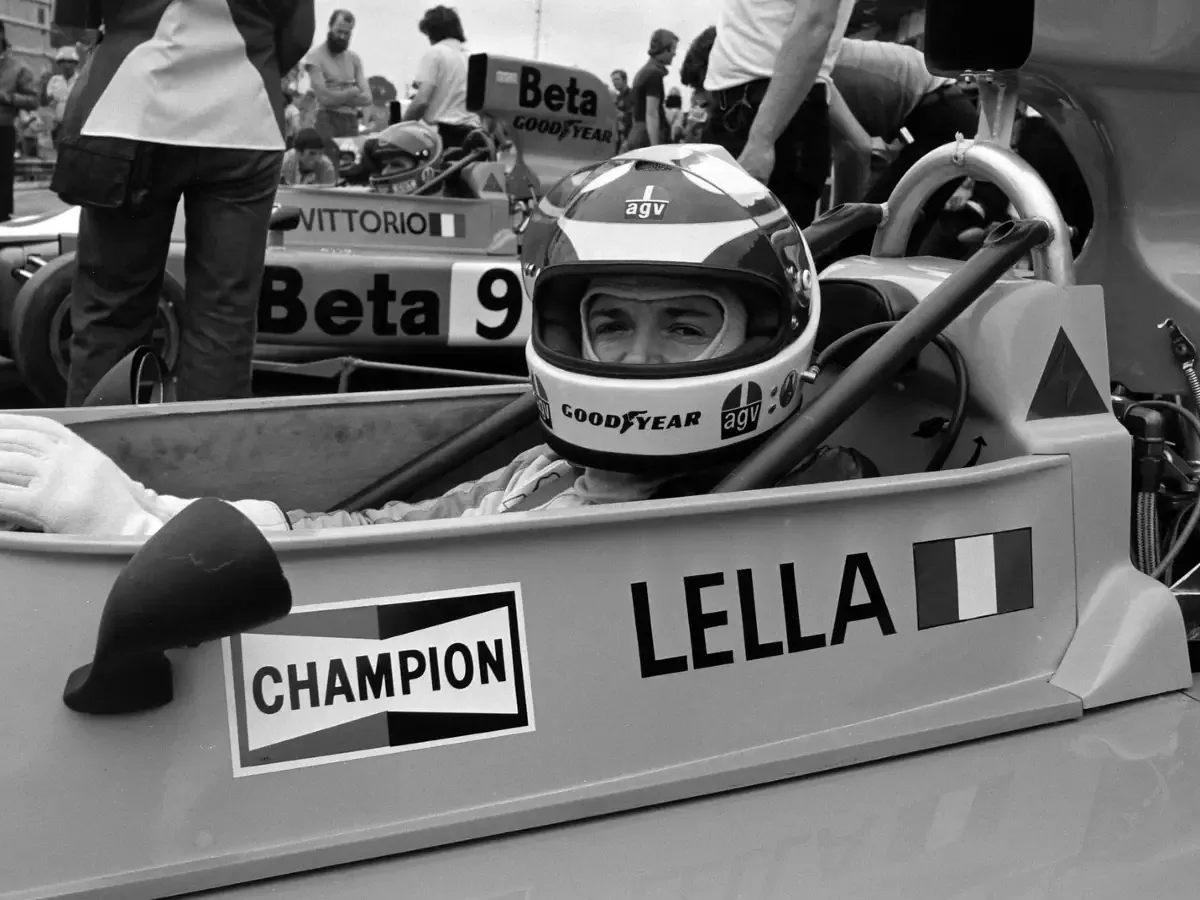
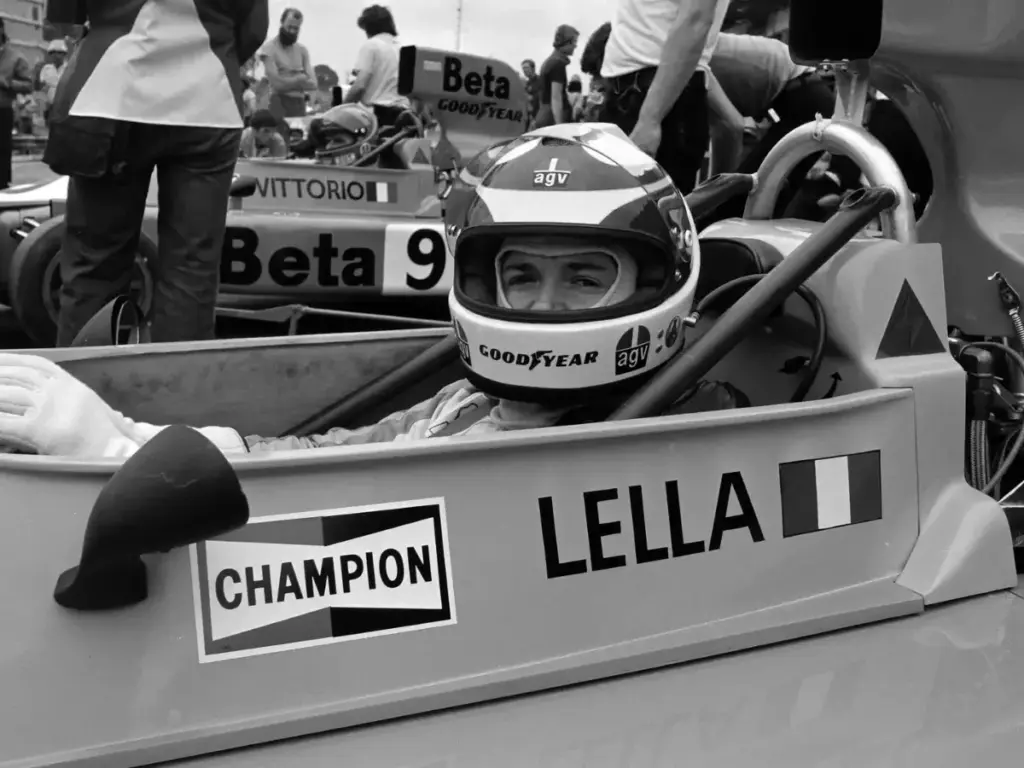
(Motorsport-Total.com) – 85 years after Lella Lombardi’s birth, her famous “half point” still tells a bigger story: women were never truly absent from Formula 1 – they were merely lone fighters.
Read more Niels Wittich: Michael Masi «didn’t do that much wrong»
Since the beginnings of motor racing, men have been in the spotlight. For a long time, it was assumed that women were better suited as models for cars rather than driving them themselves – while engineering or managing a team was completely out of the question.
Precisely for this reason, it feels so significant today that more and more women are finding their way onto the grid. And yet, women have always been a fundamental – albeit rare and scattered – presence in Formula 1.
Today, Red Bull relies on Hannah Schmitz as chief engineer, Haas has Laura Müller as race engineer, while Bernie Collins and Ruth Buscombe have established themselves as prominent strategists in Formula 1.
Elsewhere, Michaelagh Tennyson works in Red Bull’s technical pit crew, and Khloe Collins serves as a vehicle build technician. Their work is increasingly recognized through initiatives like “In Her Corner” and a growing online presence. But none of this is entirely new.
“Little Pilots” and Perseverance
Women have been part of motorsport since its beginnings – and Grand Prix racing in particular. Figures like Camille du Gast, Maria Antonietta Avanzo, Elisabeth Junek, and Helle Nice competed between the 1900s and 1940s, long before the modern World Championship took shape.
Maria Teresa de Filippis was the first woman to qualify for a Formula 1 Grand Prix in 1958. At the French Grand Prix that same year, a race director told her that “the only helmet a woman should wear is the one at the hairdresser’s.” Despite such attitudes, she competed in F1, often referred to as “il pilotino” (the little pilot) due to her stature, before retiring in 1959.
Even off the track, women have played a crucial role in automotive history. Even Queen Elizabeth II joined the Auxiliary Territorial Service (ATS) as a driver and mechanic during World War II, where she was trained in engine maintenance, repaired trucks and ambulances, and earned the nickname “Princess Auto Mechanic”.
And closer to the paddock: Before the age of computer automation, lap times were often manually recorded on the pit wall – frequently by the drivers’ girlfriends and wives, stopwatch in hand.
Prove Speed, Earn Your Place
Nevertheless, we are celebrating a special anniversary: 2026 marks the 85th anniversary of Lella Lombardi’s birth. The Italian remains a unique figure in Formula 1 history: the only woman ever to score points in the World Championship.
She was also among the very few to qualify and compete at the highest level, later becoming the first woman to start in the “Race of Champions”.
Lombardi’s career extended far beyond Formula 1. She won the 6h of Pergusa in 1979, the 6h of Vallelunga in the same year, and the 6h of Mugello in 1981. In 1976, she finished second in her class at the 24 Hours of Le Mans.
Read more Antonelli for Domenicali more than a fast driver: The next big thing?
Born in Piedmont as the daughter of a butcher, Lombardi initially worked as a delivery driver for her family’s business. There, she developed a passion for driving. Although initially met with skepticism at home, her ambition was supported once she began to show real competitiveness in 1968.
By 1970, she had already proven her skill, winning four out of ten Formula 850 races in a Biraghi before securing the championship in 1971. She then moved up to Italian Formula 3, finishing tenth overall in consecutive seasons and even beating the highly-rated Maurizio Flammini at Vallelunga.
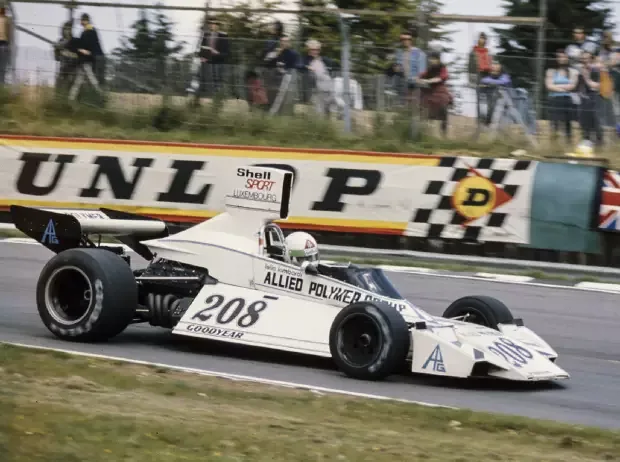
Her performances continued to attract attention. After finishing twelfth in the Monaco Formula 3 support race, Brands Hatch promoter John Webb invited her to compete in the “Celebrity Escort Mexico” series, where she beat names like Jacques Laffite and Mike Wilds. This led to a test in a ShellSPORT F5000 Lola T330 and a full season in the series in 1974.
The Irony of Lombardi’s Great Feat
Her path to Formula 1, however, was anything but straightforward. In 1974, Lombardi unsuccessfully attempted to qualify with a privately entered Brabham, supported by the Automobile Club d’Italia. The car carried sponsorship from Radio Luxembourg, which broadcast on medium wave 208 meters – a detail that inspired her race number.
The following winter proved crucial. Supported by Count Vittorio Zanon, she secured a spot with March Engineering for the 1975 season, alongside Vittorio Brambilla and Hans-Joachim Stuck.
At the opening race in South Africa, Lombardi was the first woman since de Filippis to qualify for a Grand Prix. Later that season, she made history at the Spanish Grand Prix by becoming the first – and to date, only – woman to score World Championship points.
The Tragic Half Point
The result, however, came under tragic circumstances. The race was stopped after a fatal accident involving Rolf Stommelen’s car, in which four spectators died. As the full race distance was not completed, only half points were awarded, ironically giving Lombardi just half a point – a statistic as symbolic as it is poignant.
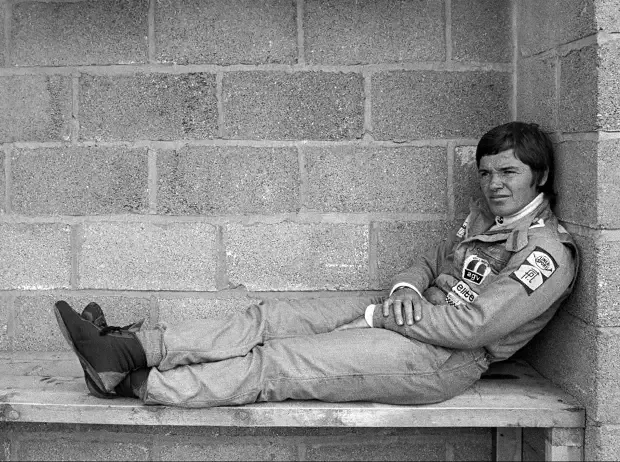
She continued to deliver solid performances, including a seventh-place finish at the Nürburgring. Beyond her results, Lombardi also stood out as one of the first female racing drivers to openly live in a same-sex relationship, underscoring her place as a pioneer both on and off the track.
Since her time, only three other women have attempted to compete in Formula 1: Divina Galica, Desire Wilson, and Giovanna Amati. It remains a short list – but perhaps not for long.
With initiatives like the F1 Academy gaining momentum and the increasing visibility of women in all areas of the sport, the foundations laid by these early pioneers could yet lead to a broader, long-overdue change.
Read more Margot Robbie reveals: How the Ocean’s prequel becomes an F1 thriller