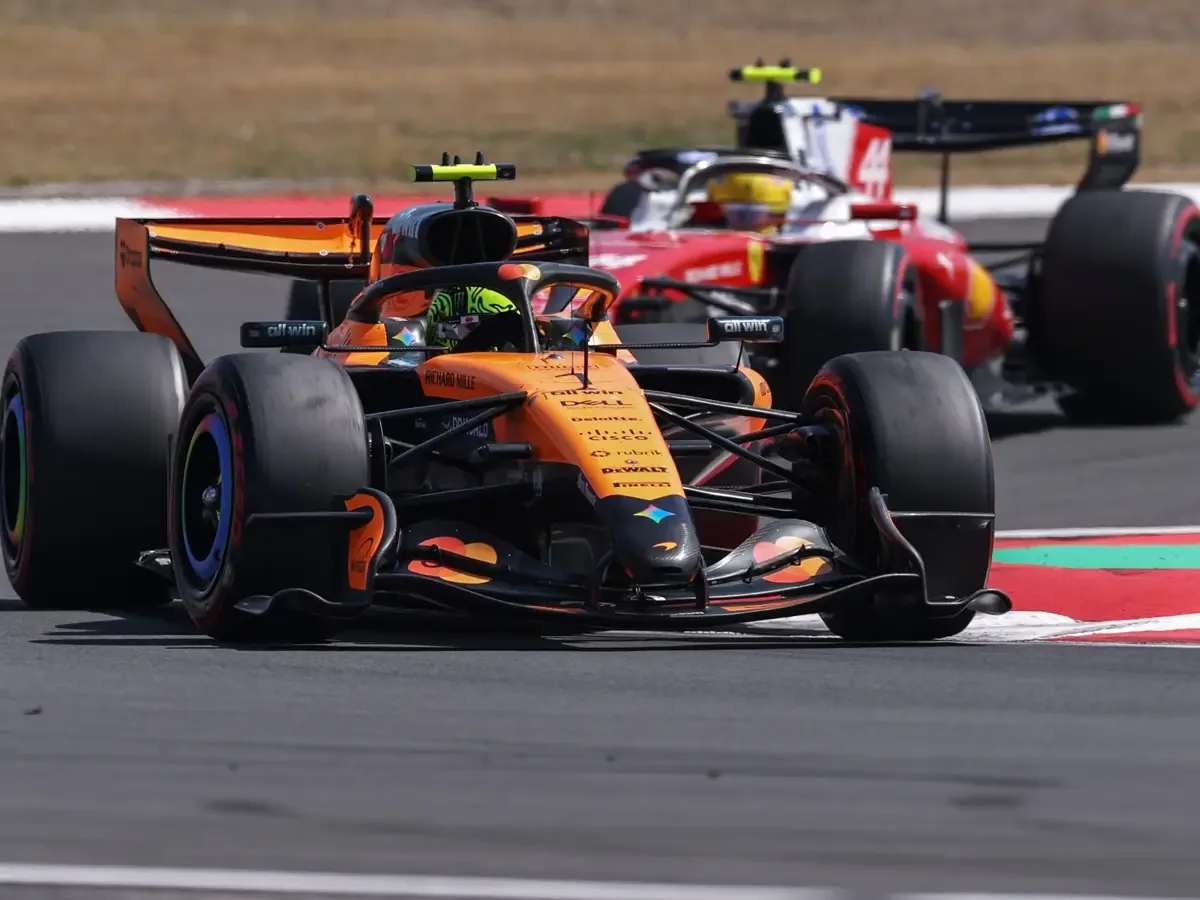
(Motorsport-Total.com) – In the package of changes to the Formula 1 rules for 2026, which was decided last week but not yet ratified by the FIA World Motor Sport Council, one of the main goals was to better address the problem of closing speeds.
Read more Roundtable: How do the new F1 engines work, David Varnholt?
The dangers that arise when one car approaches another at unexpectedly high speed were recently highlighted in Suzuka. There, Oliver Bearman had to swerve to avoid Franco Colapinto’s Alpine, lost control, and crashed heavily into the wall.
Although Bearman later blamed Colapinto, the trigger for the incident and a significant contributing factor was the difference in auxiliary electrical power between the two cars at that moment. As a result, Bearman approached Colapinto significantly faster than expected.
It is hoped that the measures to change the use of electrical energy will not only reduce safety risks but also help to reduce so-called “unintended overtakes”.
At the Japanese Grand Prix, Lando Norris had to lift off the throttle to avoid hitting the back of Lewis Hamilton’s Ferrari at 130R. When he accelerated again afterwards, he received significantly more power than expected.
This drained his battery so quickly that after overtaking Hamilton, he immediately lost the position again due to the difference in charge state.
“Unintended overtakes are also related to closing speeds,” explains FIA Single-Seater Director Nikolas Tombazis, emphasizing: “We believe that the measures we have taken regarding boost levels and power in certain sections of the track will at least partially address this problem.”
New rules for better qualifying and more safety
While the most noticeable changes concern an increase in energy recoverable through so-called super-clipping and a reduction in the recovery limit in qualifying, these were primarily aimed at making qualifying more spectacular.
At the same time, there are safety benefits, as a more natural speed profile is maintained and the need for lift-and-coast is reduced. More detailed changes include a new distribution of energy output outside the areas designated by the FIA as “important acceleration zones”.
There, the limit remains at 350 kilowatts, while in other sections it is limited to 250 kW. The maximum additional power in boost mode during the race is now limited to 15 kW.
In addition, the so-called “Power-Limited” and “Power-Limited-Pending modes” have been adjusted, which control the use of electrical energy outside these important acceleration zones.
Read more Horner’s Future: Former Red Bull Team Principal a guest at MotoGP in Jerez
Formula 1 Fails: These rule changes were a flop
Some of the peculiarities, such as unintended overtakes, are the result of measures designed to prevent cars from running out of energy on the straights, which could cause safety problems when following closely.
These interim solutions include, among other things, that electrical power is gradually reduced according to a predetermined pattern, instead of cutting off abruptly.
Another measure is the division of the track into areas where auxiliary electrical power is particularly relevant for lap time – especially at corner exit – and areas where it brings less benefit, such as later on the straights.
Teams use machine learning algorithms to “train” the car to optimally enter these so-called power-limited areas. This is triggered when the driver gives at least 98 percent throttle for one second.
FIA anticipates further adjustment
What proved to be Norris’s undoing in Japan, and Charles Leclerc’s in qualifying in China, was a lift of the throttle at a point that deviated from the “script,” causing the system to reset when they accelerated again.
According to Motorsport-Total.com, it has been agreed that cars will switch to power-limited mode in the future, regardless of whether the driver lifts off the throttle or not. While this will help, the crucial factor for closing speeds and unintended overtakes is primarily the available power.
The next races will therefore show whether the chosen values have the desired effect or need to be adjusted again. Tombazis emphasized that this is a gradual, data-driven adjustment.
“We believe and are quite confident that these changes are a step in the right direction – and quite a significant one,” he says, adding: “Whether that is enough or whether we will have to take another step at some point, we will assess in the coming races.”
“We are open to continuing the discussion and are in exchange with the teams, with FOM, and with the drivers,” says Tombazis, emphasizing: “We also listen to the fans. All of this together helps us shape our strategy.”
“The break has allowed us to focus on these discussions without racing every other weekend. But that doesn’t mean these conversations can’t continue.”
Read more Coulthard: Miami will hardly show the effects of the changes