(Motorsport-Total.com) – Formula 1 entered a new era in 2026 – with probably the biggest regulation revolution in its history, as both the chassis and power units were completely overhauled. The chassis is now lighter and more agile, with the minimum weight reduced by a hefty 32 kilograms. The electric component of the power unit was massively increased, resulting in an almost balanced ratio between the combustion engine and electric motor.
Read more Environmental knight Sebastian Vettel: How he surprised students in Sweden
The whole thing was, to put it mildly, controversial. While the chassis changes were consistently well received – after all, weight management had been a growing problem in the top class for years – the focus on more electric power met with little approval.
All in all, this has led to a completely changed product this year, known as “Jo-Jo-Racing.” But what exactly is behind it and how are the reactions in the paddock?
Why is it called “Jo-Jo-Racing” in Formula 1 2026?
Many intentions were behind the 2026 regulations. One of them was to improve the show on track. Wheel-to-wheel duels had become increasingly rare recently because the cars were simply too big and too heavy. In 2025, for example, the prescribed minimum weight was 800 kilograms – a hefty increase of 180 kilograms compared to 2010. That was a problem in itself.
The result was often static races where DRS trains formed and overtaking maneuvers were scarce – despite the enormous power of the cars. Formula 1 tried to solve this with the new rules but felt somewhat handicapped because it oriented itself to the direction of the automotive industry from 2022 when the regulations were passed.
“When we discussed the current regulations, the involved car manufacturers told us clearly that they would never develop a new combustion engine again,” recalls Nikolas Tombazis, FIA Formula Director. “They wanted to phase out combustion engines and be fully electric by a certain year.”
Jo-Jo effect through energy management
This inspired Formula 1 to adopt an electric-focused rule set, hoping to attract new manufacturers like Audi and Honda. That worked, but it elevated the racing style to a completely new level that was not originally intended.
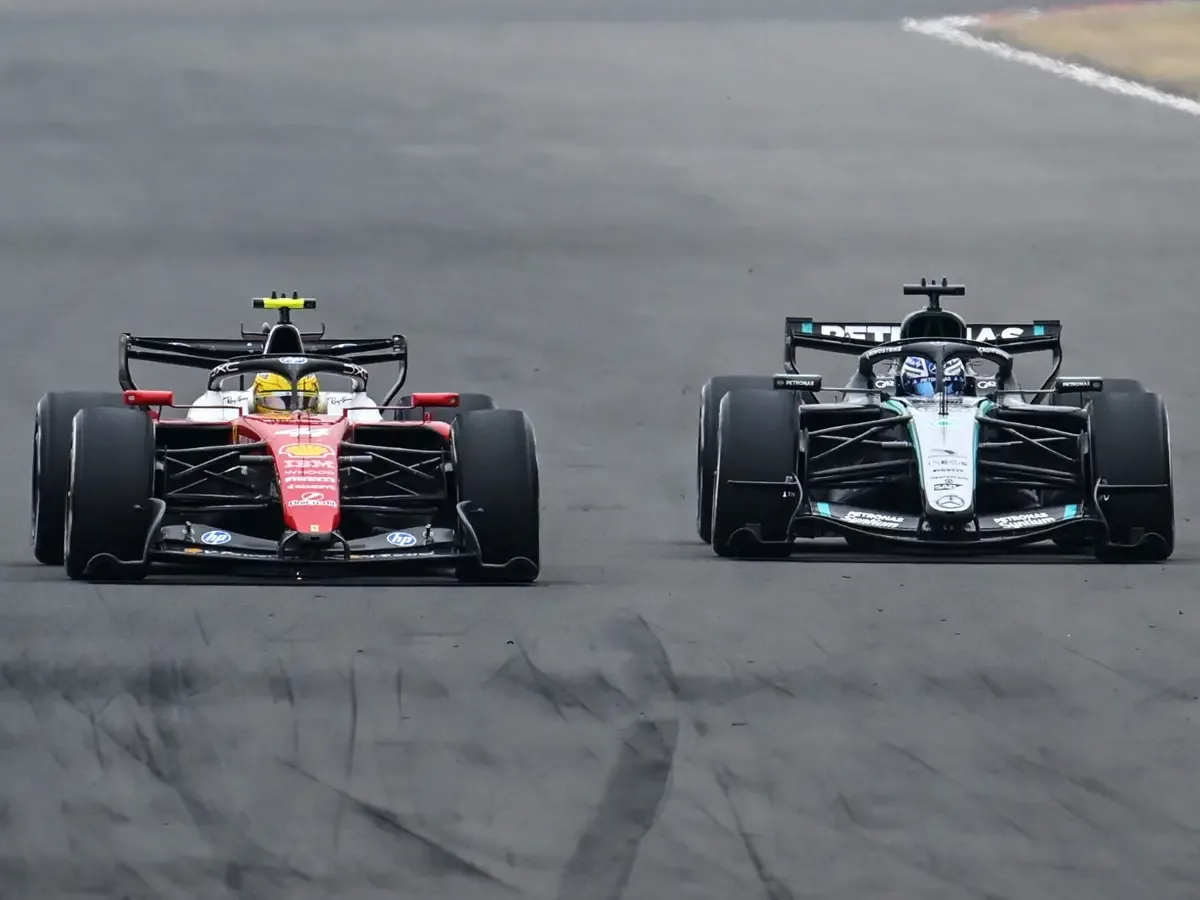
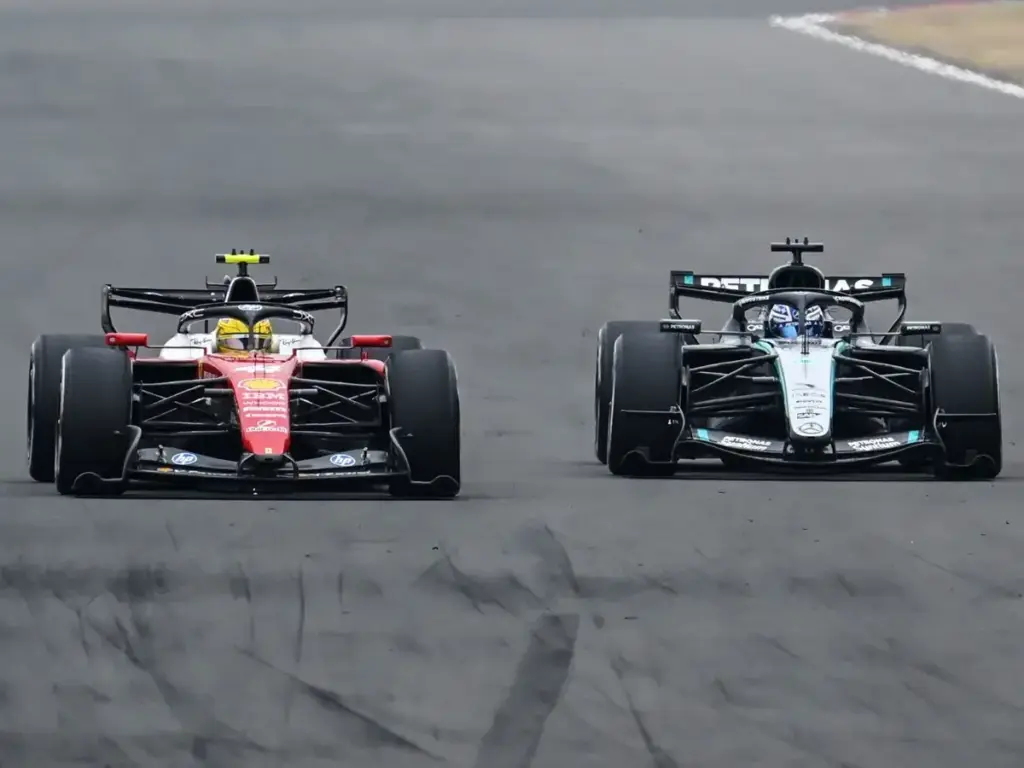
Nowadays, Grands Prix are defined by energy management. Drivers must reserve enough battery power to complete a lap as fast as possible. To achieve this, cars sometimes downshift on the straights, use “lift-and-coast” before corners, or engage in a kind of “super-clipping” – where the battery charges even at full throttle. The result is “Jo-Jo-Racing”: a constant back and forth in battles, as we have seen in every race in 2026 so far.
Previously, the matter was usually settled once an overtaking maneuver succeeded. The attacker stayed ahead and looked forward. Only rarely did the pursued manage to stay close and immediately counterattack. But today, with fluctuating battery levels over a lap, duels mostly continue.
More overtakes, but better ones too?
China was a prime example: overtaking often happened before the hairpin (Turn 14), only for the opponent to regain the position on the start-finish straight. This sometimes continued into the second sector of Shanghai.
The constant overtaking and re-overtaking is routine in 2026 and has led to a massive increase in the number of maneuvers compared to 2025. At the 2026 Australian GP, there were 120 overtakes, while the previous year had “only” 45.
Whether this is good or not is debatable. In an interview with our global sister site Motorsport.com, F1 CEO Stefano Domenicali recently revealed that the championship must never again allow manufacturers to influence the direction of the regulations so strongly – especially because the focus on electric drives in the industry today is not as extreme as it was four years ago.
Comparison to Formula E
“Look at what Renault did,” said Domenicali referring to the sudden exit of the French as engine supplier at the end of 2025. “Renault was at the table when this engine was decided, and then they chose to exit. That’s exactly what I mean: we must not get into a situation where a market crisis leads manufacturers to make difficult decisions and prioritize other initiatives. We must protect ourselves from that.”
Nevertheless, these power units have produced a racing style never before seen in Formula 1. It resembles Formula E, where thanks to purely electric power units there are also constant position changes and close battles. There, energy management, strategy, and driver aids often dictate the outcome.
Read more No ego trip: What Albon and Sainz do differently at Williams
Are the drivers fans of the new style?
The 2026 regulations are probably the most polarizing in Formula 1 history. The increased number of overtakes can be seen positively as it provides exciting action that you cannot take your eyes off.
However, many argue that these maneuvers are “artificial.” They often only occur because the car in front is currently harvesting energy, which “devalues” an overtaking maneuver.
This was observed in Suzuka when Lando Norris had to lift off at 130R to avoid crashing into the back of Lewis Hamilton’s Ferrari. When he got back on the throttle, he received more power than expected, which propelled him past the seven-time world champion but drained his battery. Norris immediately lost the position again.
Unintended maneuvers
“I didn’t want to overtake Lewis,” complained Norris. “It’s just that my battery boosts. I don’t want it, but I can’t control it. So I overtake him, have no battery left, and he just flies past me again. That’s not racing, that’s playing Jo-Jo. Even if he claims it’s not – it is Jo-Jo-Racing.”
He was referring to statements by Hamilton, who had expressed support for the new rules: “When you go back to karting, it’s exactly the same.”
“You go back and forth, back and forth, you can never pull away,” Hamilton added. “No one has ever called karting Jo-Jo-Racing. It’s the best form of racing. And Formula 1 hasn’t been the best form of racing for a long time. Of all the cars I’ve driven in 20 years, this is the only one where you can actually follow through fast corners without losing everything. You can stay close.”
Paddock divided
The opposing views of Norris and Hamilton clearly show how divided the field is. The probably biggest critic is Max Verstappen. He caused a stir in the previous season when he called the rules “anti-racing” and “Formula E on steroids.”
The four-time champion stuck to his criticism all year and claimed the regulations were “fundamentally flawed.” “If someone likes this, they really have no idea what racing is about,” said Verstappen. He also denied the assumption that he only dislikes the rules because his Red Bull team had a false start (sixth place after three laps) and only the drivers at the front support the rules.
There is some truth to this, as Hamilton is experiencing a much stronger start to the season than in previous years. The two championship leaders, Mercedes teammates Kimi Antonelli and George Russell, also speak positively about this year’s racing.
Will “Jo-Jo-Racing” continue?
The drivers’ concerns have led Formula 1 and the FIA to make adjustments to the regulations before the fourth race of the season in Miami next weekend. One of the changes affects qualifying, which in 2026 has not been as close to the limit as before. Therefore, the cap on energy recovery on Saturday was lowered from eight to seven megajoules.
But especially the adjustment to super-clipping could influence Jo-Jo-Racing. The value is increased from 250 to 350 kilowatts, meaning drivers can recover more energy at full throttle. A change McLaren team principal Andrea Stella had already demanded in the previous season. It won’t solve all worries but should make the race safer without the unexpected lift-and-coast.
This safety aspect became a priority after Oliver Bearman’s heavy crash at the Japanese Grand Prix. He was about a second behind Franco Colapinto in the second sector but suddenly closed in as the Alpine suffered from energy shortage. With a speed difference of almost 50 kilometers per hour, he had to evade. The Haas jerked left, went onto the grass, and after spinning, hit the barriers with 50 g.
Since the changes should lead to fewer lift-and-coast situations, speed differences should also be smaller – which in turn would result in less extreme Jo-Jo situations. But: to some extent, this style will probably remain part of the Grands Prix.
Read more Berger about Roland Ratzenberger: «More difficult than my own accident»