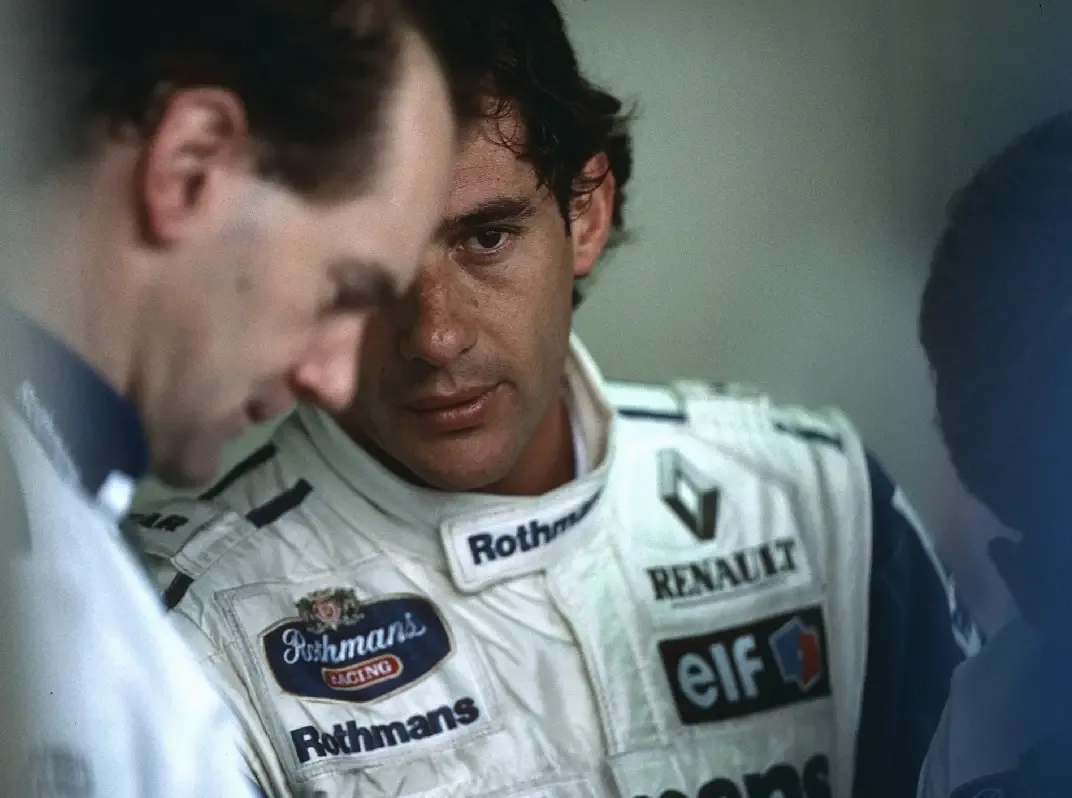
(Motorsport-Total.com) – The San Marino Grand Prix on May 1, 1994, in Imola was a defining moment in Adrian Newey’s career. Ayrton Senna fatally crashed in the Williams FW16 designed by Newey – and at that time, it made the Brit question whether he wanted to continue working in motorsport.
Read more Max Verstappen: If only people had listened to the drivers five years ago …
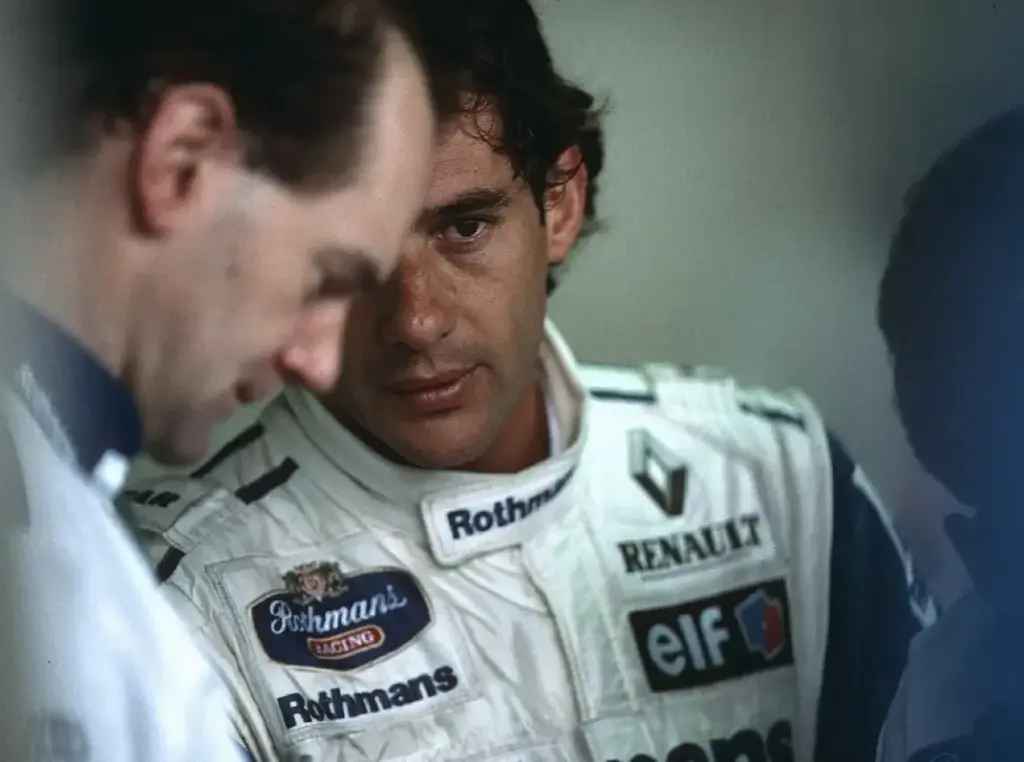
“As stupid as it may sound: I never thought about how I would feel if someone was seriously injured in a car for which I am fully responsible – or worse,” Newey reveals in the podcast High Performance.
Now 67 years old, he had already built two world championship cars for Williams in 1992 (Williams FW14B) and 1993 (Williams FW15C). After Nigel Mansell and Alain Prost each won the title in a Newey car, Senna joined the team in 1994.
But unlike his two predecessor models, the new FW16 was not the best car on the grid at the start of the year. While Michael Schumacher won the first two races in the Benetton B194, Senna started the season with two retirements in Brazil and Japan.
At the third race in Imola, the fatal accident occurred when Senna, leading shortly after a safety car phase, went off at the Tamburello corner. “The biggest memory of it is those damn sirens,” Newey reveals, who also still has the TV images of Senna in the car after the accident in his mind.
Cause of the accident still not fully clarified
“You fervently hope that he is okay,” says Newey. But Senna did not survive the accident because a suspension arm pierced his helmet. “What a stupid accident. And what an unfortunate accident,” Newey explains.
“If it hadn’t been for that wishbone back then, he would have remained completely uninjured,” he emphasizes. Senna succumbed to his severe head injuries, and Newey then questioned whether he even wanted to continue working in motorsport.
Adrian Newey’s World Championship Cars
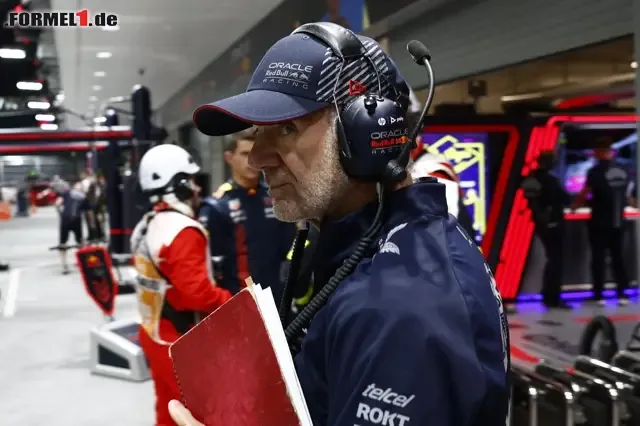
He also wondered how the accident could have happened. Because to this day, the circumstances that led to Senna’s death are not fully clarified. “Did the steering column break? Did we completely fail in the design and build an unsafe car, or did something else happen?” says Newey.
A matter that the Italian courts also dealt with in the following years. The background was the question of whether there was a case of negligent homicide. The focus here was on the car’s steering column, which had been modified beforehand.
During the Imola weekend, Williams had extended the steering column at Senna’s request. One theory about the accident is therefore that the steering broke at the weld joint in the middle of the drive, and Senna lost control of the car as a result.
Read more «Only responsible for the gas pedal»: Bearman fit again after Suzuka crash
Newey: “What role did I personally play?”
The Italian judiciary later also concluded that this was very likely the cause of the crash. “No data indicates that the steering column was the problem,” Newey still emphasizes today.
“The data rather shows that the car slid sideways in a corner that should have been taken at full throttle,” he explains and adds: “In the first lap [after the safety car] he went full throttle without problems. Why on earth did he not make it through the second lap?”
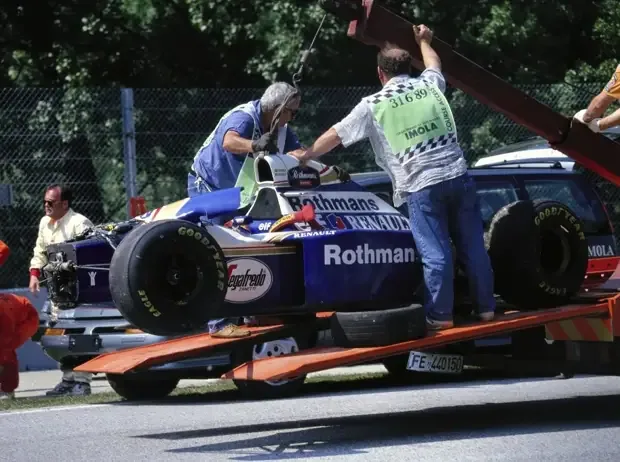
“In the first lap he had a critical moment, but in the second lap the tire pressure should have been higher, and then everything should have been fine. So I don’t know,” says Newey about the cause of the fatal accident.
Only in 2005, more than ten years after Senna’s death, was Newey acquitted in Italy “because as a designer he cannot be held responsible for later changes to the car.” The proceedings against then Williams technical director Patrick Head were discontinued due to the statute of limitations.
“There was some pressure,” Newey says today about the trial, “but for me that was not the decisive factor. The decisive factor was to know what role I personally played and what exactly happened.”
Newey admits: Made “mistakes” on the Williams FW16
“And I don’t think we will ever know with 100% certainty what happened,” he emphasizes. Besides the steering column theory, which he himself considers unlikely, there could also have been a tire failure, Newey explains.
But because the right rear tire was completely destroyed after the accident, that could not be verified either. A third theory is that it was the car itself that caused the accident. Newey does not want to shy away from that responsibility.
Formula 1 Quiz
The best starting position of the Williams team in Formula 1 was?
Test yourself now in the Formula 1 quiz and compare yourself with other users
“I know the car was aerodynamically unstable, which was definitely my fault,” he admits and concedes: “I made mistakes with the car’s aerodynamics.” For example, the diffuser caused a flow separation at very low ride height, Newey explains.
Whether that ultimately played a role in Senna’s accident is as unclear as the steering column or tire failure theory. So for Newey, besides much uncertainty, only the fact remains that Senna fatally crashed in a car he designed.
Read more Lance Stroll: «Sad» about the direction the sport has developed in
“That is the responsibility I have to live with,” says Newey.