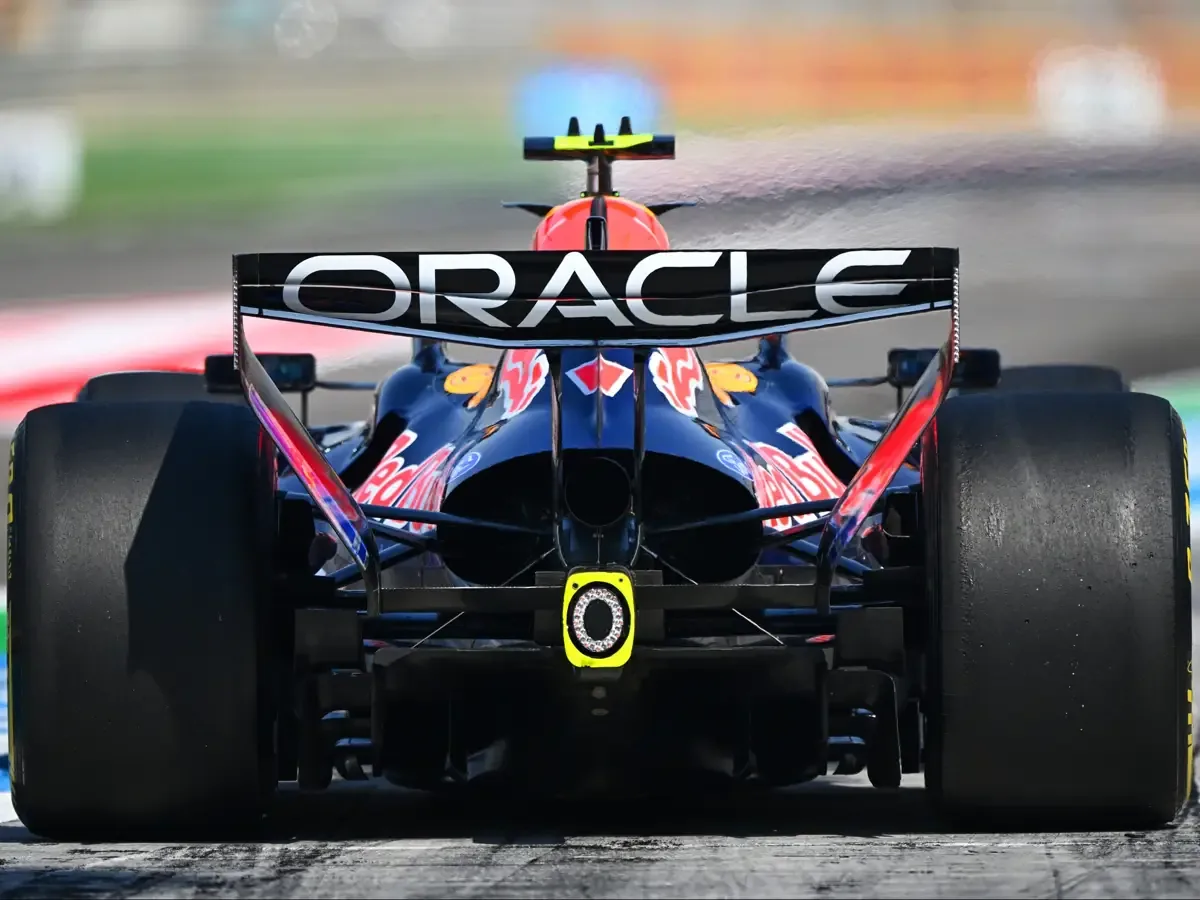
(Motorsport-Total.com) – Only for the Miami Grand Prix last weekend were the Formula 1 rules adjusted, and discussions are already revolving around even bigger changes starting from the 2027 season. However, it might already be too late for more extensive rule adjustments next year.
Read more Probably in Austria: Red Bull wants to reduce the overweight of the RB22
Because while the recent rule changes for Miami only affected the software of the engines, McLaren team principal Andrea Stella explains: “I believe we can get even more out of these regulations, but that requires some hardware adjustments.”
But that is exactly the problem, because while software can be adjusted relatively quickly, changes to hardware require long lead times. As a measure for the future, Stella suggests, for example, a higher fuel flow “to increase the performance of the combustion engine.”
Another idea is to “recover more energy than you actually consume, because you spend much more time consuming electrical energy than recovering it,” Stella explains and adds: “Can we increase [the electric power of the engine] from 350 kW to 400 kW or even 450 kW?”
“Then, in my opinion, we simply need bigger batteries,” he emphasizes and concludes: “From the perspective of power unit manufacturers, I consider [bigger changes] for 2027 difficult, as the requirements for battery size and handling the higher fuel flow usually require a longer lead time than is still available until the 2027 season.”
Bigger changes also problematic for teams
Steve Nielsen from Alpine also explains that not only the engine manufacturers would have problems with short-term changes for next year. “Our responsiveness will be put to a tough test if bigger changes for next year are planned in the coming months,” he explains.
Read more Allan McNish: This is how his debut as race director went at the Audi team
Nielsen gives an example: “More fuel means a bigger tank, which in turn requires a different chassis. And not every team will plan to build a new chassis for next year, because given the budget cap, money is invested where the biggest performance gain can be achieved.”
Formula 1 fails: These rule changes were a flop
And that is often not the case in this area, which is why teams often use a chassis (and also other parts of the car) over several years with stable regulations. A bigger battery would also affect the design of the car.
“Personally, I consider hardware adjustments to the power unit necessary to improve Formula 1 overall,” Stella emphasizes and therefore explains: “I would strongly recommend concluding these discussions preferably before the summer break so that we are ready in time for 2028.”
That means: For 2027, the train has probably already left, as there is no longer enough time for more extensive changes. Stella therefore advises finalizing the plans for 2028 as quickly as possible so that time does not run out again in the end.
Read more Aston Martin without Miami update: This is how the team plans the next months