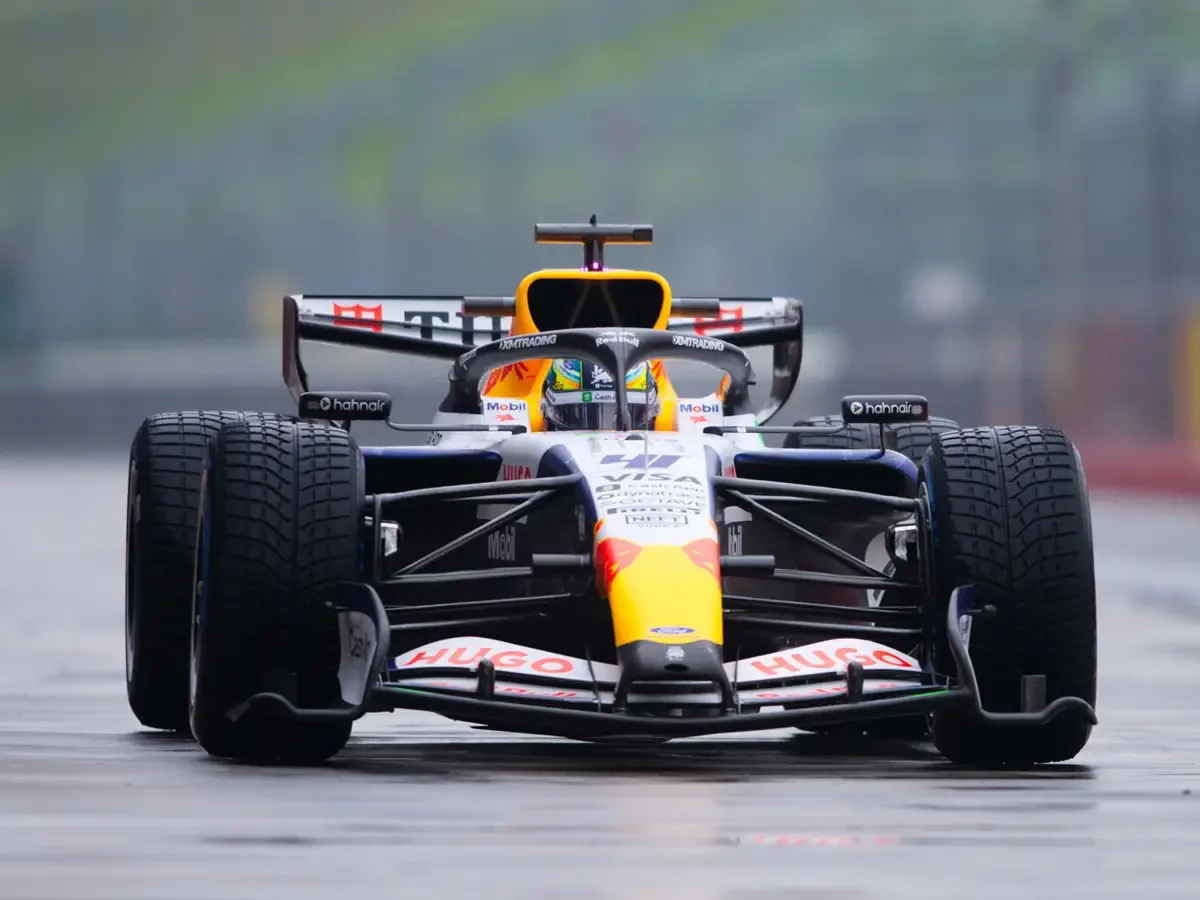
(Motorsport-Total.com) – Formula 1 has talked a lot about safety concerns due to large speed differences and the changed start procedure during the test drives in recent weeks, but another risk has remained largely ignored so far: rain and wet conditions.
Read more Drive to Survive — Season 8: Still difficult for hardcore fans
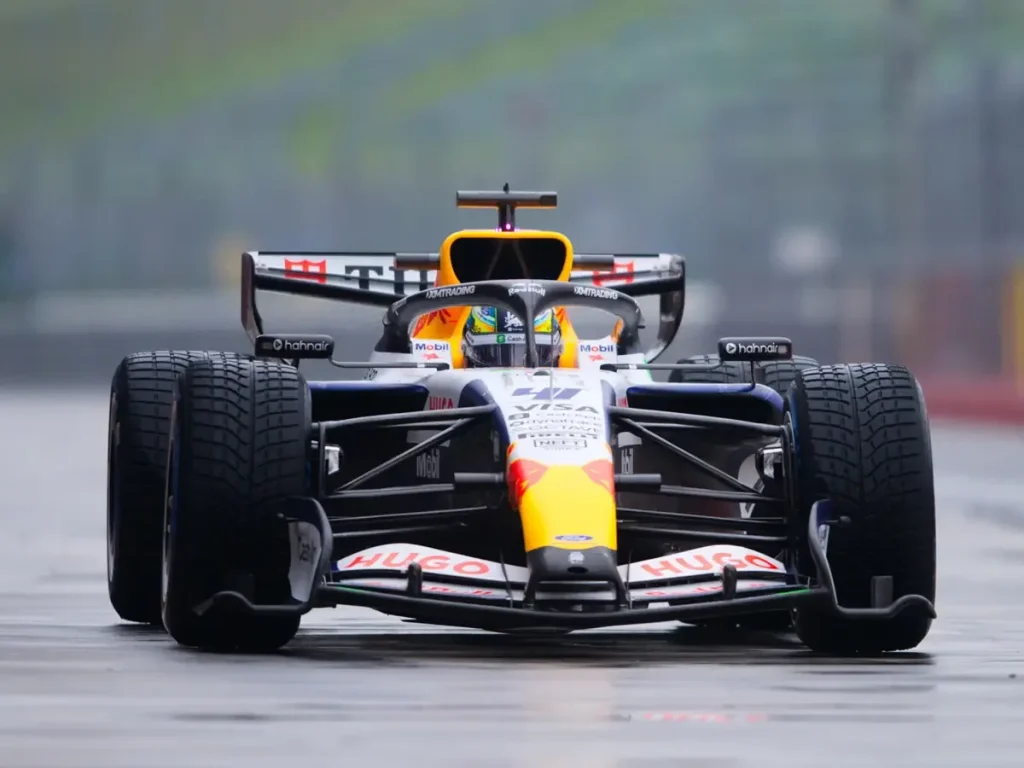
Although poor visibility due to spray should no longer be as severe with the new cars as in the ground-effect era, there are concerns about the stability of the vehicles and how the lower grip will affect energy recovery.
“To be honest, I drove the [2026] car for the first time in damp conditions in Fiorano,” says Haas driver Oliver Bearman. “Of course, I only drove around a bit. But yes, it’s an open question, that’s for sure.”
“With the speeds we can reach and the amount of power we have – especially on the first part of the straight – that’s a point for all of us to watch out for. It’s a shame that we can’t do a proper test in the wet.”
Racing Bulls Team Principal: “A huge challenge”
Although Pirelli has planned a test in Bahrain before the opener in Australia (2026 Formula 1 calendar) to test intermediates and rain tires, only Mercedes and Mercedes are taking part – with so-called “mule cars,” i.e., special test carriers.
The 2026 Formula 1 drivers in their new racing suits

A test of how the electric support and energy recovery of the new cars behave on a wet track is not planned. The teams will therefore remain in the dark for the time being until the first rain race or at least a test on damp asphalt takes place.
“It’s a huge challenge to test and understand that, really huge,” says Racing Bulls Team Principal Alan Permane. “We can model what we would do in low grip. The fact is: you have enormous recovery via the rear wheels – and in [dry] conditions, we practically don’t use the rear brakes at all.”
Read more Special honor in Melbourne for Hannah Schmitz and Laura Müller
“That’s how powerful the system is. You brake the car from 330 km/h to 60, 70, 50 km/h [in Turn 1 of Bahrain] without applying the rear brakes. That’s how powerful the MGU-K is. In the wet, no matter how much downforce you reduce, … it will definitely be a challenge.”
Stability in the rain a big risk?
In wet conditions, the “straight-line mode” with active aerodynamics is fully or partially deactivated; in the latter case, only the front wings become active. The problem is mainly related to the fact that if the electric motor’s power delivery is too strong, the components can intervene abruptly and impair stability.
At the same time, with lower energy yield, there is a risk that drivers will consume more electricity than they can recover. In both scenarios, the consequences could be expensive. “We weighed up whether we should have started on the second day in Barcelona,” says Permane.
Because it had rained during the shakedown in Spain, which Ferrari in particular took advantage of. “We just thought it was too risky to be there with only one car and no spare parts,” emphasizes the Racing Bulls Team Principal. “I’m pretty sure most were in that situation, but it was just … it wouldn’t have been worth it.”
“You always weigh everything up. There are always pros and cons, and there are good and bad sides. We decided it was too risky, although it certainly would have been useful.” And so, question marks currently remain, and not just at Racing Bulls.
Read more Domenicali relaxed: Focus will soon be on racing again