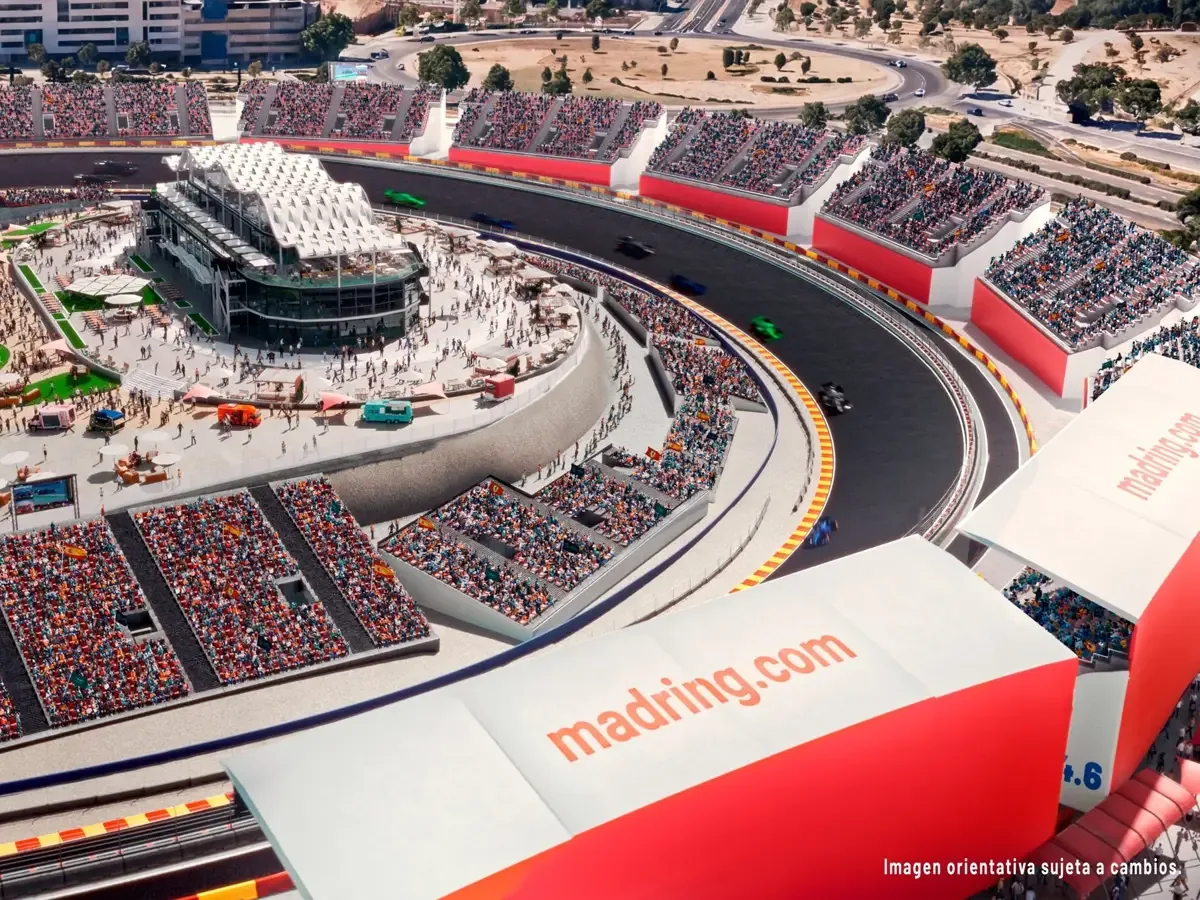
(Motorsport-Total.com) – The positioning of a Grand Prix circuit within a city requires not only political but also financial support from local or national governments. That is why European street circuits have increasingly disappeared from the Formula 1 calendar over the past decades. Only Monaco has remained – thanks to the unconditional support of the princely family that owns and manages the principality.
Read more Daniel Ricciardo dispels IndyCar cliché about Formula 1 stars
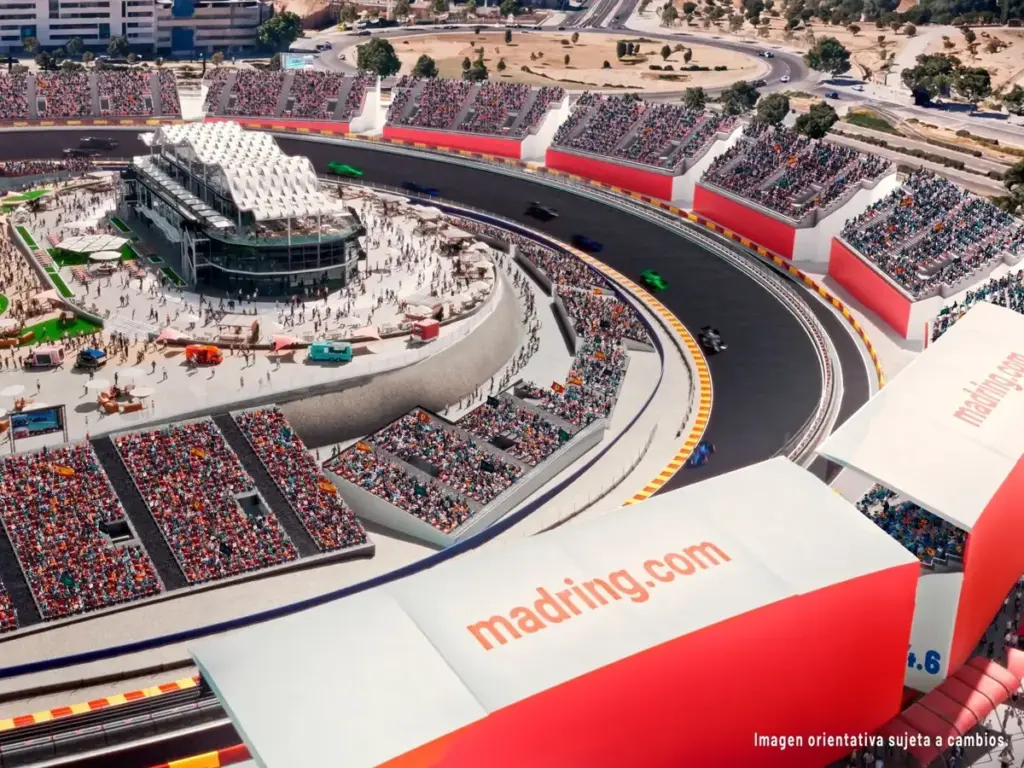
The first Formula 1 World Championship Grand Prix in Spain took place in 1951 on the Pedralbes circuit in the heart of Barcelona, on an approximately triangular track layout that partly ran along today’s Avenida Diagonal – as well as a short section of the B-20, which most visitors use to travel from the airport to the Circuit de Catalunya.
75 years later, the Spanish Grand Prix is moving to Madrid – not to the Jarama circuit, which hosted several World Championship races between 1968 and 1981, but to a combination of public roads and temporary infrastructure around the IFEMA exhibition center (Institucion Ferial de Madrid). Not quite as central as comparable circuits in Singapore, Las Vegas, Baku, or even Melbourne, but still close enough to the city center – and especially in immediate proximity to Madrid’s international airport with existing public transport connections.
At a time when races without state support are increasingly disappearing – Zandvoort is leaving the calendar this year – this is a fascinating special case. The promoters still believe in economic success, mainly because of the excellent international connectivity.
Luis Garcia Abad is a familiar face in the Formula 1 paddock, having been part of Fernando Alonso’s management for many years. Today he is the managing director of the Madring circuit. In an interview with Autosport, a sister platform of Motorsport-Total.com & Formel1.de in the Motorsport Network, he talks about the preparations for the premiere next September.
Work expected to be completed by the end of May
Question: “What were the biggest challenges in building a new race track in a European capital?”
Luis Garcia Abad: “To be honest: It is very difficult because building something in Europe is not easy. There are many regulations, laws, environmental requirements, and rules that we have to comply with. But we are on schedule because our concept was established very early. We only communicated everything when it was 100 percent certain. We are also on track with construction because we want to complete the work by the end of May.”
Question: “It is said that there might be some kind of test event in August. Could that perhaps be a touring car race or something similar?”
Abad: “We are currently reviewing that together with the FIA and Formula 1. Maybe road cars are not the best solution for a test. We would prefer to test with a formula car, but we are still discussing which solution is best. Because we definitely want to test the track in advance. I don’t want to experience any nasty surprises on Friday morning of the Grand Prix weekend.”
“La Monumental”: Corner with 547 meters length
Question: “How much has the track layout changed in the past two or three years? Apparently, two additional corners were added.”
Abad: “That was due to our planned steep corner ‘La Monumental’ with 547 meters length and 24 percent banking. A huge corner. The FIA thought we should reduce the speed at the entry. Therefore, we had to add two additional corners.”
“In hindsight, that was even positive because we could install additional grandstands and reduce noise pollution for the neighborhood since the track is now further away. Especially for a unique Formula 1 race in a large European capital, sustainability and noise protection must be very carefully considered.”
Question: “That’s interesting because how difficult was it actually to get the necessary permits? Even at Ferrari’s test track Fiorano, there are spots where drivers have to lift off because of noise measurements.”
Abad: “Our approach was to fully comply with all laws in Madrid, Spain, and Europe. At the same time, it was essential for our business model to have the track within the city. After all, it is not a permanent race track. In the end, we are talking about less than 14 hours of noise per year. That is significantly less than many permanent facilities outside the city.”
Read more Why Ralf Schumacher advises Max Verstappen against Ferrari
“Moreover, Formula 1 today is not as loud as it used to be. At a show with Carlos Sainz last June, we had more noise with Mari Boya’s Formula 3 car than with Carlos’s Williams FW45. So it can be controlled. We have communicated very openly with the residents and the city to make it clear: The impact only affects three days a year. The rest of the time, the area is used for bicycles, joggers, and other activities.”
Question: “What usage possibilities will the facility have outside the Grand Prix? That is economically very important.”
Abad: “That was central from the beginning. We use existing infrastructure like the IFEMA exhibition center. We already have more infrastructure than many other race tracks on the calendar: Wi-Fi, power supply, toilets. This saves us enormous construction costs compared to projects like Jeddah, Abu Dhabi, or Austin. We want to create a great Formula 1 experience – but at the same time an experience for the whole city.”
Question: “Unlike Saudi Arabia, you have no state funding.”
Abad: “No. We have calculated everything very carefully – investments, sponsors, the contract with Formula 1. The contract runs for ten years, so long-term. Also, outside the race weekend, we do not have to bear maintenance costs for the facility because it remains part of the exhibition center. We deliberately did not want to use public money because that would be difficult to sustain long-term. Ticket sales are going very well; we have already sold over 90,000 tickets. Support from Formula 1 and Santander was also very important.”
More than 100,000 spectators expected per day
Question: “How many spectators per day do you expect?”
Abad: “That cannot be said exactly yet because we are still working on grandstand capacities and evacuation routes. But we are talking about approximately 125,000 spectators per day. So definitely a very large Formula 1 Grand Prix.”
Question: “How is the ratio between general admission and VIP areas distributed?”
Abad: “We expect about 98,000 to 100,000 grandstand seats. In addition, there are hospitality areas with about 20,000 to 22,000 guests. One of our big advantages is Madrid’s strong connection to South America. Many people from Colombia, Mexico, or Venezuela live in Madrid. There are seven direct flights daily to Mexico City alone. That helps us enormously with marketing.”
Question: “Will there be additional events like concerts?”
Abad: “We are already working on that. We want to offer our guests a nice surprise.”
Question: “How big will the economic effect for Madrid be?”
Abad: “We currently expect about 500 million euros in direct economic impact for the city. We have not yet included the indirect effects. In the next two years, ten new five-star hotels will be built in Madrid – and the Grand Prix could be one of the reasons for that.”
Question: “Are there plans to make the Grand Prix particularly ‘Madrilenian’? Miami, for example, has its artificial marina.”
Abad: “My dear friend, we are in Europe, we are in Spain. We have to comply with European rules. We hope to create iconic places around the track, but we certainly will not set up a ship in the middle of Madrid – after all, the sea is 343 kilometers away. Instead, we want to present our culture and our city. Madrid is a city to live in. We want to convey this feeling of life to the visitors.”
Question: “Through aerial TV images, the appearance of a track is more important than ever today.”
Abad: “Absolutely. We are working intensively to make the area visually attractive. When the helicopter shots are shown, viewers should immediately recognize that it is a race in the middle of the city. You can get from the circuit to the Prado Museum or Plaza Mayor in 30 minutes. And I keep hearing that the nightlife in Madrid is fantastic. Especially for the new Formula 1 target group under 35, that is an important factor. We have to offer them an experience that justifies the value of their weekend in Madrid.”
Read more «Faster than she looks»: Carlos Sainz drives first lap in Madrid