(Motorsport-Total.com) – Even though many involved continue to publicly deny it: it is obvious that the new technical regulations of Formula 1 are met with rejection by many fans and at the same time have sparked sharp criticism from the drivers themselves.
Read more Interview: Why did you have to add two new curves on the Madring?
The recent introduction of adjustments in the use and recovery of electrical energy, followed by the confirmation of further, more extensive changes for the 2027 season, seem like a tacit admission that the basic idea of an almost 50:50 split between combustion engine and hybrid components has certain weaknesses – at least in practical implementation.
Although Formula 1 boss Stefano Domenicali recently stated, “Overtaking is overtaking,” the argument “quantity equals quality” does not convince many fans and drivers. Especially traditionalists are bothered by overtaking maneuvers that arise less from driving skill or courage, but are dictated by different battery charge levels.
Formula 1 drivers warned early about 2026 regulations
Among the drivers, there is widespread frustration because their warnings went unheard. The 50:50 principle was decided in summer 2022 at high-level meetings with the Formula 1 car manufacturers. However, the drivers only got the opportunity to assess the effects in the simulator much later.
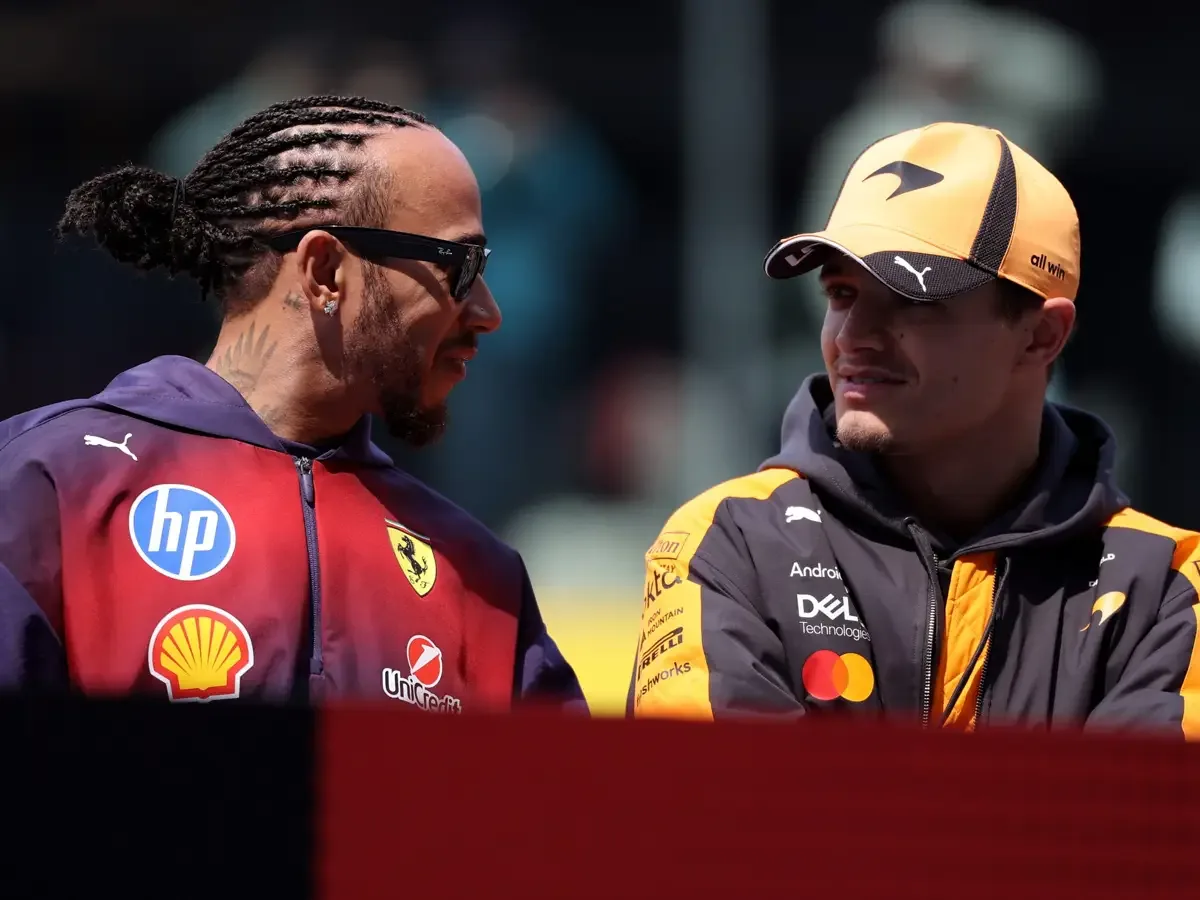
Before the Miami Grand Prix, seven-time world champion Lewis Hamilton said it was high time that drivers get “a seat at the table” when setting the rules. Six drivers, including Hamilton’s teammate Charles Leclerc, were consulted on the rule adjustments before Miami – after the fundamental decision had long been made.
Lando Norris wants “uncompromising racing” again
Title defender Lando Norris basically agreed that drivers should have a voice in the long term: “We just have to honestly give our input. We want the fans to have a great time, and we want to have fun ourselves. We also want Formula 1 to remain what we all saw growing up: uncompromising racing. And we haven’t had that so far.”
“Good racing does not necessarily mean that one has 100 percent battery charge and the other is at zero. That’s not how real racing should work.”
“It should be about letting cars run closer together – with less weight, better tires, and less susceptibility to problems when following, such as with temperatures. Not by introducing batteries and wings that do all these things we have now,” said Norris.
The priorities of car manufacturers have shifted
Domenicali and FIA Formula sport director Nikolas Tombazis diplomatically admitted that the current regulations also arose because the car manufacturers in Formula 1 demanded more electrification. This corresponded in 2022 to the strategic direction of the automotive industry. This picture has changed over the past four years.
Read more Daniel Ricciardo dispels IndyCar cliché about Formula 1 stars
In the meantime, the flawed 50:50 principle has been kept functional through various corrections – including active aerodynamics as well as detailed specifications that define how much electrical energy may be recovered or used in certain track sections.
Formula 1 should “return to normality”
“You can simply do it a slightly different way, and that’s exactly what we drivers want for the future,” said Norris. “But because of the bigger picture, because manufacturers, partners, and teams are involved and because it’s a business, some things are not so simple.”
Formula 1 fails: These rule changes were a flop
“Hopefully, in the next five years or so, things can move a bit more back towards normality. And I believe we can still create better racing.”
Are the 2027 measures really effective?
For 2027, the ratio between power from the combustion engine and electrical support shifts closer to 60:40. At its core, however, this is only another transitional solution to mask the limits of a modified version of the current hardware.
In the long term, there are voices, including FIA President Mohammed bin Sulayem, pushing for a return to V8 naturally aspirated engines with a significantly smaller electric share. As things stand, this is a point of contention for some manufacturers, especially Honda and Audi. Competitors with a larger presence in the US market – Ford and Cadillac – are more positive about the V8 concept.
What Norris wishes for the next power era
Crucially: the current power formula expires at the end of 2030. While the basic philosophy of the next generation of rules is to be set this year to allow enough lead time for development, Norris advocates approaching the process more thoughtfully this time – so that a regulation that seems unfinished does not start again.
“What we drivers want is also what will be better to watch for the fans,” explained Norris. “At the end of the day, it’s a business. So the business side has to be balanced, and of course, we don’t have much say there. But we are making progress with the FIA. I think they have done a good job improving things.”
“The bigger topics and the things we want more for the future are the areas where I want to take more time.”
Read more Why Ralf Schumacher advises Max Verstappen against Ferrari