(Motorsport-Total.com) – Susie Wolff, the CEO of the F1 Academy, has revealed how she managed to secure all ten Formula 1 teams as supporters for the all-female racing series in the 2024 season. After a debut season that highlighted the urgent need for more visibility for the series, Wolff pursued the ambitious goal of winning over every single Formula 1 team for the project.
Read more No chance for Kimi Antonelli? Expert warns about Monaco
“I still remember well when I took on the role,” Wolff said in an interview on Talks At Google. “I drove to the very first race. At that time, we were not yet racing as part of the Formula 1 support program, but at the Circuit Paul Ricard – not far from my home in Monaco. As I approached the track, I thought: ‘Strange, there are no cars out here at all.'”
“It was absolutely dead silent. I turned onto the premises and briefly thought: ‘Did I get the date wrong?’ Because I had never seen such an empty race track in my life. When I drove in, there were literally only the trucks of the F1 Academy. No one was there. I had never seen such a deserted track in my entire life.”
Sponsor frustration and empty stands
The reception in the paddock was sobering: “I got out of the car and was immediately stopped by two team principals who said: ‘Listen, this isn’t going to work. We can’t find sponsors. We’re pulling out at the end of the year.’ I just thought: ‘Okay, nice to see you.’ Shortly after, some female drivers came to me and said: ‘Look, we’re supposed to bring in a third of our budget ourselves, but we can’t find the money. I can already tell you that I won’t be able to pay my share.'”
“I spent the day and the following one there and finally called Stefano [Domenicali], the CEO of Formula 1. I told him: ‘This won’t work because no one is raising sponsor money.’ The original model was that Liberty Media would cover a third of the budget, the driver a third, and the team the last third.”
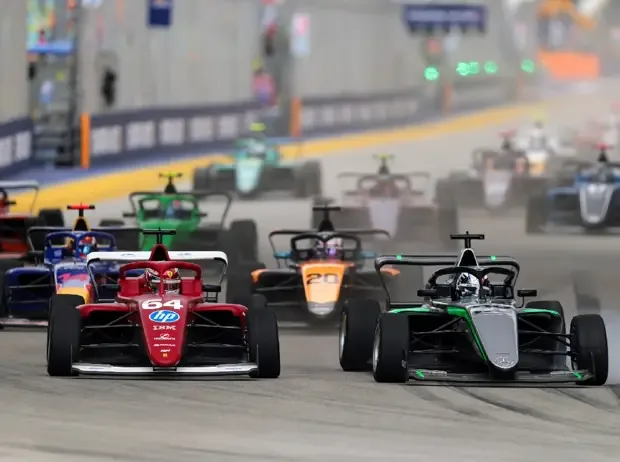
The result was pure chaos in the market: “Suddenly, we had a completely flooded market where everyone was looking for sponsors. Some asked for 5,000 euros, others for 500,000 euros – it was completely uncoordinated. And of course, no sponsor pays to stick their logo on a race car that drives in front of completely empty stands. There literally wasn’t a single person in the grandstand.”
The coup with the ten Formula 1 teams
After intensive talks with various industry insiders, Wolff finally brought up the idea of directly involving the ten Formula 1 teams and bundling all commercial marketing within the company.
“I got the green light,” Wolff continued. “Then I said to Stefano: ‘Should we approach the Formula 1 teams together?’ He just said: ‘No, no, no, you do that all by yourself.'”
Read more Lotus 72: Fittipaldi raves about the «best car» of his career
“Well, of course, I had one of the team principals sitting at home. My husband [Toto Wolff] is my biggest supporter but also my toughest critic. He said to me: ‘Look, I can’t be the first to say yes. Get six others on board first. If you have the majority, I have to follow.’ I just thought: ‘Great, thanks for nothing!'”
Then the Formula 1 teams came
But the dominoes began to fall: “I have to say, when I went to Frederic Vasseur at Ferrari – whom I have known for a very long time – it was actually partly his idea. I asked him: ‘Would you consider joining the F1 Academy?’ And he immediately replied: ‘Yes, and we can paint the car red.’ I said: ‘Okay, let’s paint it red. How about a Ferrari sticker?'”
“With that, I had Ferrari in the bag. After that, Zak Brown at McLaren was extremely supportive. And at that time, Christian Horner was still leading Red Bull – which could have potentially been complicated due to his not exactly best relationship with my husband.”
But Horner did not block: “He was actually very supportive. I had friends who worked very closely commercially with Red Bull and explained to him why this project is so enormously important for Formula 1.”
“Suddenly, I had four teams. I convinced two more, and suddenly I had this magical six together, with which I could firmly plan Toto as well. That made seven. The last three – I don’t name them in the book because I think that wouldn’t be fair to them – were very skeptical, however.”
Persistence pays off
While the last three teams resisted, Wolff got down to business and drew up contracts with the already confirmed seven teams. By the time the final signature came, she had also convinced the last doubters.
“That was really a genuine pinch-me moment for me,” Wolff admits in retrospect. “At times, I was absolutely not sure if we would ever get it through. But we did it. And I believe that in the end, it was simply due to a huge amount of persistence – and the refusal to accept a ‘no’ as an answer.”
Read more Formula 1 Weather 2026: The Current Forecast for Montreal