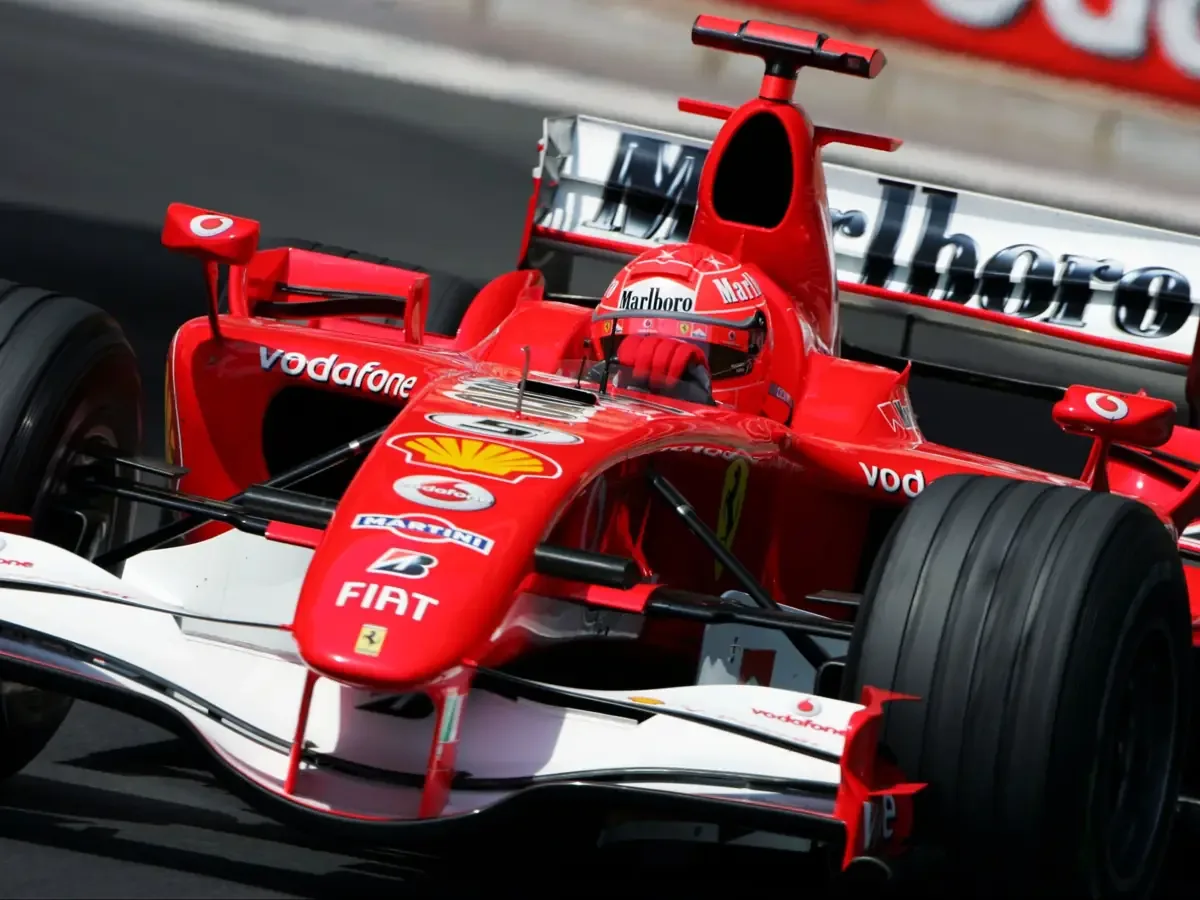
(Motorsport-Total.com) – On May 27, 2006, Michael Schumacher parked his Ferrari 248 F1 in the iconic Rascasse chicane. The controversial maneuver in the qualifying for the 2006 Monaco Grand Prix not only brought the seven-time world champion a lot of public criticism but also a disqualification.
Read more Expert sure: George Russell wouldn’t have won in Canada anyway
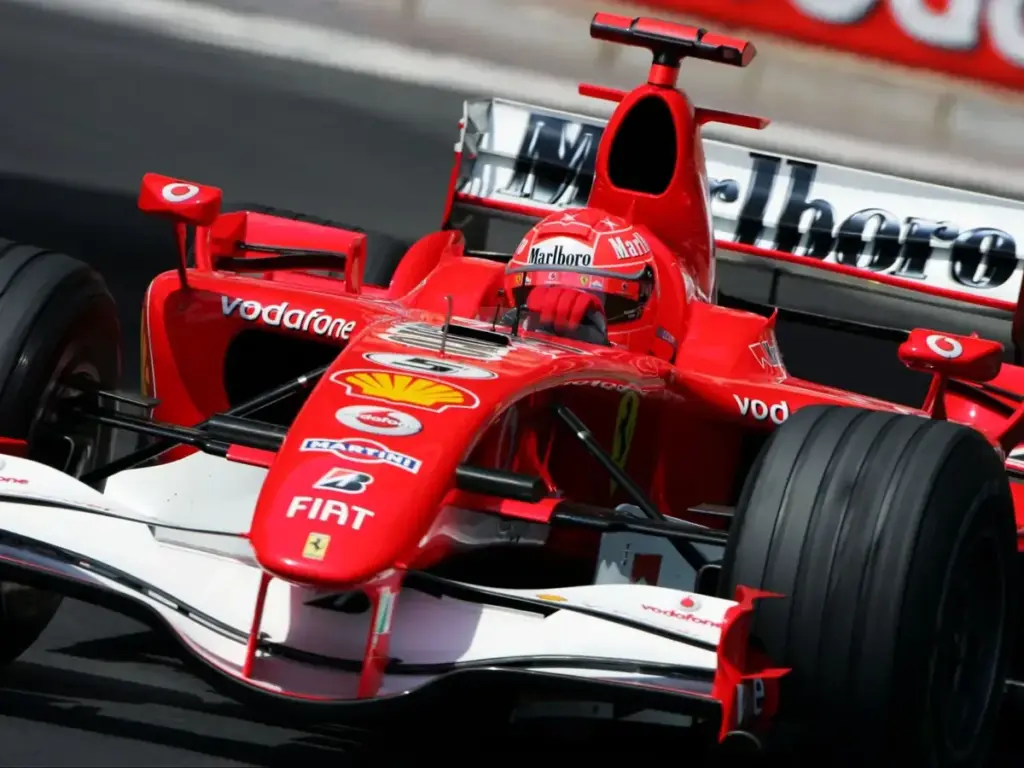
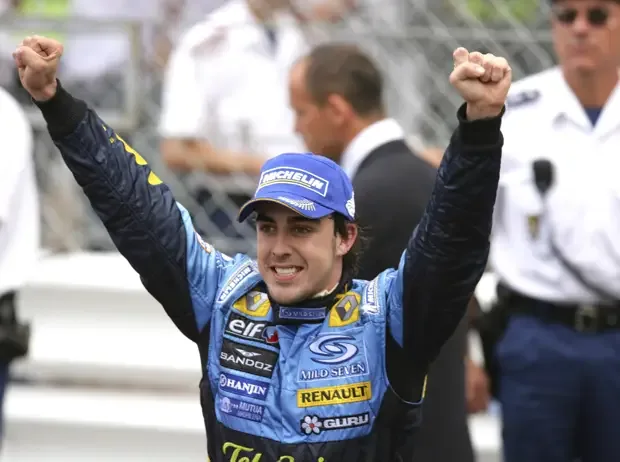
In his last year for the Scuderia, Schumacher had to duel with the reigning world champion Fernando Alonso. The Renault driver was 15 points ahead of the Kerpener at the time of the race weekend in the principality. It should be noted that back then, a Grand Prix win was worth only 10 points.
At the start of the season, Alonso won three races and achieved numerous podiums. Ferrari was clearly stronger than in the disastrous 2005 season, but Schumacher had thrown away important points in the championship duel due to a crash in Australia.
And looking at the free practice sessions on Thursday and Saturday, Renault once again went into the Grand Prix as the favorite. Two weeks earlier, Alonso had won the Spanish Grand Prix in Barcelona for the first time in his baby blue R26 and extended his championship lead.
How did qualifying work in 2006?
In 2006, the now well-known knockout qualifying was introduced. Q1, Q2, and Q3 were launched as a new format, but there was an important difference compared to the current implementation.
After all, refueling was still allowed in the 2006 season, so drivers had to run the third qualifying segment with the amount of fuel from the box that they would also use for the start on Sunday.
In other words: a large part of the session consisted of burning as much fuel as possible to have a lighter car for the final lap. If you had fueled less, you would have to start the race with correspondingly little fuel and pit early.
Thus, the first minutes of Q3 in Monaco were anything but meaningful. In Q1 and Q2, Kimi Räikkönen in his McLaren-Mercedes and Alonso in the Renault dominated. Although Schumacher led the third segment after the first run, the signs clearly pointed to pole position for his championship rival.
The parking maneuver in the Rascasse
On his fast lap, Schumacher was already just under two tenths behind his best time before the third sector. An improvement and pole position were almost impossible. In the Rascasse, the Ferrari driver threw his car towards the wall, only to stop a few centimeters before the barrier.
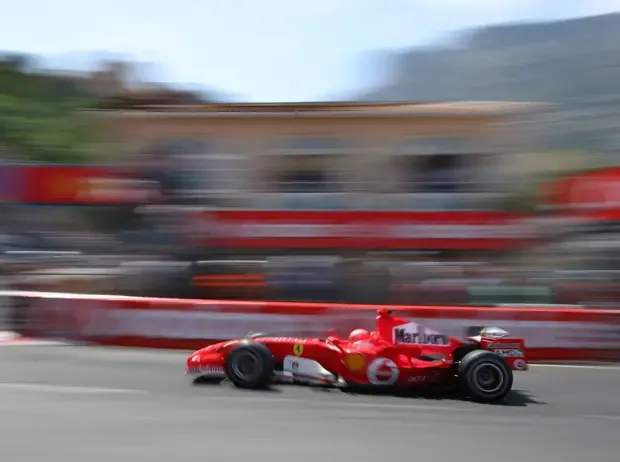
The result? A yellow flag had to be shown for the stationary vehicle, preventing Alonso from improving in this section of the track. The pole thus went, at least for the time being, to Schumacher. The reigning champion was only 64 thousandths behind that.
As soon as the session ended, speculation about the maneuver of the record world champion began. “He didn’t crash into the wall – he just parked the car,” said Renault team boss Flavio Briatore. “I can’t believe it.”
Public criticism of the qualifying maneuver
“I don’t know why he needs to do that. I think he’s lying to all of us. A seven-time world champion wants us to believe that it wasn’t intentional – a fairy tale.”
Keke Rosberg was even more blunt at the time on ITV: “The cheapest, dirtiest maneuver I’ve ever seen in Formula 1. He should leave Formula 1 and go home.”
Read more «I am the best»: Alonso also confident at 44 years old
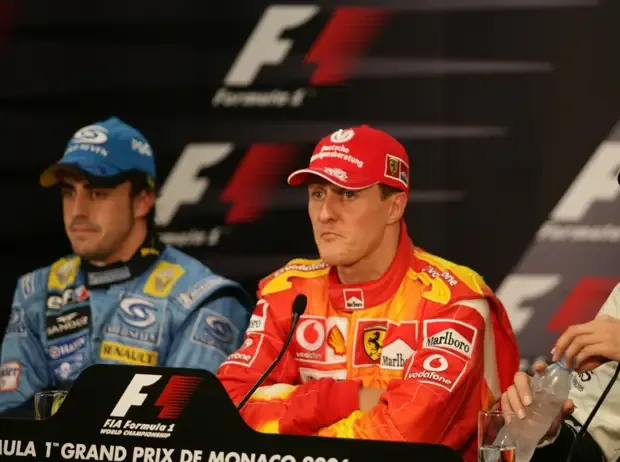
Schumacher himself saw the situation a little differently at the time. He emphasized to the press that he simply lost control on his last fast lap and then stalled the engine. “No matter what you do in such moments: your opponents will believe one thing, and the people who support you another,” he said in the press conference after qualifying.
Disqualification for Schumacher
After an eight-hour investigation, the verdict was reached: Schumacher was subsequently disqualified and had to start the Monaco Grand Prix from the last grid position.
Impressively, in a generation before DRS, KERS, or overtake mode, Schumacher still managed to fight his way up to fifth place. Nevertheless, the Kerpener lost important points to Alonso, who won the Grand Prix ahead of Juan Pablo Montoya and David Coulthard.
It was hardly surprising that Ferrari was anything but pleased with the decision. “The stewards declared him guilty without evidence,” said Ferrari team boss Jean Todt at the time.
Was the maneuver born as a joke?
Many years later, Ross Brawn, then Technical Director at Ferrari, and Felipe Massa, who had just joined the Scuderia as a race driver, spoke about the situation in the Sky documentary The Race To Perfection.
“We had a meeting with the team back then where we talked about qualifying,” Massa recounts. “Back then, you had two sets of tires for qualifying. And Michael said something like: ‘Yes, but, you know, if we are faster first and then go on the second set…'”
“And then Ross Brawn said: ‘Maybe we can cause a yellow flag.’ And I just said: ‘Just kidding. It’s not serious, just kidding.'”
“And that ‘joke’ is exactly what Michael then used.”
“I remembered the meeting [afterwards]. I just said: ‘I can’t believe he did that. He really did it. And the only thing he couldn’t do was admit that he did it.'”
“It took him a year to confess to me that it was intentional. A whole year. I asked him, ‘How could you do that?'”
“It shows that everyone makes mistakes in life, and that was definitely one.”
In the documentary, Ross Brawn emphasizes: “Michael sometimes had moments that you couldn’t explain with logic. He was incredibly driven by success. And sometimes that led to short circuits.”
“In Monaco, you basically always want to go for pole. But in this case, with the strategy we had up our sleeve, the tires and the car, it wasn’t necessarily necessary. It was just a stupid maneuver. It was one of those mistakes, those lapses, that Michael had two or three times in his career.”
Read more Knife attack or accident? Mika Salo injured in Thailand