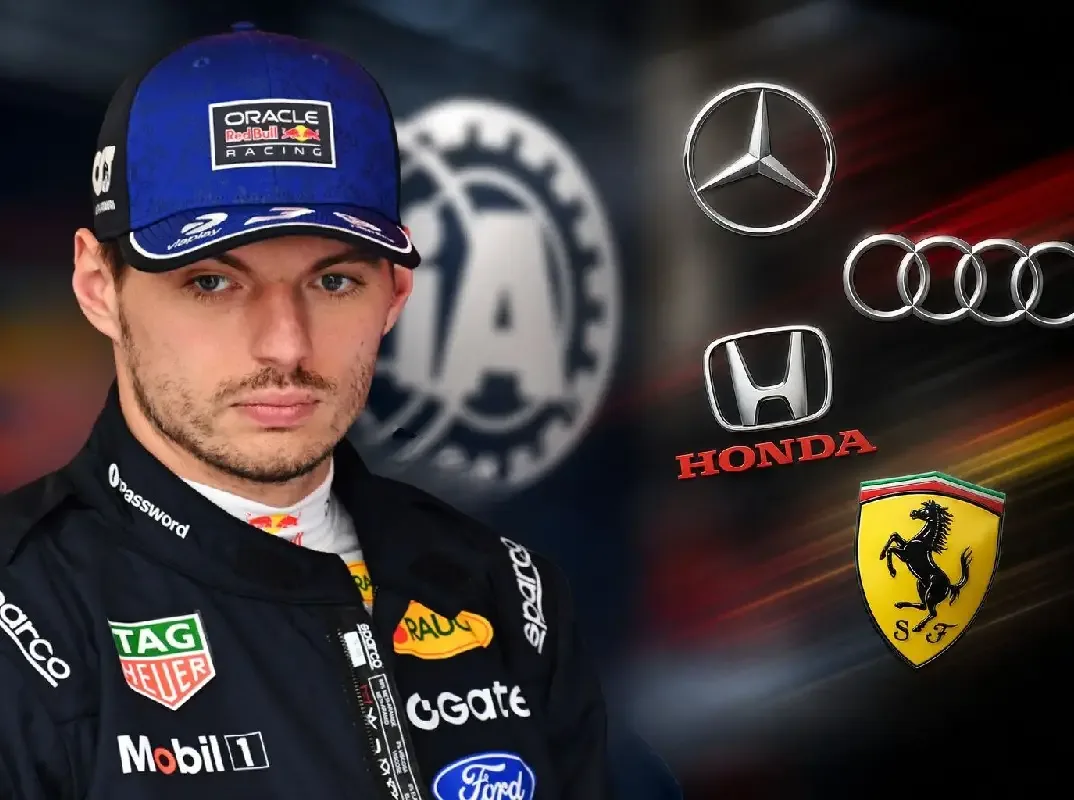
(Motorsport-Total.com) – While Montreal provided entertaining racing on the track, the paddock was dominated by one particular topic: 2027. Ahead of the Formula 1 race in Canada, the FIA announced that a fundamental agreement exists to change the ratio between combustion engine and electric power to 60:40, with the goal of bringing the combustion engine back to the forefront.
Read more The last F1 helmet of Gilles Villeneuve breaks all records
However, over the course of the weekend it became clear that the word “fundamental” in this statement did most of the work. As is often the case in Formula 1, the political reality proved to be far more complicated than it initially appeared.
This also became clear to Max Verstappen. On Thursday, he had spoken positively about the proposed direction, saying it would “definitely help” him to stay in Formula 1 next year.
However, when he realized how complicated the matter actually is behind the scenes, Verstappen warned that it would be “mentally impossible” for him to continue if the changes were ultimately blocked by political games.
The fact that the race in Montreal – just like the one in Miami – felt more natural than the Grands Prix before the April break does not change that. Verstappen argued that the entertainment value was not due to the rules and that Formula 1 drivers could put on a show even in rental cars.
The Dutchman received support from many other drivers during the media round. When asked, several drivers explained that despite the visual improvements for the fans, the fundamental problems from the cockpit perspective remain unchanged.
Formula 1 fails: These rule changes were a flop
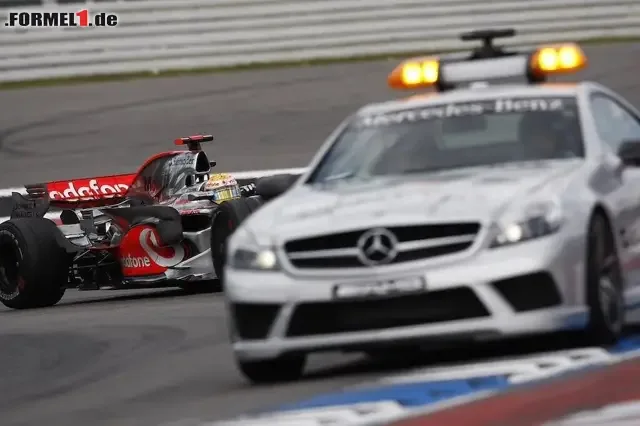
“Sometimes it’s super easy to overtake a car, but on the next straight you get overtaken right back immediately. It’s still hard to find a kind of rhythm where you feel like you’re really racing,” said Alexander Albon.
“Sometimes the speed differences [are so big] that you basically don’t want to defend anymore because it almost feels dangerous to move on the straight. So you just stay on your line and let the other car overtake you again.”
This means that almost all drivers seem to agree that more changes are needed to make racing feel more natural again – starting with the 60:40 split for 2027.
What Sainz really meant with his appeal to the FIA
When it became clear that this topic is highly political, Verstappen and Carlos Sainz were among those who called on the FIA to “take a hard line.” However, that is easier said than done. With the revised start procedures, the FIA could do this because it was allowed to push through changes for safety reasons.
However, the potential changes for 2027 do not seem to pose a direct safety risk, even though the drivers continue to argue that the approach speeds remain too extreme. But if the FIA cannot play the safety card, the governing body’s hands are largely tied to enforce changes.
In this case, it primarily comes down to achieving a supermajority among the engine manufacturers, which requires the support of four of the six parties. Now one might wonder why there are six manufacturers when there are currently only five different engines. This is because General Motors (Cadillac) has officially registered and thus also has voting rights.
When asked what exactly he meant by the FIA “taking a hard line” if the federation cannot intervene for safety reasons, Sainz clarified:
“I know. I know that this is actually [difficult]. When I said that and thought about it more closely, I realized that there is a commission where you can vote and the teams have a vote. I guess at that point I called on the FIA and the FOM to push it through and stick to it.”
“Because if they say it should be like that, I’m pretty sure the teams that complain or maybe aren’t quite on board will have no choice but to implement it,” said Sainz.
“Of course, everyone has to agree. But at the same time, I am a big fan of decision-makers taking a very hard approach and a strong stance if it serves the good of the sport, the races, and the show.”
Ultimately, it still comes down to gathering the necessary support. But Sainz would at least like the FIA to clearly take a stand before the vote and explain to the blocking manufacturers why the changes are necessary.
Why Ferrari could give the FIA headaches
Although that is a valid point, some manufacturers also need to look at themselves. First, it must be acknowledged that political interests are at play on all sides – including among the proponents of the changes.
Red Bull and Mercedes are both in favor of the changes, which is hardly surprising. As a company, Red Bull naturally has less interest in electrification than others, and they also employ Verstappen, the loudest driver on this topic.
Read more No straight-line zones: Active aerodynamics missing in Monaco
Mercedes emphasizes acting in the best interest of the sport and potentially being willing to give up an advantage – considering that the manufacturer is currently leading. However, a change in the engine regulations for 2027 could also create development opportunities for Mercedes that would not otherwise exist.
Mercedes does not seem to qualify for the ADUO system – the special regulations for further development for disadvantaged manufacturers. This means that with stable regulations, only the competitors would receive development opportunities, while Mercedes would not. Rule changes might therefore not be such bad news for them.
This brings us directly to one of the manufacturers that has consistently opposed the changes so far: Ferrari. According to the FIA, Scuderia is particularly focused on ADUO and has therefore tried to steer all discussions behind the scenes in this direction.
Ferrari is concerned that possible changes for next year could affect the ADUO system, which is currently Ferrari’s main focus. The team also emphasizes that the same employees responsible for implementing the ADUO upgrades would also have to handle any rule changes for 2027.
Formula 1 teams with at least five wins at the start of the season
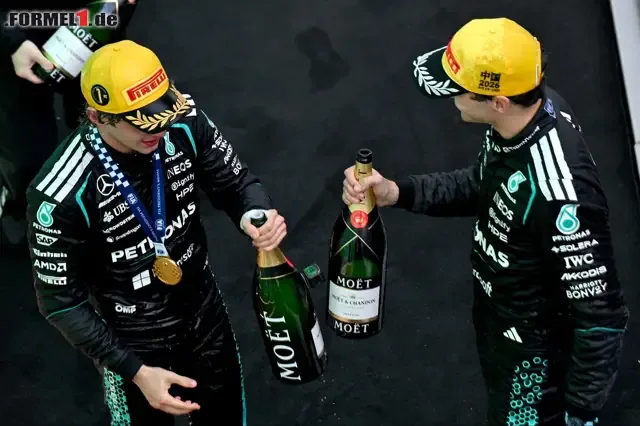
It is understandable to some extent that Ferrari looks at its own competitive position – wanting development opportunities for itself and wanting to prevent Mercedes from getting any – but the Italian manufacturer also needs to question itself.
Both Ferrari drivers have made it clear once again in recent weeks that the current regulations are not optimal. Charles Leclerc repeatedly spoke about qualifying sessions where drivers were practically punished for pushing harder, while Lewis Hamilton said the following on Sunday evening:
“It definitely doesn’t feel natural, that’s for sure. I think it remains a strange feeling. You go on the throttle, open the SM (Straightline Mode), and then the power drops halfway down the straight and the revs fall. Motorsport shouldn’t feel like that. The engine should rev at the limit until the end of the straight and just keep pushing.”
If Ferrari takes the concerns of the drivers, including its own pilots, seriously and really wants to act in the interest of the sport, they should think about their position before the Formula 1 commission meeting on Tuesday.
But this is a classic example of a conflict of interest: the own competitive interest stands against the interest of the sport – although everyone in the paddock always claims the latter comes first.
Can the financial concerns of Audi and Honda be resolved?
The second concern is financial. Audi and Honda are worried about additional investments that might be required. On the chassis side, this problem seems solvable. Several teams want to carry over this year’s chassis into the next season, and the team principals confirmed on Friday that a plan is already on the table: some races are to be shortened by a few laps and the laps in the starting grid limited to one per driver.
On the engine side, however, the situation is more complicated. If adjustments to the fuel flow are required, hardware changes to the engines will also be necessary – for example, because a higher fuel flow would have consequences for reliability.
These changes cost money, which Audi is not keen on, also because the brand from Ingolstadt might then have to negotiate again with the entire Volkswagen Group. The manufacturer with the four rings argues that so much has already been invested in the current power units that new investments just one year later are anything but desirable.
Red Bull team principal Laurent Mekies counters that such investments are insignificant if they improve the sport as a whole.
“I don’t think the amount of investment is relevant compared to the size of the sport. I think, to put it this way: we should solve the problem once and for all and not make it a constantly recurring issue,” he says.
Looking ahead to Tuesday, the core question is whether one of these two concerns can be resolved. If Ferrari, Audi, and Honda remain in their blocking stance for different reasons, a quick agreement could be difficult – or it might end up with a weaker compromise than the proposed 60:40 split.
Something the drivers would again be unhappy with.
However, if one of the two problems can be solved – for example, through a financial framework – the plan already published in the FIA statement still has a realistic chance of success.
Once again: political interests play a decisive role on all sides, both among the proponents and opponents, and that has always been part of this sport.
But if the drivers are united in the opinion that these changes are necessary to make Formula 1 feel more natural again, some manufacturers might have to reflect once more before next week’s meeting.
Read more Meeting in Monaco: Three possible scenarios for BYD entry