(Motorsport-Total.com) – The Monaco Grand Prix is a hot contender for the most boring race of the year, and 2026 will be no exception. But the magic of Monaco remains a unique experience, especially right at the track, and qualifying often makes up for many of the downsides.
Read more Leclerc extends at Ferrari: Right decision or dead end?

Just like last year, the start of the European season coincides with the most prestigious Grand Prix of all: Monaco. This means a race weekend in an iconic setting, a mostly breathtaking qualifying session, but also a “race” that divides fan opinion.
This is already evident in the run-up to this year’s edition, both on social media and in the comment sections: The Monaco Grand Prix is often described as a dreary procession, a parade that has very little to do with pure racing.
To these opinions, there is only one thing to say: Without drama or rain, they are spot on, absolutely correct. This feeling is shared by the drivers too. Max Verstappen joked during the 2024 edition, when an early red flag had removed any strategic option from the race: “This is so boring, I should have brought my pillow.”
Afterwards, the Dutchman said that, in his opinion, the track layout should be looked at – something for which GPDA chairman Alexander Wurz had submitted concrete proposals last year.
Reactions to the Stroll Race in Monaco 2025
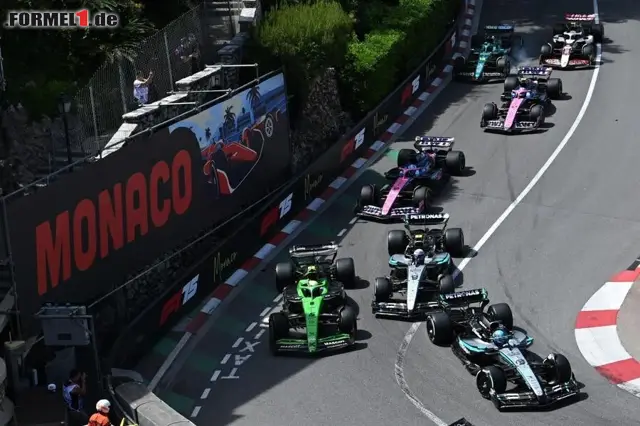
Among other things, he suggested widening the entry to the Loews hairpin, moving the Nouvelle Chicane further down towards Tabac to create a harder braking zone at the tunnel exit, and moving the apex of Rascasse outwards while slightly widening the track there.
Although these are reasonable suggestions that would not fundamentally change the track’s DNA, Formula 1 and its fans may simply have to accept Monaco as it is: completely different from any other race weekend. This applies to both the positive and the negative.
The positive is that qualifying gets fans off their seats like nowhere else and reliably delivers one of the most thrilling Saturdays of the year. The negative, logically, is that Saturday determines the outcome, leaving Sunday little more than a formality.
Last Year’s Pit Stop Experiment
Beyond the pure layout, various other initiatives have been attempted in recent years to make Sunday (artificially) more exciting.
Last year, the FIA introduced a mandatory two-stop race, also to avoid a repeat of the 2024 scenario, when everyone changed tires after an early red flag and hardly any pit stops followed afterwards.
An additional advantage – at least in theory – was that Monaco’s only real source of strategic tension (whether an undercut works or not) would occur twice during the race instead of just once.
The idea behind the plan was not unfounded, but the Formula 1 teams once again proved to be cleverer than the rulemakers, and the FIA’s intervention led to unintended side effects.
Teammates driving one behind the other on track could help each other by deliberately slowing the pace to allow the leading driver one – or in extreme cases even two – free pit stops.
Deliberately driving slowly obviously does not align with the spirit of what Formula 1 should be, and caused frustration among competitors – even to the extent that George Russell cut the Nouvelle Chicane.
While the experiment did create action, it may not have been the kind of action Formula 1 and the FIA had hoped for.
The rule initially remained in the sporting regulations for 2026 but has since been removed. In addition to the experiences from the previous year, the FIA also wants to first see how the new generation of cars behaves in the Principality before taking further steps.
Franco Colapinto has already stated that the driving feel for the drivers with the new power units and reduced downforce will be completely different. However, this is unlikely to change much for the race action itself.
While the FIA may have introduced the current regulations as a “Nimble Car Concept” (agile car), the differences are still modest: 20 centimeters shorter, ten centimeters narrower, and 30 kilograms lighter. This will not suddenly trigger a wave of overtaking opportunities in Monte Carlo.
Read more Nasty Tricks: How Michael Schumacher Wanted to Mentally Destroy Nico Rosberg
In fact, this brings the real problem directly to the point. Besides the racetrack itself, part of the problem lies with the cars. Overtaking in Monaco will always be difficult, but the size and weight that Formula 1 cars have taken on over time represent the biggest obstacle.
The 2026 chassis is a small step in the right direction, but by no means enough.
Due to increased safety requirements over the years and the hybrid power units, this trend proved inevitable. The only hope remains that the FIA will take another significant step to reduce the size and weight of the cars for 2031, or perhaps even earlier, combined with an engine formula that relies significantly less on electrical power.
A Walk Around the Monaco Track
But even until then, Monaco remains something special.
This applies to qualifying – and should also be the case in 2026, as energy management plays a lesser role here than on many other tracks – but even more so if you have the privilege of walking directly along the track in the Principality, knowing that not everyone gets this opportunity.
Anyone wearing a photographer’s bib in Monaco and standing directly behind the guardrails while cars shoot past half a meter away knows how unique this experience is. And, to be honest, how absolutely crazy the idea actually is to race Formula 1 cars through the streets of Monaco.
The walk begins at Rascasse and proceeds against the direction of travel. At the Swimming Pool chicane, it’s impressive how high the speed is on turn-in and how close the cars get to the guardrails – especially during qualifying runs.
From there, it continues towards Tabac, where there is a photo opening in the fence on the inside of the corner, but any attempt to use it is accompanied by an instinctive step backward.
Photos: F1: Grand Prix of Monaco (Monte Carlo) 2026


After that, it’s time to make your way to the Nouvelle Chicane, the most famous photo spot on the track.
At the end of the guardrails at the tunnel exit, near the pedestrian crossing, journalists and photographers can crouch directly on the asphalt to capture the perfect shot: a car turning into the first part of the chicane with the Monaco skyline in the background.
Despite the relatively low speed at this point, it remains a remarkable feeling that absolutely nothing – not even a guardrail – separates the photographers from the cars.
The path then continues through the tunnel towards Portier, where even today’s power units still sound reasonably loud – which is certainly not the case anywhere outside the tunnel.
This only fuels the imagination of how incredible a V10 must have sounded here. Perhaps from 2030 or 2031, we will get at least a piece of that feeling back, should V8 engines indeed make their comeback.
At Portier, some local knowledge is required. The route briefly leads away from the track before a series of steps and shortcuts bring you back near Mirabeau.
From there, you can walk to the inside of the Loews hairpin, which is another wonderful place to watch Formula 1 action on a Friday or Saturday afternoon: cars literally drive around you at the slowest point of the entire calendar.
This walk takes up most of a practice session, so afterwards you can either continue towards Casino Square and take a shuttle or make your way back to the paddock.
Such a lap around the legendary track is enough to understand how special the Monaco Grand Prix weekend is and remains.
Yes, the race is sleepy, and that will most likely be no different in 2026. But the unique setting and breathtaking qualifying still make Formula 1’s most iconic Grand Prix worthwhile in its current form – at least from my perspective.
Read more Helmut Marko: Mercedes can only beat themselves in 2026