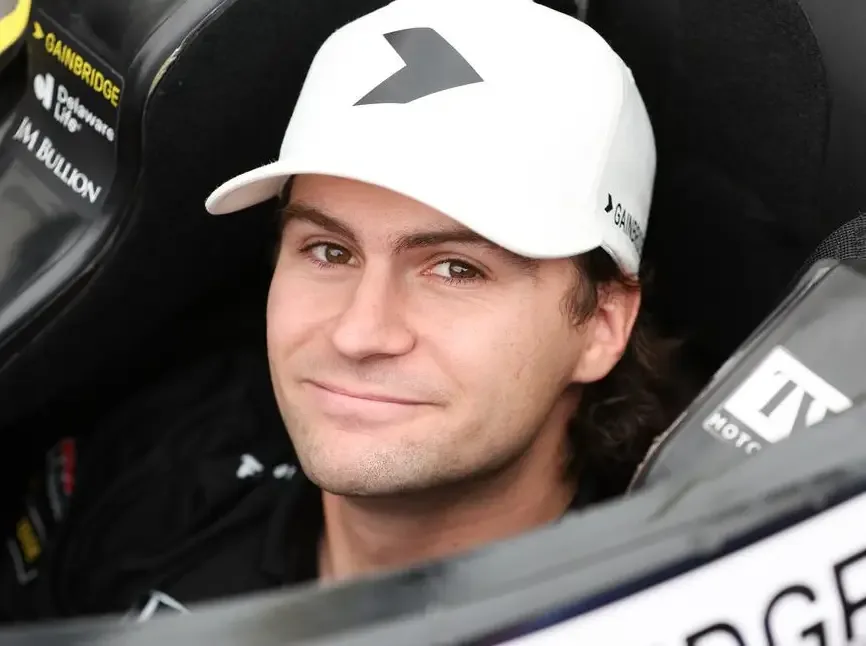
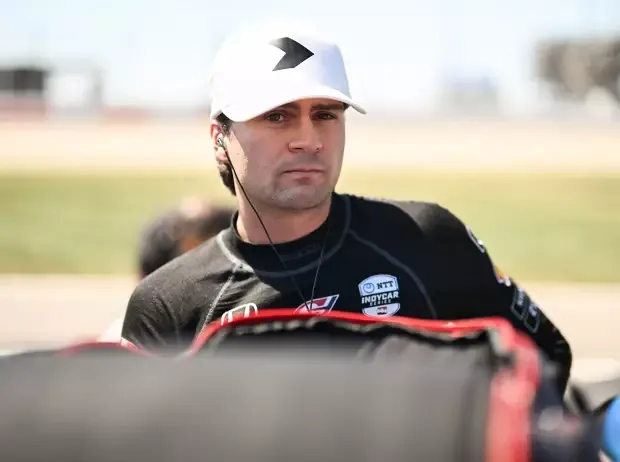
(Motorsport-Total.com) – Colton Herta has not yet buried his dream of Formula 1. But while he makes the bold move from the IndyCar series to Formula 2, the question arises: what are the chances really that he will make it to the World Championship?
Read more After escalation in the Middle East: Special rules for Formula 1 season start
As the son of IndyCar driver and team owner Bryan Herta, it was almost pre-programmed that Colton would develop an interest in motorsport. But as his formula racing career gained momentum, Herta quickly turned his gaze towards Europe.
At the age of 15, he participated in MSA Formula (now British Formula 4) and finished in third place – while a certain Lando Norris took the first of his many junior titles.
In 2016, Herta moved up to Euroformula Open at Formula 3 level and finished the championship in third place again, behind the more experienced drivers Leonardo Pulcini and Ferdinand Habsburg.
“Actually, Formula 1 is not my goal”
Was he already aiming for F1 back then? Not really. “Actually, my goal is not Formula 1. I never really had that interest – especially in the past seven years, in which one team has dominated,” he told Motorsport in December 2016, when the Mercedes dominance reached its peak after the Red Bull era.
“It seems like: if you get the wrong cockpit, you’re basically stuck in the midfield forever, fighting hard for one or two points and never being noticed by the top teams. That just bores me. No matter how good you are as a driver, if the guy in front of you is in the better car, he can pull away by 20 seconds by the first pit stop.”
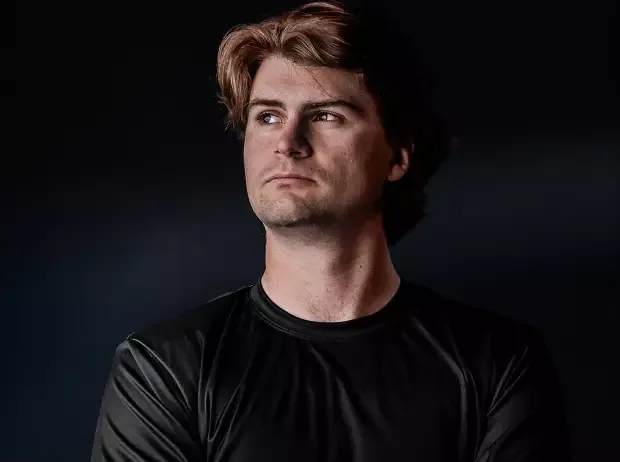
So why was Herta in Europe at all? “It’s better for learning because the fields are larger and more high-caliber,” he explained. “I learned more in my first year in Europe than in my first year of racing in America. I was 14 when I moved over, and that matured me a lot – faster than I would have here. I think it was the right choice, and I’m excited to see what comes next.”
Success came in Indy Lights, where Herta became “Rookie of the Year” in 2017, before losing out to debutant Pato O’Ward in the 2018 title fight. This was followed by the promotion to the IndyCar series, where he triumphed in only his third appearance in the top class and became the youngest winner in series history at the age of 18.
In the following seven years, mainly with Andretti, Herta increased his record to nine wins in 117 races, finished third in the championship in 2020 and runner-up in 2024. Already in 2019, he was described as a “real superstar” in Motorsport’s season review and was – apart from some error-prone seasons in 2022 and 2023 – mostly a top driver.
The rocky road via the super license
Formula 1, meanwhile, appeared on the horizon several times. In 2021, when Andretti tried to take over the Sauber racing team, Herta already tested in the team’s simulator, but the deal fell through.
The Cadillac design for 2026
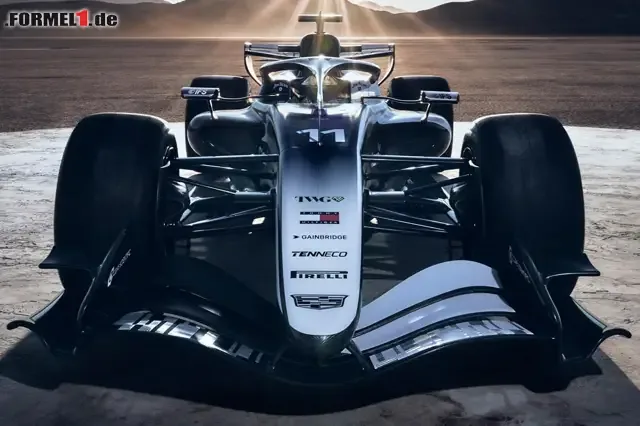
In July 2022, the American completed a two-day test with McLaren, while Red Bull began looking for a replacement for Pierre Gasly, who was moving to Alpine, at AlphaTauri. The brand had Herta in its sights, but despite his decent IndyCar results, he only reached 32 of the 40 required super license points. Red Bull eventually gave up on Herta and chose Nyck de Vries instead.
The Formula 1 hopes of the now 26-year-old seemed almost at an end, but Andretti’s Formula 1 application finally became a reality under the identity of Cadillac. The support of General Motors – and the upcoming engine program – brought the project across the finish line, despite the resistance of Formula One Management against a new team that, in their view, “represented no added value for the championship”.
Cadillac debut: Routine instead of US hype?
A much-discussed question was whether America’s newest Formula 1 team would sign a driver from the USA. Despite interest in Formula 2 frontrunner Jak Crawford, Cadillac opted for arguably the most experienced line-up a newcomer team has ever had: veterans Sergio Perez and Valtteri Bottas.
Former Sauber driver Zhou Guanyu got the job as a reserve driver; Herta was signed as a test driver while he makes the bold move from the IndyCar series to Formula 2. In Formula 1’s junior series, he will again try to collect the missing super license points.
The Californian currently stands at 34 points, so he is only missing six points – which corresponds to a top-8 finish in the championship. In addition, he can collect further points through appearances in Formula 1 free practice sessions.
It will be less about the raw results and more about gaining experience and, above all, proving that he has what it takes for the World Championship. A promotion in 2027 is not out of the question. “He has to earn it, right?” said Cadillac F1 team principal Dan Towriss last September when announcing Herta’s program for 2026.
Towriss expects a top-10 result from his protégé, who is competing for Hitech – a British team that has recently celebrated success in F2 and has achieved a total of 21 podium finishes in recent years with Paul Aron, Luke Browning, and Dino Beganovic.
Read more After McLaren exit: Alpine snaps up this top talent for 2026
Herta’s statement: “Don’t just want to fill the field”
When asked if he was confident of achieving the required top-10 result, Herta made it clear that he doesn’t just want to be an extra: “In everything I get into, I want to be competitive and strong. If the goal isn’t victory, I don’t see any reason why you should do it at all – that’s my attitude. How realistic or unrealistic that is, I don’t know. Time will tell.”
“But everything I do in motorsport, I try to give 100 percent. Approaching it with the attitude ‘Oh, let’s try to get into the top 15 and work our way up from there’ is, I think, the wrong approach. I want to be as fast as possible. I want to lead sessions, I want to win races. But I guess time will tell how difficult that will be.”
The pre-season tests in Barcelona were encouraging in this regard. Herta only finished twelfth in the standings over the three days, but was less than six tenths of a second behind the fastest Rafael Camara, the current Formula 3 champion, and exactly three tenths behind second place.
Herta described the contrast to IndyCar as a 180-degree turn. “This car is extremely different from anything I’ve driven before. It’s a big jump, a big difference,” he emphasized. “There are a lot of things to get used to. It’s getting better, but from my side, it doesn’t feel quite fluid yet. It will still take time until I know exactly: ‘Okay, I have to do this, I have to brake here,’ before I go into battle.”
The Pirelli problem: Management is everything
Herta’s career step is in some ways unprecedented. In the modern era, no IndyCar frontrunner has ever moved to the Formula 1 preparatory school. While there were drivers like Gianmaria Bruni, Timo Glock, Romain Grosjean, or Giorgio Pantano who went back to Formula 2 (or GP2) after a Formula 1 stint, that was two decades ago and they were, unlike Herta, not such established professionals in another top series.
The most relevant