(Motorsport-Total.com) – Although Damon Hill became Formula 1 World Champion in 1996, there was no place for him at Williams the following year. The Brit took the number 1 to backmarker Arrows for the 1997 season, while Heinz-Harald Frentzen took over his cockpit alongside Jacques Villeneuve.
Read more Mixed feelings: Why Red Bull is not satisfied yet in 2026

In an interview with Formula1.com, Hill has now revealed why Williams, in his opinion, showed him the door back then: “Over time, it became clear to me, among other things, that there was a trend in Formula 1 towards Germany in terms of the market – and that was because of Michael.”
Michael Schumacher had become world champion twice with Benetton in 1994 and 1995 and then moved to Ferrari. At that time, Formula 1 was booming in Germany, and Hill believes that Williams simply wanted a piece of the cake as well.
“A lot was invested in TV, and Germany was gaining increasing importance. Therefore, a German driver was important for Formula 1 marketing. And it was said that Frentzen was just as good as Michael – at least when he was still driving sports cars,” said Hill.
How Williams explained the decision to Hill
At least this part of his theory coincides with statements from, for example, Flavio Briatore, who brought Schumacher to Benetton in 1991. A few years ago, the Italian claimed that back then “more or less everyone” in Formula 1 would have preferred to sign Frentzen over Schumacher.
While “Schumi” made his entry into the top class already in 1991, Frentzen followed three years later. He debuted in 1994 for Sauber and drove three years for the Swiss team before moving to Williams as Hill’s replacement for the 1997 season.
Ten world champions who miscalculated when changing teams
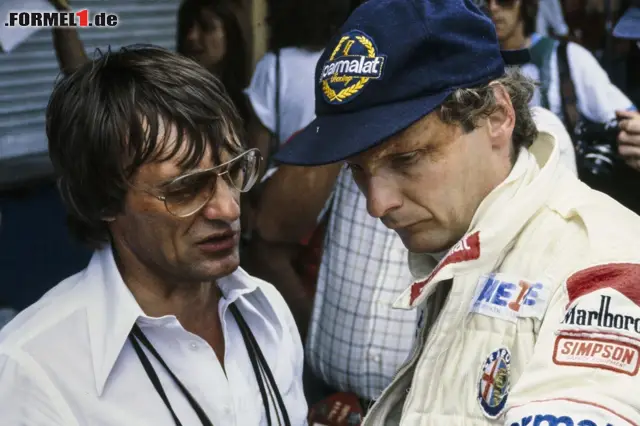
The Brit recalls a meeting with team boss Frank Williams in 1996: “When Frank told me they would let me go, he said: ‘I have to think about the future of the team.’ That was his answer, his excuse. And I said: ‘I’m not the future? Why is that?'”
Although Hill was already 36 years old when he won the title in 1996, seven years older than Frentzen and even eleven years older than teammate Villeneuve, Hill does not believe that his age was the real reason for the decision. “Years later I did a bit of research,” he reports.
Read more Gabriele Mini: Then I should have a chance at the Alpine cockpit!
What role did BMW play?
Williams may have also had “the use of BMW engines” in mind when signing Frentzen, “which eventually happened,” Hill recalls. Indeed, Williams and BMW agreed on a partnership in 1998, and from the 2000 season, the German manufacturer supplied the team with engines.
“I believe a German driver was crucial in that,” says Hill, who sees himself as a victim of this situation. “Basically, it didn’t matter what I did in 1996. Frank had already signed two drivers for 1997. So there was no place left,” he shrugs.
The Williams story
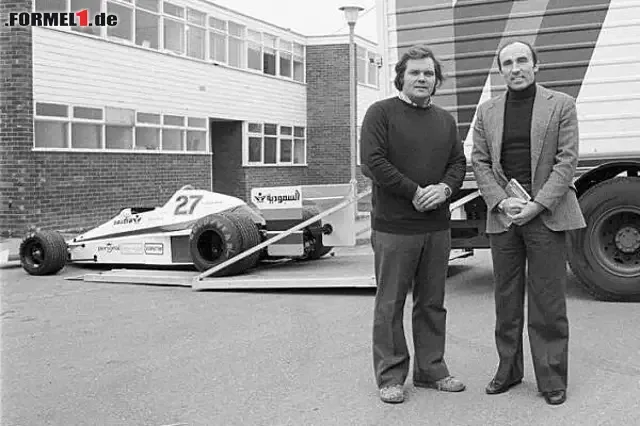
Frentzen himself, by the way, never sat in a Williams-BMW. He only drove for the team for two years before being replaced by Ralf Schumacher for the 1999 season. BMW thus got a German driver when returning to Formula 1 in 2000 – but not Frentzen.
He switched to Jordan for the 1999 season and became Hill’s teammate there. While Frentzen surprisingly fought for the title in the Jordan 199 that year and finished third in the championship, Hill ended the season in twelfth place and retired from Formula 1 at the end of the year.
How Patrick Head presents the Williams perspective
Williams co-founder Patrick Head described in the podcast Beyond the Grid several years ago how, in his opinion, the separation from Hill happened back then. His version of the story differs significantly from Hill’s theory.
Hill’s then-manager Michael Breen simply asked for too much money. “He was arrogant and told Frank that Damon would no longer drive for Williams unless the salary was five times higher than his 1995 salary,” Head recalls.
Frank Williams then sent Breen home, and the team “started thinking about other drivers” in response, says Head, who in retrospect calls the separation from Hill a “big mistake.”
Read more Max Verstappen: Can still drive in Zandvoort — just not F1
At least on this point, both sides are likely to agree.