(Motorsport-Total.com) – The first months of the partnership between Honda and Aston Martin were extremely painful, but now the Japanese manufacturer is looking forward again. Honda’s Formula 1 project differs fundamentally in personnel from the glorious years with Red Bull.
Read more Bortoleto excites Audi: McNish praises the Brazilian’s potential

This already led to the realization in January that the start of this new era would be problematic – even more problematic than expected, as Shintaro Orihara, General Trackside Manager and Chief Engineer, admitted.
In Zandvoort, the Japanese manufacturer will introduce its first ADUO upgrade of the year, which focuses entirely on the combustion engine. This step is intended to bring Honda back to the top group in terms of engine performance.
However, several more upgrades will be necessary to completely close the gap. Development is planned to continue in 2027, which is already a major focus behind the scenes.
“For 2027, slightly changed rules apply to the fuel flow rate, but our development program remains the same. We need to continue improving our combustion performance,” Orihara says in an exclusive interview with Motorsport.com.
He emphasizes: “So we will continue to focus on increasing the performance of our combustion engine and want to make bigger development steps in 2027. That is our main focus.”
According to Orihara, the new engine and chassis also offer the opportunity to better integrate Honda’s power unit into Adrian Newey’s design. At the beginning of this year, there was extensive discussion about alleged short-term demands from Newey and the associated complexity.
Crash and failure: These Formula 1 mega projects were never successful
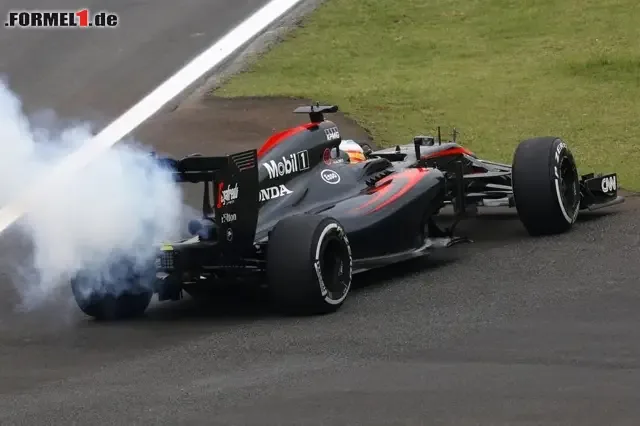
After a year of working together, however, opportunities are now emerging to improve integration for the upcoming season. “We are in close contact with Aston Martin to better integrate our power unit into the new chassis,” says Orihara.
“So we are now focusing on developing a good engine for 2027 and are working closely behind the scenes with Aston Martin,” he reports.
Despite a difficult start, Honda sets ambitious goal
Honda’s previous Formula 1 phase also started difficult but ultimately ended with several world championship titles alongside Red Bull and Max Verstappen. Given the current problems, no one in Silverstone at Aston Martin or in Sakura at Honda is currently thinking about wins – let alone world championships.
However, the past gives reason for confidence that a turnaround can succeed again in the long term. When asked about the expected timeframe to reach the targeted competitive level, Orihara says: “It is difficult to give an exact timeframe in Formula 1 because our performance is always relative to that of another competitor.”
Read more Mika Häkkinen: Why the duel with David Coulthard never escalated
“After the summer break, we want to reconnect with the leading group. At the same time, we are working intensively in the factory to make an even bigger step for 2027. But we should also remain realistic here,” he emphasizes.
“I think that at the beginning of 2027 we may not yet have the best power unit, but we will be closer to the best competitors. After that, we will continue to work hard to – I hope – become a top competitor ourselves in 2027 or 2028.”
Honda thus aims to be the benchmark in Formula 1 again by the end of the upcoming season or the beginning of the 2028 season – or at least to belong again to the top group of power unit manufacturers.
Could reliability become a problem again in 2027?
Closing the gap is not the only aspect Honda must consider for the coming year. All manufacturers must also be prepared for the announced changes in fuel flow rate.
These are part of the broader shift towards a ratio of 58:42 between combustion engine and electric power in 2027. For 2028, a split of 60:40 is then planned. “The biggest challenge will probably be reliability,” says Orihara.
“Even if the fuel flow rate were not changed, further reliability developments would be necessary on our part as soon as we increase performance. That is to be expected anyway.”
“Now, however, we are additionally increasing the fuel flow rate. This makes the demands on reliability quite large. So for us, it is about improving combustion and beyond that increasing the fuel flow rate.”
Nevertheless, Orihara considers it feasible that Honda will achieve the required reliability level despite these changes. “The demands on reliability will be high, and the development time is quite short. So that is a challenge. However, reasonable steps have been taken thanks to the FIA.”
“If we had to reach a large number within one year, that would be a big problem. But since the change has now been split into two steps, that is a reasonable scale in terms of performance increase – also considering that we have to provide a good show.”
“Reliability remains a challenge, but I think it was a good decision,” says Orihara.
Read more Bearman in the 1985 Senna-Lotus: A deeply emotional moment