(Motorsport-Total.com) – What big secret is Williams planning for its Formula 1 car? Team principal James Vowles is cryptic and only says that parts for the car are now being built in a completely new way and that the competition will be watching. “If they can figure out what we have done,” he adds.
Read more This is how the first F1 Friday in Madrid went: Best time Antonelli, crash Lindblad

Behind the closed doors of the Williams factory, a methodical revolution is taking place in the manufacturing of central vehicle components. “The main thing is this: It is specifically about what we have done with the chassis and other elements, which are large, massive carbon structures,” says Vowles.
“So it’s not about a small wing, but about a fundamentally new way of working. There was a traditional method for 15 years. And what we have done now is completely different from what we have done in the last 15 years – really completely.”
The Brit does not want to reveal more on the subject. More than that: even internally at Williams, it is kept a big secret. “Even in our building, only seven people in the design department are informed about it. And in manufacturing, only twelve people knew what we were doing,” he says. The reason: “You have to protect something like this for as long as possible now.”
“But everything is good: The part is produced, has very high quality, and has passed all required tests. It is ready for use,” emphasizes Vowles. “So I am very satisfied with it. And it is much lighter and at the same time more stable.”
Why Williams has to take different paths
He consciously accepts that this radical realignment has cost valuable development time and that the construction of the car took longer: “Because for our future, it’s not just about building a product that is simply lighter. We could easily do that. We could just make the parts lighter and correct our mistakes. But that would not be a good way to spend money,” Vowles makes clear.
The Williams Story
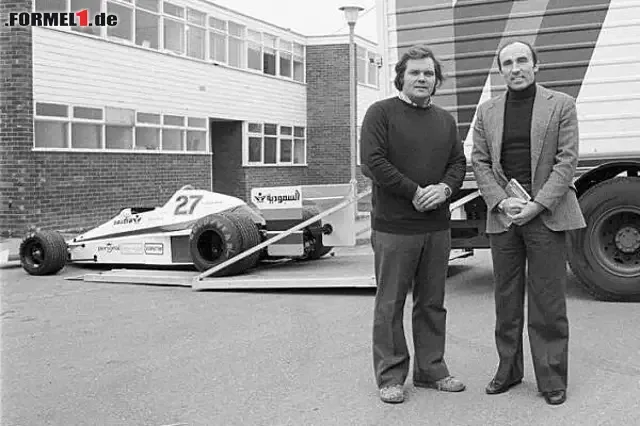
“A smart investment is when I get ideas on how things can become more stable and lighter, which take longer but are based on a completely different path. That means we start to learn completely new techniques and methods – and we invest in that at the same time.”
“Just making a part lighter is not the decisive factor. Sure, it brings lap time, but then in twelve or 24 months we would be exactly in the same place again,” says the team principal. “And there is a big difference: One is real innovation for me. The other is just a minor improvement of what we are already doing.”
Disadvantages in infrastructure
However, this inventive toughness is also a sheer necessity for Williams to survive, as the team suffers extremely from the structural disadvantages of the past. When asked how difficult it is to catch up in infrastructure, Vowles gives deep insight into the financial imbalance.
“The biggest difference is this: When I compare us with Mercedes, Red Bull, or Ferrari, these teams no longer invest in basic CAD software, PLM, or ERP systems. I know these are all acronyms, but basically, it’s about the software with which you build a car in the first place. We invest six to eight million per year in this – period. And that already makes a huge difference.”
The current Formula 1 team principals
This results in two problems for the team: First, the employees have to adopt a working method that is about 30 percent less efficient according to Vowles. And second, the money invested in this development is missing from the budget cap for improving the car.
“Something like this cannot be caught up in a single year. We have a plan on how to achieve it, but it will take time,” says Vowles.
Read more Spain Friday: Crash Festival at the new Madring!
That pure building investments are outside the cap does not help with the software problem, Vowles emphasizes with a smile: “Regarding the building alone: yes. But everything I just described: no. None of that falls outside the budget cap.”
Budget cap helps the big teams
Because the financial regulations bind chasing teams more than they help them, he believes. “The budget cap is an extremely good element, really. It has turned Formula 1 into a functioning business. The downside, however, is that it freezes existing disadvantages and it takes an extremely long time to work out of this hole again, while the others continue to invest cheerfully.”
“The budget cap was ultimately created for the biggest teams,” emphasizes Vowles.
Formula 1 Quiz
The average starting position of the Williams team in Formula 1 is?
Test yourself now in the Formula 1 quiz and compare yourself with other users
He shares the view that established big teams have been able to maintain their lead but paints a nuanced picture of the regulations: “The budget cap has many facets. There were several goals back then. First, we wanted to create a sport that investors want to enter because it makes economic sense.”
“We can check that off. It has definitely gotten better because now it is a real business. Before COVID, it was not a business. But there were other goals.”
“Goal number two was to bring the field closer together. That has not happened. On the contrary,” says Vowles with a view to the current balance of power. “Whoever had an advantage keeps that advantage preserved.”
Changes yes, abolition no
The team principal would like to change this circumstance because otherwise, it would take “extremely long” until there is a leveling of the field – if it happens at all. “But Formula 1 is showing understanding here, and the FIA is also receptive,” says Vowles. “So let’s see what progress we can make in the next few years. I don’t have a ready solution now.”
However, the Williams team principal rejects a complete abolition of the regulations: “It is not true that the budget cap is only good for the top teams. If we completely abolished it, the expenses of teams like Mercedes would explode. They always want to win. The numbers would double, triple, quadruple.”
“The sport would not be healthy in three years because it would collapse. And since some car manufacturers are struggling in the civilian world, it could bring them to a point where they simply cannot afford it anymore,” he says.
“So we have a sustainable business for the next 20, 30 years. That is good. Now we just have to find a mechanism that enables a real meritocracy again, where everyone can work with the same tools.”
Read more Six stops? Mercedes amazes with curious tire forecast in Madrid