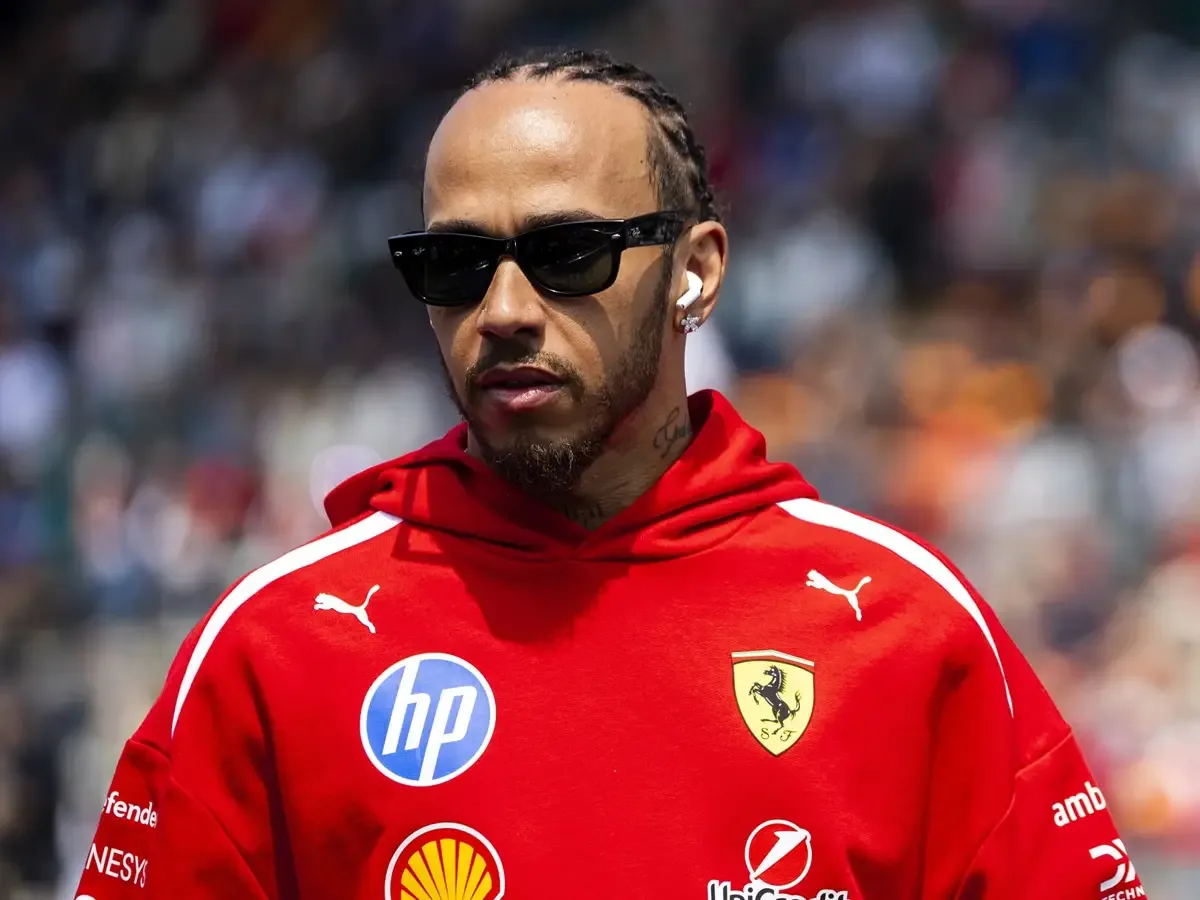
(Motorsport-Total.com) – Lewis Hamilton has reopened an old Formula 1 question in Miami: How much influence should drivers have on the regulations? The Ferrari driver demands that the pilots not only be heard but also “get a seat at the table.”
Read more Williams tackles problems in «baby steps»
The trigger was the package of rule adjustments decided before the Miami Grand Prix. The changes came about unusually pragmatically. Instead of long trench warfare over details, there were several talks between the FIA, Formula 1, and selected drivers.
Hamilton himself was not part of this group. Nevertheless, he praised the process and made it clear that drivers, as end users of the cars, need to be involved more often. “We all work together, we all meet, but we have no seat at the table,” he said.
“Talk to us!”
The seven-time world champion sees a need for catch-up especially on topics like tires and driving behavior. At the Pirelli test in Fiorano, he emphasized that they do not want to publicly criticize the tire manufacturer but work together on a better product.
Modern Formula 1: These drivers drove for the most teams
“The feedback comes from people who have never driven a car,” Hamilton said in essence. Therefore, Pirelli, FIA, and Formula 1 need to speak more directly with the drivers. “We don’t want to badmouth our sport. We want it to be successful.”
Max Verstappen, one of the sharpest critics of the current regulations, sees it similarly. The Red Bull driver was involved in the talks and says: “I hope it will increase. We can really provide good input.”
Team principals cautious
Verstappen goes even further. If this involvement had existed five or six years ago, “we probably wouldn’t be in the position we are now.” He means cars that many drivers find too heavy, too sluggish, and too dependent on the aero map.
The reaction from team principals is noticeably more cautious. Ferrari team principal Frederic Vasseur responded humorously in Miami to the question about a bigger table: “We are still looking for the table.” Substantively, however, he does not see the drivers excluded.
Vasseur points out that the drivers were part of the discussion on the recent changes to the engine regulations. “They have different views, and it is not always easy to find a compromise,” said the Ferrari team principal.
Table too small or too big?
Formula 1 Quiz
At which track was the 1988 Belgian Grand Prix held?
Test yourself now in the Formula 1 quiz and compare yourself with other users
From the teams’ perspective, this is exactly the crux. Drivers often think very precisely about grip, balance, tire windows, and drivability. At the same time, they are part of a competition where every technical detail can also help their own team.
Read more Haas in Miami without points, but: a major update is coming in Canada
Williams team principal James Vowles therefore sees limits. Carlos Sainz was consulted before the Miami adjustments, Nikolas Tombazis involved him and other drivers meaningfully. But even more participants could paralyze the process.
“We are probably already too many at the table,” said Vowles. “You just go around in circles. Five more people won’t help.” More sensible would be one representative of the drivers, either before an FIA meeting or directly in the session.
Maintaining neutrality
Vowles explicitly names a potential danger. Formula 1 must avoid rule processes being steered towards a particular power unit manufacturer. It is crucial to separate the genuine driver perspective from team interests.
The FIA tried exactly that in the recent talks. Six experienced drivers from teams with different engine partners were invited: Verstappen, Sainz, George Russell, Lando Norris, Charles Leclerc, and Nico Hülkenberg.
Tombazis spoke of a cross-section of competitiveness and experience. The talks took place virtually. Initially early in the process, later again when the concrete proposals had already passed through several instances.
On the right track
Leclerc also praised the attitude of the drivers towards each other. Normally, drivers are programmed to think only about performance. In these talks, they put their own advantage aside and talked about the feeling in the car.
Especially in qualifying, a Formula 1 car should feel more like Formula 1 again for Leclerc. It is about precision at the apex, confidence when turning in, fewer artificial compromises, and driving behavior that corresponds to the pinnacle of motorsport.
The debate shows the core of the problem. Drivers provide the most direct feedback on stint progression, tire degradation, balance, and overtaking opportunities. At the same time, teams fear that an open rule process will become even more political and cumbersome.
Read more Miami Data: Red Bull is catching up massively — Ferrari update flopped?