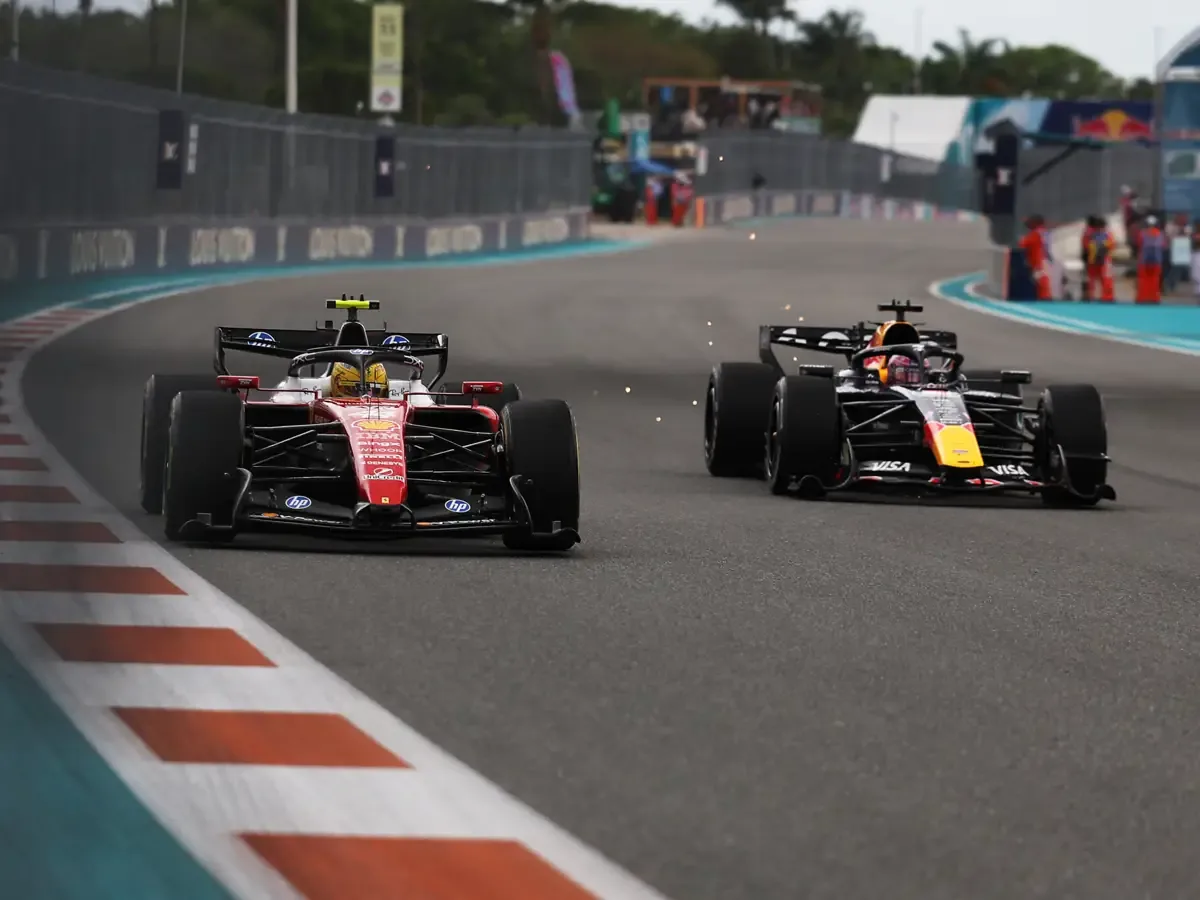
(Motorsport-Total.com) – After a five-week break, the balance of power in Formula 1 seems to have been significantly disrupted. Although the winner in Miami was the same as before in Japan, Andrea Kimi Antonelli, a wave of updates and possible adjustments in battery usage could have sustainably shifted the pecking order.
Read more Interpol investigates: Sutil’s 22-million Koenigsegg hypercar missing
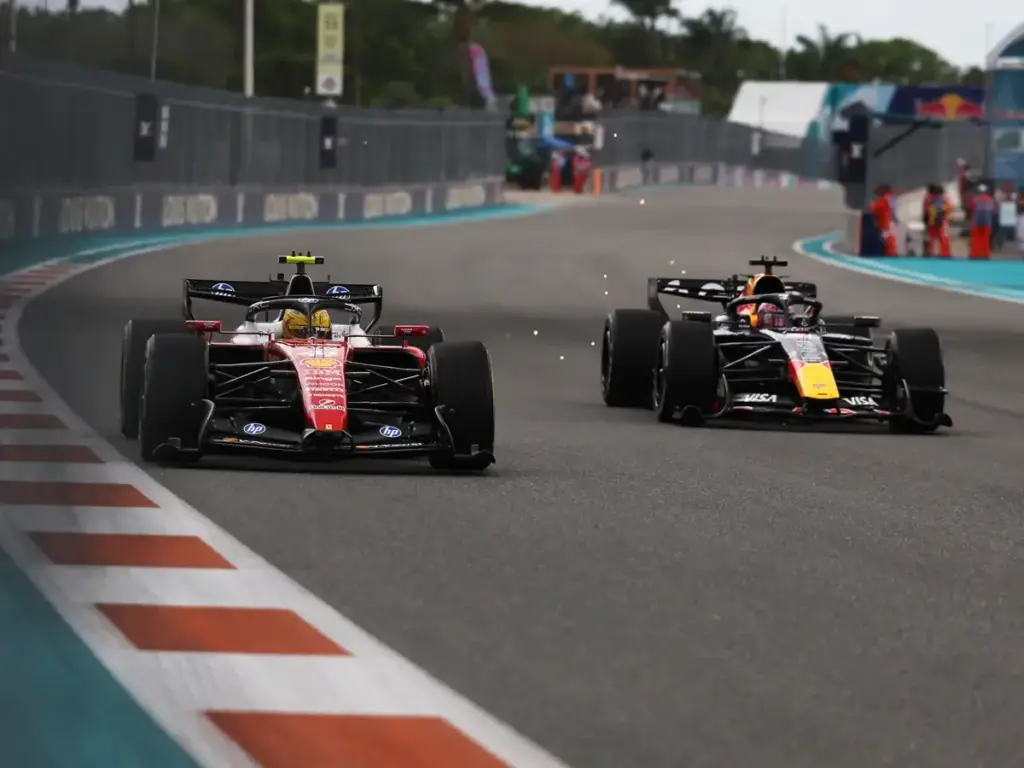
A look at the season average of the first three race weekends in 2026 shows: Mercedes was initially the dominant force. In qualifying, the lead over the first pursuer was 0.56 seconds, and in race pace, they were even 0.53 seconds per lap ahead.
In Miami, this lead was significantly smaller. Antonelli’s pole lap brought “only” a 0.35-second advantage, while Mercedes could distance McLaren by just 0.02 seconds per lap in the race. Overall, the Silver Arrows lost about two tenths on a fast lap and more than half a second in race pace compared to the start of the season.
Only updates responsible? The reasons for Mercedes’ slump
A key factor is quickly identified: While the competition brought extensive update packages in Miami, Mercedes held back. Only two adjustments were introduced – an optimization at the rear to reduce air resistance and an update to the front brake ventilation.
The competition was much more aggressive: Ferrari brought eleven new parts, Red Bull and McLaren each seven – with visible effect. Mercedes, on the other hand, plans its bigger update only for the upcoming race in Canada.
But the shift cannot be reduced to this alone. Two other factors play a central role: the track characteristics and possible rule adjustments.
It was known that Miami traditionally is not a strong track for Mercedes. Only in 2025 did they achieve a podium there for the first time. Historical data also shows that Mercedes had on average 0.22 seconds per lap more deficit to the top in Miami than in the season average – a significant reason for the weaker performance.
On the other hand, the participants do not see rule changes as decisive. McLaren team principal Andrea Stella emphasizes: “Our progress had nothing to do with the changes. Our levers are corner grip and powertrain usage – and we have made progress there.”
Development race: Red Bull and McLaren catch up massively
Among the chasers, a different picture emerges: Red Bull made the biggest leap. Compared to the first three season races, the team gained 0.92 seconds per lap. Even after adjusting for the track factor, there remains a gain of 0.7 seconds – an enormous progress.
McLaren also improved significantly and came 0.80 seconds closer to the top. Considering the track characteristics, the value is even 0.87 seconds, noting that a clear performance increase was already visible in Japan.
Comparing the race pace with the second stint in Japan, McLaren was 0.51 seconds per lap closer to Mercedes in Miami. Adjusted, this results in a real progress of about 0.56 seconds.
Read more Nico Hülkenberg with gentle criticism of Audi: «We also have to implement it»
Ferrari: Many updates, little effect?
Ferrari brought the largest update package with eleven new parts – but the effect remained modest. In Miami, the deficit in race pace was 0.46 seconds per lap, compared to 0.53 seconds in the previous season course.
This corresponds to an improvement of only 0.07 seconds. However, since Miami is considered a rather favorable track for Ferrari, the track-adjusted result even shows a deterioration of 0.18 seconds per lap.
Whether this impression holds will only be shown by the upcoming races. The sprint format with limited practice time could also have played a role. Possibly Ferrari has not yet been able to extract everything from the package.
Midfield: Shifts with question marks
There were also significant movements in the midfield. Williams made a big step forward with a gain of 0.8 seconds per lap and collected important points. But here too, the track factor relativizes the impression: instead of eight tenths, the updates might have brought only about 0.23 seconds.
Alpine brought six new parts and improved by 0.24 seconds – track-adjusted, however, this corresponds to a minimal setback of 0.02 seconds. An indication of how intense the development race has become and that medium-sized updates now only suffice for consolidation.
Audi & Haas: Hardly any updates, clear losses
Haas and Audi suffered particularly from lack of further development. Together they brought only three updates. Haas lost 0.45 seconds per lap – despite actually strong track. Audi lost 0.16 seconds, which track-adjusted even corresponds to a significant setback of 0.91 seconds.
Surprisingly positive was Aston Martin: despite missing updates, they were able to improve by 0.44 seconds, or 0.28 seconds after adjusting for the track factor.
The balance is particularly negative for Racing Bulls: despite six updates, the team lost 0.86 seconds per lap – the biggest setback in the field. Cadillac brought nine new parts but could only achieve an improvement of 0.02 seconds – well below expectations.
The development race remains the decisive factor in 2026. After only one race, no final conclusions can yet be drawn, but Canada could already reveal the next shift in the balance of power.
Read more Aston Martin: Are the vibrations really gone — or still there?