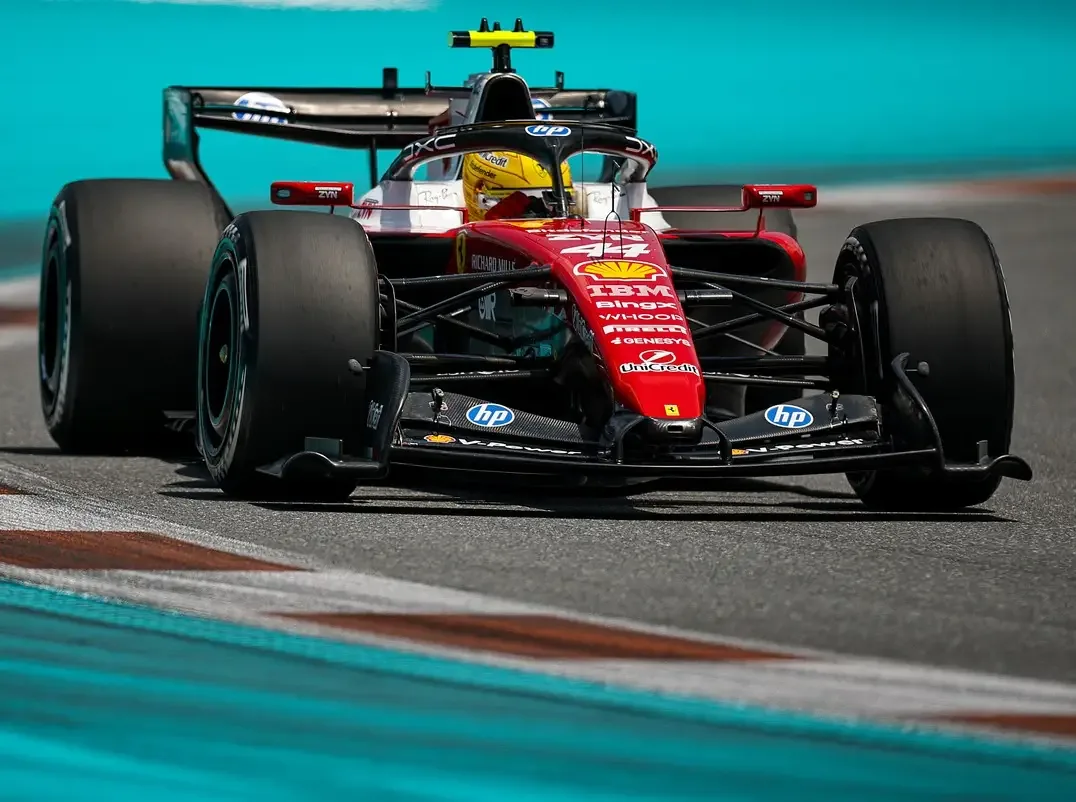
(Motorsport-Total.com) – Ferrari is pursuing one of the boldest technical approaches in the entire Formula 1 field with the SF-26. Instead of focusing solely on maximum engine power, Maranello relies on a uncompromisingly integrated overall concept, in which the powertrain, chassis, and aerodynamics were developed as a closely interlinked unit.
Read more F1: The Macarena rear wings of Ferrari and Red Bull compared
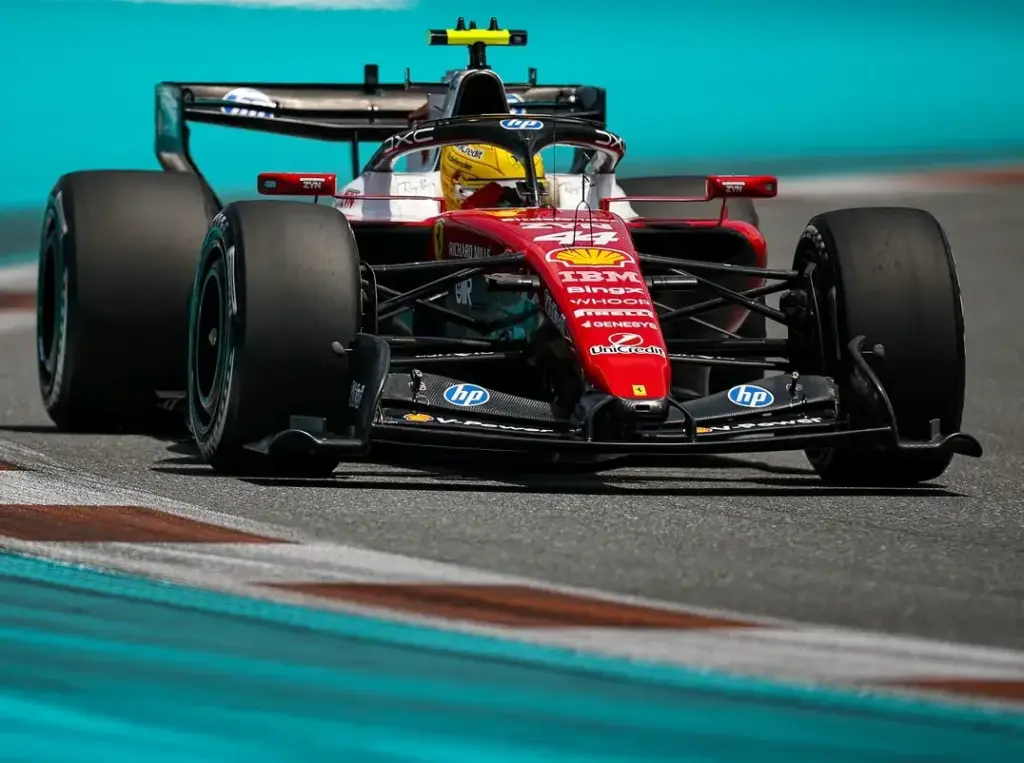
This unconventional philosophy carries significant risks but at the same time opens up development potentials that go far beyond pure performance parameters. An analysis.
Unlike all other manufacturers, the Ferrari engine has a cylinder head made of steel. When this information first became known, the choice of a heavier alloy than aluminum initially seemed implausible, although steel is significantly more durable. According to current information, however, Enrico Gualtieri and his team have pursued a completely novel development approach.
Why the Mercedes power unit achieves higher peak performance
An internal combustion engine usually reaches its highest efficiency when the temperature of the intake air remains as low as possible: the cooler the air – typically between 70 and 80 degrees Celsius – the more efficient the combustion process.
Ferrari, on the other hand, has chosen a revolutionary special path. The six-cylinder turbo 067/6 operates at significantly higher temperatures. The intake air is supposed to be well above 100 degrees, with the exact value kept strictly secret.
At first glance, this decision seems risky but could partly explain why the Ferrari power unit lags behind the Mercedes M17 in peak performance, which is currently considered the reference in the field.
The advantage of one location for all departments
In Maranello, a concept was deliberately pursued in which the powertrain is not understood as the sole performance factor. Rather, the power is intended to arise from the closest possible integration of powertrain and chassis to unlock development areas that remain closed to the competition.
Formula 1 Quiz
Which team has led the most races in Formula 1?
Test yourself now in the Formula 1 quiz and compare yourself with other users
Ferrari benefits from its special structure here, as the SF-26 is developed, designed, and built almost entirely within the same factory. Alongside Red Bull, Ferrari is thus one of the few teams that can realize chassis and powertrain so closely interlinked, while, for example, Mercedes or Audi distribute their development departments across different locations.
Why Ferrari deliberately foregoes power
The hot-running engine offers significant advantages despite reduced peak power. Due to the lower cooling load, the sidepods can be designed much more compactly, which saves weight and gives the aerodynamicists greater freedom in shaping the bodywork.
Ferrari has apparently deliberately foregone about ten to twelve horsepower to implement a more aggressive aerodynamic concept. The heat exchanger between chassis and powertrain, for example, is more compact and further improves packaging.
Read more Fernando Alonso: New 10-Million Car with Special Extra
Ferrari takes its own path with exhaust, turbo, and diffuser
Another central component of the project is the exhaust solution. The higher exhaust gas temperatures enable a targeted aerodynamic benefit through an enhanced “blow effect”.
The so-called FTM system, the “Flick Tail Mode,” is considered a particularly innovative solution. It deliberately exploits regulatory interpretation leeways of the FIA, where an exhaust bracket becomes aerodynamically effective.
The update introduced in Miami significantly improves the efficiency of the diffuser and simultaneously increases the effect of the rear wing. Although this solution costs an additional five to seven horsepower, the aerodynamic advantage is said to be about half a second per lap, which clearly overcompensates for the power loss according to current simulations.
Ferrari also takes its own path with the turbocharger. The Garrett turbo used is about ten millimeters smaller than the systems from Mercedes and Red Bull. This configuration offers advantages in acceleration and energy recovery but leads to disadvantages in top speed and peak power. About seven horsepower are said to be missing in the upper rev range, which explains the previous difficulties of the SF-26 at top speed and superclipping.
The actual advantage is not yet apparent
The engine concept should therefore not be fundamentally judged as a wrong decision. Ferrari has an exceptionally efficient aerodynamic rear concept that hardly any other team can currently replicate. The real problem is that the missing peak power prevents fully translating this aerodynamic advantage into lap time.
The last 20 Ferrari drivers on the podium

With the ADUO program, Ferrari now aims to halve the gap to Mercedes. The further development apparently focuses on an even more aggressive combustion strategy, optimized high-temperature processes, and a revised turbine geometry to improve high-rev performance without questioning the basic concept.
The remaining gap must, however, be made up through the overall vehicle. Besides aerodynamics, this particularly concerns chassis setup, tire management, and vehicle balance.
Where the current Ferrari package has its limits
The Miami weekend exemplified the weaknesses: falling tire and track temperatures after the safety car phase caused Leclerc not to bring the tires immediately into the optimal temperature window, which caused additional wear and ultimately cost performance.
The SF-26 concept is thus by no means a failure but rather a highly complex approach whose complete technical tuning is not yet finished. However, if the FIA restricts the aerodynamic benefit of exhaust blowing from 2027, Ferrari could be forced to realign central elements of this development philosophy.
Read more ADUO: Questions and Answers about the Formula 1 «Catch-up Program»