(Motorsport-Total.com) – Rob Smedley has criticized some modern race engineers for the time they take to relay important information to the drivers. In a conversation with former Alpine team principal Otmar Szafnauer and host Jake Humphrey on the High Performance Racing podcast, the experienced engineer gave insight into the intense dynamic between the command center and the cockpit.
Read more Unexpected success: Verstappen reveals details about his maiden victory
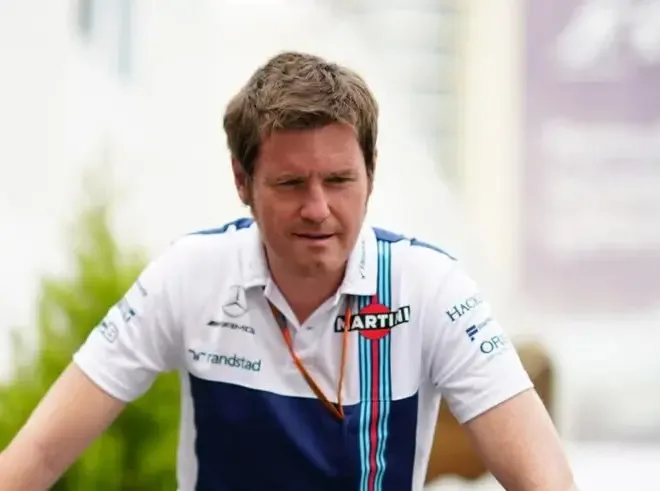
“What makes a great race engineer? It is someone who understands the driver and can always optimize their position,” said Smedley. “Whether in qualifying or the race, in my opinion, a good race engineer should have very good knowledge of aerodynamics. One should have very good knowledge about tires. One should have very good knowledge about the mechanical systems on the car and know how to optimize all these things to make the car fast.”
“But you also have to understand how the driver ticks. Not just their driving style, but also the psychology of that person. They are athletes, right? So you can’t just say: ‘This is the best way to optimize the car according to simulation. This is what we will do.’ Because the one behind the wheel might say: ‘Yes, but that doesn’t suit me. I don’t like that. That gives me too much understeer or too much oversteer.'”
What does not make a race engineer
“Whatever it is. So you have to constantly be in the driver’s head. And for me, you also have to translate. The drivers are not engineers. They are not trained accordingly. Most drivers have learned the vocabulary of race cars through experience. And each of them translates the behavior of the car in a slightly different way. It is the race engineer’s job to translate this back to the team.”
When asked what makes a “terrible” race engineer, Smedley added: “I think there are good engineers in Formula 1 today, but I also think there are some pretty terrible ones. I think indecisiveness makes one terrible, as well as not being on top of things and not understanding the basic principles – those elements I just talked about, like tire science, tire dynamics, vehicle dynamics, aerodynamics.”
“You have to understand them. I don’t want to say as well as an aerodynamicist or like the best tire experts in the pit lane, but you have to be able to have a conversation with them. You have to understand 80 percent of what they understand. I think if you don’t do that, you are at a disadvantage.”
Read more Formula 1 Upgrade: With this plan, Cadillac wants to chase Aston Martin in Canada
Decisions take too long
Smedley also criticized race engineers who “take forever to deliver an answer,” calling it “unacceptable.” “They [the drivers] are in a situation. They don’t understand it. They need help. For them, it’s that they are driving this car that is hard to drive and hard to understand,” he added.
“They are the ones stuck in the middle of all that. They need help. They will call out over the radio and say: ‘Help me!’ So, I understand that, and then it is up to the team, especially the race engineer, to get this situation under control.”
“A good race engineer will get this situation under control very, very quickly. And that goes back to what I discussed: How well do you understand the car? How well do you understand the car’s electronic systems, the car’s aerodynamics, the car’s vehicle dynamics? Because you should be able to have 80 percent of the answer ready immediately. And if you can’t do that, you are not a very good race engineer. ‘I’m just waiting on someone.'”
“I’m in Miami at the other end of the world waiting on someone in Brackley or Silverstone or Maranello, a 22-year-old graduate, to give me a number I need. I’m sorry, but if you are the race engineer, you have to be much, much better than that. You have to keep all these people on their toes, not the other way around. And that’s the part that drives me crazy when a driver asks a question and then it takes forever for the answer to come. That is unacceptable.”
Read more Formula 1 look decoded: Why Cadillac drives monochrome