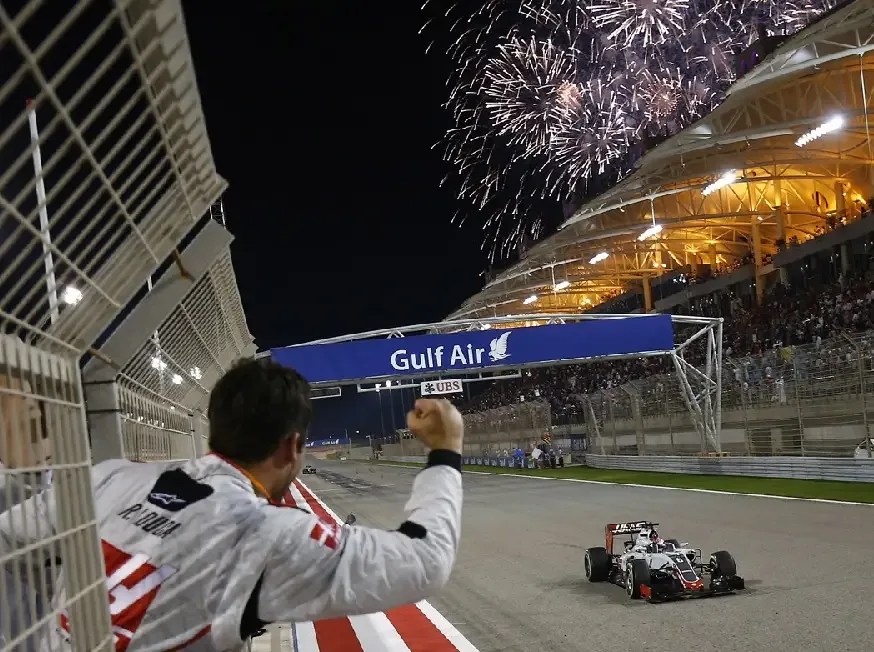
(Motorsport-Total.com) – As Cadillac prepares to begin its Formula 1 journey, the last completely new team in the series was also an American entry. Emerging in the wake of the failures of many other teams in previous years, Haas chose a different path to attack in Formula 1 – in close alliance with Ferrari – and made a big splash at the start.
Read more The biggest problem with the updates for 2026 is not technical in nature
Join Formula 1, they said. It will be fun, they said.
“To be honest, building the first car in 2016 … it was hell,” recalls Ayao Komatsu, who was among the first Haas signings and joined from Lotus before the team’s first season. “It completely destroyed us. I remember driving from the Dallara factory to the airport in a van with a bunch of mechanics.”
“It felt like we had already been through the entire winter testing. The guy next to me in the passenger seat was completely exhausted, fast asleep, and then it hit me: ‘Shit, we haven’t even turned the steering wheel yet.'”
The Haas set-up was different and in some ways revolutionary for Formula 1. In the five years before the team’s debut, Formula 1 had seen new projects stumble and disappear without leaving much of a trace: Caterham, HRT, and Manor couldn’t shake the feeling of being an embarrassment to the world championship, and US F1 even disappeared without ever appearing at the track.
Guenther Steiner developed a model in which his team would rely heavily on supplies from Ferrari, taking advantage of everything the regulations allowed. The construction of other parts was left to a third-party provider – another Italian giant: Dallara.
Haas’s own structure was intended to function primarily as a racing team, designing its cars around what Ferrari offered and racing them. But that also brought a certain level of complexity, as it was up to Steiner’s team to make the whole thing work logistically, while Gene Haas provided sufficient funding, the name, and an American identity for the project.
“Oh yes, it was a big challenge,” Steiner agrees, “but I would say that with the business model I developed, we had the advantage of working with someone who knew what they were doing. You don’t have to be arrogant about something like that. If you need help, you have to ask for help. There’s no point in stubbornly saying, ‘Oh, we’ll do everything ourselves’ – and then failing at it.”
“So we had … I wouldn’t say luck, but I have to give a lot of credit to Stefano Domenicali. At the time, he was the team principal of Ferrari, who believed in what we were trying to do. He didn’t want to see [the same story as] the other four teams that wanted to enter, and one didn’t even make it to the start.”
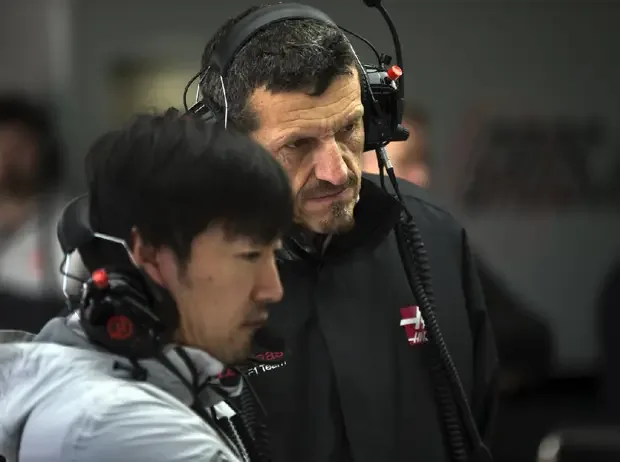
As a result, Haas’s structure was significantly leaner compared to most rivals and also relatively young.
“I wouldn’t say that [our employees] were inexperienced, but we didn’t have any so-called high-profile people,” Steiner recalls. “The most important thing was that the people who came to us really wanted to do their jobs. They weren’t just there to work in a Formula 1 team. They wanted to be part of a Formula 1 start-up.”
“[I had to] find the right people who really wanted the challenge. They were people who couldn’t show what they wanted to show, who didn’t have the chance in a big team. Those were the kind of people I was looking for: people who wanted to see a challenge ahead of them. People who thought like I did.”
“And I didn’t want a job. I wanted to go on a mission.”
A car born under pressure
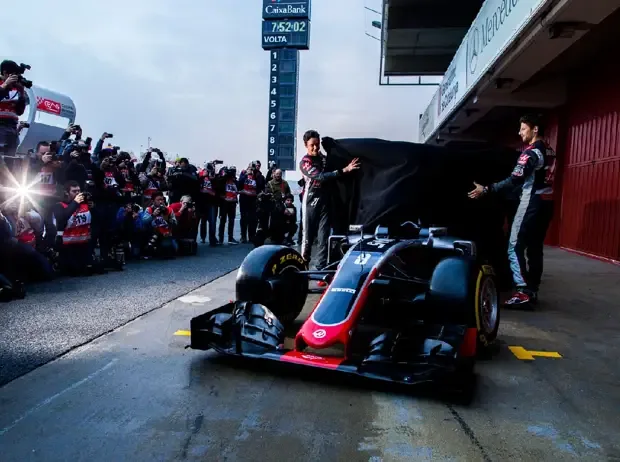
But because it was also new territory for Ferrari and Haas was building its own structure in parallel, the first car was born after a long labor with many contractions and growing pains before the VF-16 finally saw the light of day.
“Three days before the first engine start, when I looked at the car, I was convinced: This is never going to happen!” says Komatsu. “We worked with Ferrari, which was great, but – yes, they had supplied engines to customer teams before – they had never supplied suspension, hydraulics, and all the other parts to someone on this scale. Basically, neither side had experience with what we were trying to do.”
“Of course, we had these deadlines for the first start and so on, but Ferrari didn’t have a mechanism for it. When you then have three days left and see a huge hole in front of you without knowing exactly how Ferrari is supposed to make it possible, it’s not a very pleasant situation. In the end, we made it, but for example, we didn’t even have the brake cooling until we went to Barcelona [for testing].”
While the car was being built at Dallara, Steiner recalls that Haas employees had to drive back and forth between the factory in Varano de’ Melegari and Maranello several times a day to pick up freshly produced parts from Ferrari.
“I think we were the biggest contributors to those highway tolls back then!” he laughs. “They must have thought, ‘Wow, there’s a lot of traffic here!’, because whenever we needed something, someone would jump into a rental car and drive off to pick it up. Everything was last minute.”
Thrown into the deep end in Melbourne
The biggest task was done, but Haas still had many operational points to check off before the first race in Melbourne: setting up procedures, establishing ways of working, and even doing things that seem obvious from a distance, like pit stop practice, but still had to be done.
“Everyone was basically dead before the season even started,” recalls Romain Grosjean, who was not only the team’s undisputed lead driver but also, due to his experience, an enormous source of feedback – and ultimately the greatest hope for results. “There was so much to put together, so much to do to be on time, so much to learn …”
“We had great people [when we went to Melbourne], but when I first joined the team at the end of 2015 and got into the simulator, the team consisted of a press officer, Stuart Morrison, an engineer, Gary Gannon, a performance engineer, Jose [Manuel Lopez], who I think is at Audi now – and that was basically it. You can imagine how much there was to do and how much we had to catch up on.”
According to Komatsu, the team didn’t even manage to do proper pit stop practice before the race. “By the time you arrive in Melbourne, you’re actually already done,” he says. “And then when you’re in Australia, the workload is so high …”
“You know, one night we worked right through before the curfew came into effect, and before the race on Sunday, you naturally want to do your pit stop practice as planned: on Thursday, Friday, Saturday, right? None of that happened. So you go into the race, and that’s the first time you do a live pit stop.”
All Haas Formula 1 cars since 2016
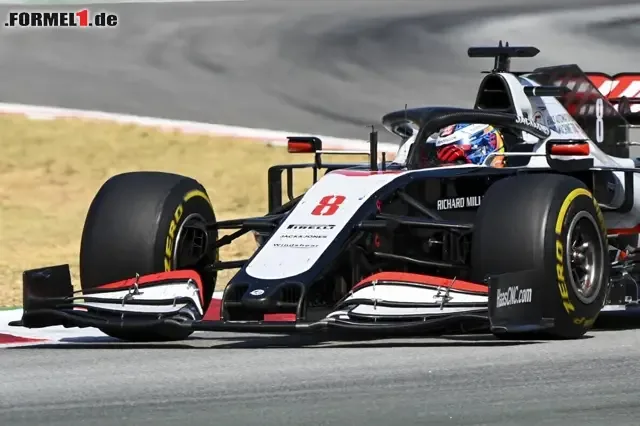
What happened in Australia exceeded all expectations, to say the least. Grosjean’s sixth place at the end of the race was not without luck.
By chance, the heavy accident between Haas’s other driver Esteban Gutierrez and McLaren’s Fernando Alonso led to a red flag, and the team was able to change the tires on Grosjean’s car under the red flag, eliminating a pit stop during the race. This also allowed the Frenchman to stay ahead of several other cars, which he kept behind him until the finish.
Read more Red Bull & Oracle extend: With AI power into the 2026 engine era
His radio message after the end of the race – “This is a win for us” – was by no means misleading.
“The only thing we wanted to achieve was to be solid,” Steiner says of his expectations before the start of the season. “To be there and not be an embarrassment. Because in Formula 1, you can embarrass yourself pretty quickly.”
“We wanted to be at the start, have everything on site, have a good race. Whatever the result is, it is what it is. After the tests, we knew we wouldn’t be five seconds behind the first car. But for us, it was more like: let’s just make sure we don’t mess it up, you know?”
Komatsu, who had lived through the winter months with the team, is convinced that this result saved the team.
“Before we went to the first race, we already had a few resignations,” he recalls, “because it was such hard work. And honestly, there wasn’t much sleep in Australia either. If it hadn’t been for that P6 result with Romain, I think many more people would have quit – because it was tough. Seriously, everyone was at the end of their tether…”
Performance confirmed in Bahrain
“I didn’t celebrate on Sunday night and drove home,” Grosjean recalls of Melbourne, “but I can tell you that that day will be remembered forever by everyone involved in that team. And for me, it was one of the best days in Formula 1.”
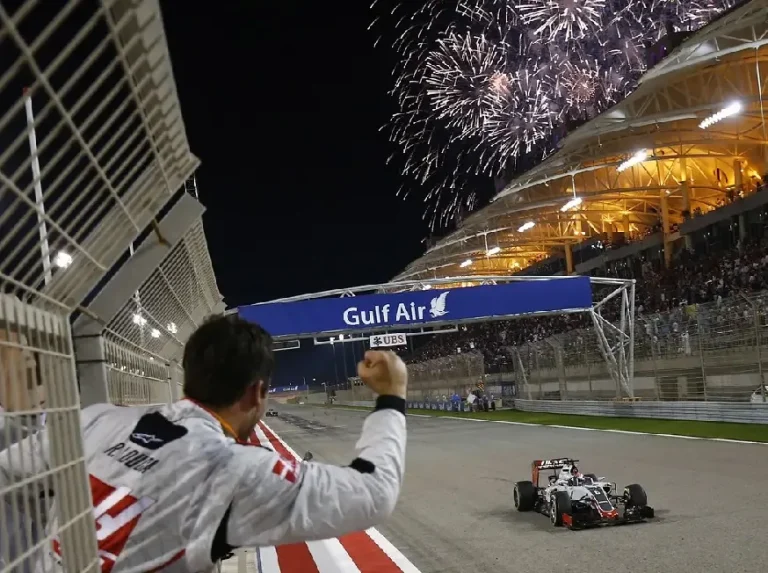
Another followed just two weeks later in Bahrain, when Grosjean finished fifth, this time without needing much luck, but mainly thanks to an aggressive strategy: with three pit stops on a track that allows overtaking, the Haas driver was among the fastest throughout the race.
“Just overtaking everyone, that’s the image that comes to mind when I think of that race: the Red Bull, the Williams, being on new tires and just flying past people,” he says. “I mean, it was crazy. It was absolutely crazy how fast and how smooth that race was for us.”
“We had a problem at the pit stop, so we lost the place to Red Bull, but we got it back! It was just unreal and great. I had one more stop than everyone else and was always on new tires, and the car worked so well!”
“It was one of those days where everything goes your way and you don’t have to think about anything. You just push and give it your all.”
Grosjean lost a few seconds due to a problem at the rear left during a pit stop. The team was still inexperienced but regained the lost positions thanks to fresher tires compared to the competition.
When the Frenchman overtook Felipe Massa’s Williams in an impressive move on the outside of Turn 1, the shot of a laughing Steiner on the Haas pit wall made it into the world feed.
Grosjean himself couldn’t suppress his smile when he stepped in front of the microphones in the paddock immediately after the race.
“I don’t know … That’s the American dream,” he cheered. “I don’t know, it’s incredible. There are many things we can do better, pit stops, car set-up and so on. But this is for the guys …”
“You know, last night I looked at their faces, and they were all very tired because the amount of work we do behind the scenes is huge. But this … this is a huge reward, this is incredible for us. And yes, I think …”
He slapped his cheek: “Wait, yes, it’s real!”
No time to celebrate
If there was one single downside to Haas’s start, it was that the team had little time to pause and celebrate the moment.
“It was the paranoia of going to the next race and being ready again,” Steiner says of how the team reacted to its early success. “In Melbourne, we had the big crash with Esteban, you know? The car was destroyed. And of course, we were … and I always say in hindsight that we didn’t enjoy the moment there enough.”
“We should have. The whole team, not just me, we should have enjoyed it more because it was a great result. But at the time we were just like … wow, the next race is coming up, and we’re not ready for the next race. The first three, four, five races were just survival mode.”
“Of course, we had the joy after the race, we had points, but then it was like: Wow, now we have to get back to work.”
“The worries weren’t over in Bahrain, because it was like that all year, we had to catch up. You know, it wasn’t easy. But those results … oh, they were fantastic for the team, for everyone involved. I always say: I did something there, I had the idea of how to build a Formula 1 team. I found investors to implement it. But those people actually did the work. I can’t do anything alone.”
“Those results, that’s what we worked for. That’s the whole idea … because there were many people who didn’t believe in my business model.”
“You know, they said, ‘That can never work,’ ‘No one can do that’ – working with Ferrari like that and so on … And we made it happen.”
Read more After 30 years: Mario Isola leaves Formula 1 tire manufacturer Pirelli