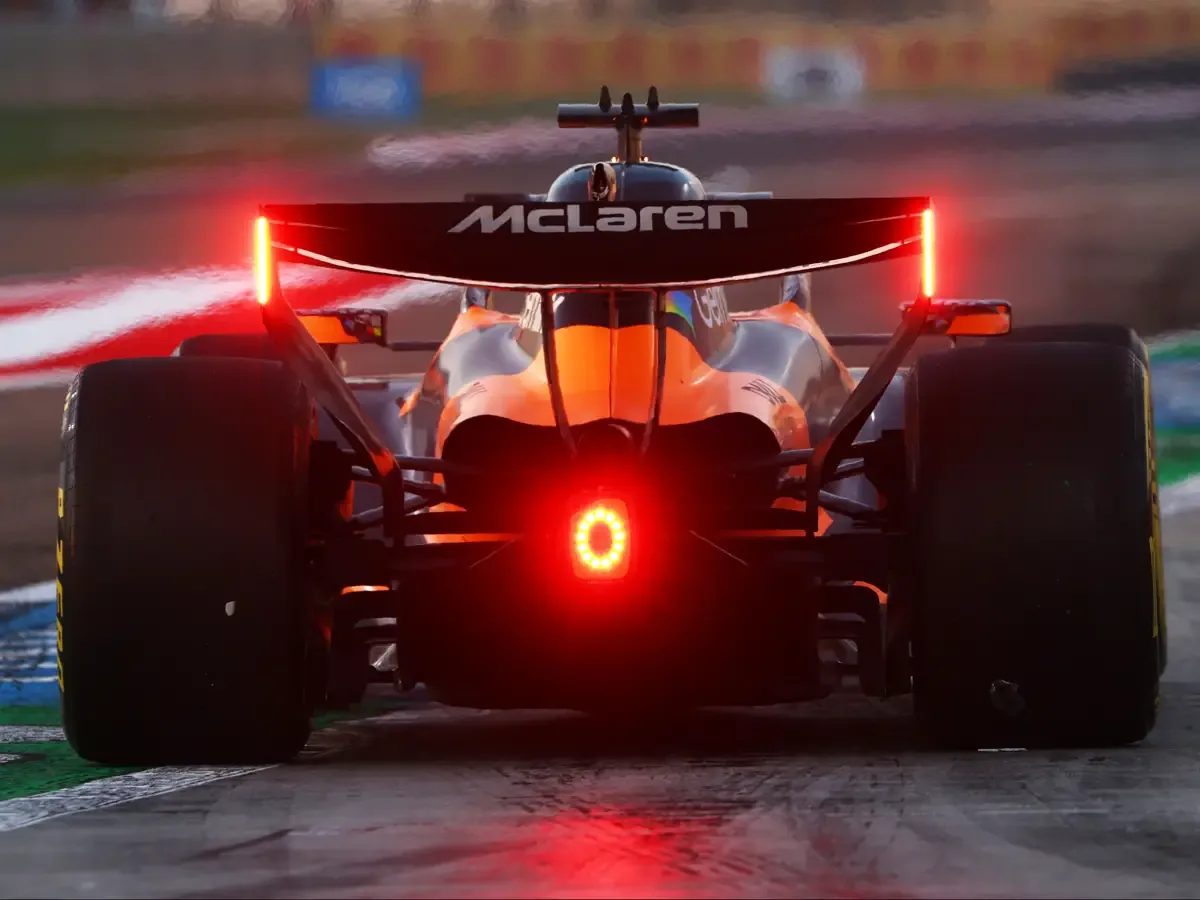
(Motorsport-Total.com) – Anyone who has already followed the test drives in Bahrain will have noticed that the new Formula 1 cars of the 2026 season shine significantly brighter and more colorfully than their predecessors. New lights flash at the rear and in the side mirrors, providing important information. But what exactly is behind these light signals?
Read more Ten years after Haas’ shock F1 debut: «That is the American dream»
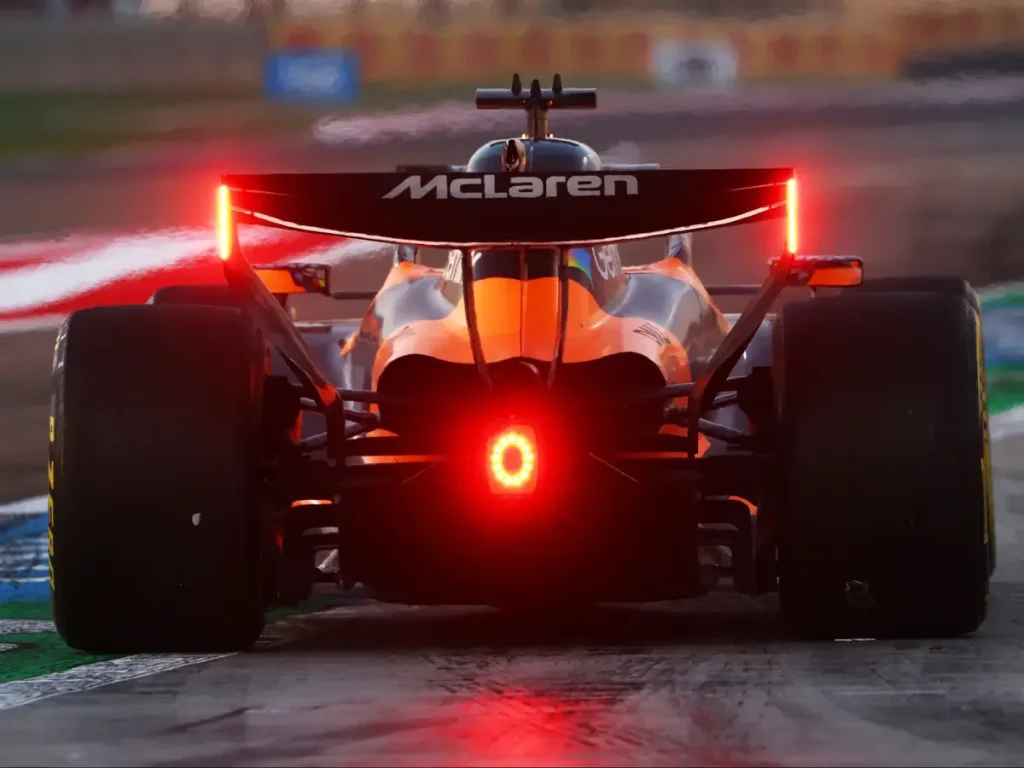
The first change concerns the rear light on the rear crash structure of the cars, also known as the “Rear Impact Structure Light”. In the future, it will no longer be rectangular, but oval. This is primarily because an onboard camera will be installed in the center in the future.
The oval rear light, which is around 180 grams lighter than its rectangular predecessor, shines red most of the time and provides the driver behind with important information about the car’s current energy state. The data is not transmitted via the color, but via the flashing sequence of the rear light.
A single flash signals that the MGU-K is delivering less electrical power than the set 350 kW. Two flash signals mean that the power delivery has been completely stopped. And several fast flash signals indicate that the MGU-K is currently being charged while the internal combustion engine continues to run normally.
Rear light can also shine blue in the future
In addition, the rear light can now also shine in other colors, such as blue. This is used when the current driver in the car does not yet have a full super license – for example, with rookies participating in Friday practice.
“First of all, we have a new specification that allows us to change the color,” adds FIA Single-Seater Director Nikolas Tombazis. “This allows us to send different signals to the following driver. The system will evolve and improve over time – there shouldn’t just be a single red display.”
It is planned that more colors with different meanings will be added in the future. However, this only applies to the rear light on the rear crash structure, and not to the two lights in the side endplates of the rear wing, which will continue to signal only the energy state by lighting up red.
Read more The biggest problem with the updates for 2026 is not technical in nature
“[Currently] they serve to warn following drivers of charging processes and sudden braking maneuvers,” adds Tombazis. “Of course, they also continue to fulfill their main function, the original function in the rain. We are convinced that with the new specification, which allows for different colors, we can provide more information to the following drivers.”
New safety lights in the side mirrors
Another important innovation for following drivers is the side safety lights in the exterior mirrors, which are visible from both the front and the side. They switch on automatically after a spin or accident.
The lights flash orange or yellow and activate as soon as a car has come to a complete standstill or the speed drops below 20 km/h. They also become visible briefly before the race start when the car is in neutral. As soon as the driver engages a gear, the lights go out again.
“The idea for this came from the drivers in one of the driver briefings,” says Tombazis. “Basically, it was said that in wet conditions and with a car facing sideways, you can’t see the rear light because you are at the side.”
Cars that are facing against the direction of travel after a spin should also be better perceived by following drivers in the future to avoid serious accidents. “Therefore, it was suggested to attach side rear lights, and that is exactly why we added them.”
Read more Red Bull & Oracle extend: With AI power into the 2026 engine era