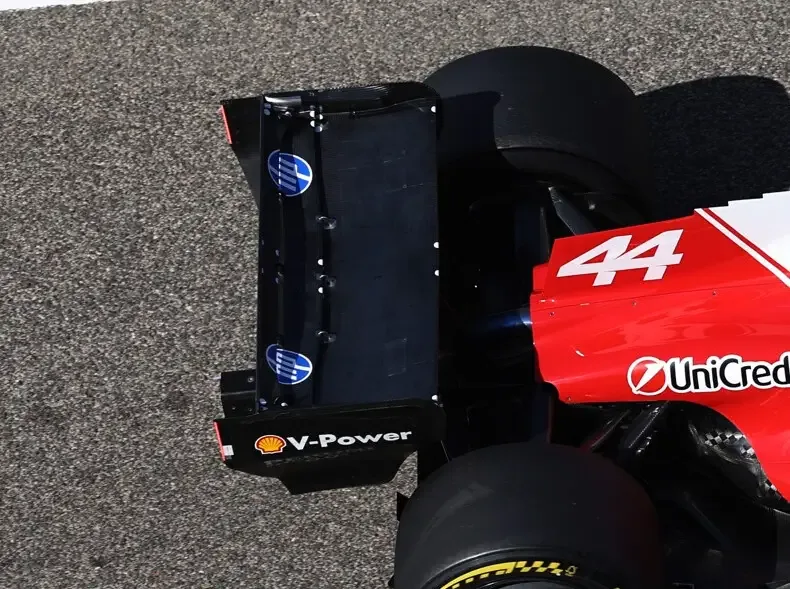
(Motorsport-Total.com) – If there was one team that amazed the Formula 1 scene with particularly imaginative ideas during testing this winter, it was Ferrari.
Read more Formula 1 technology: New Ferrari rear wing reminiscent of Mercedes 2011
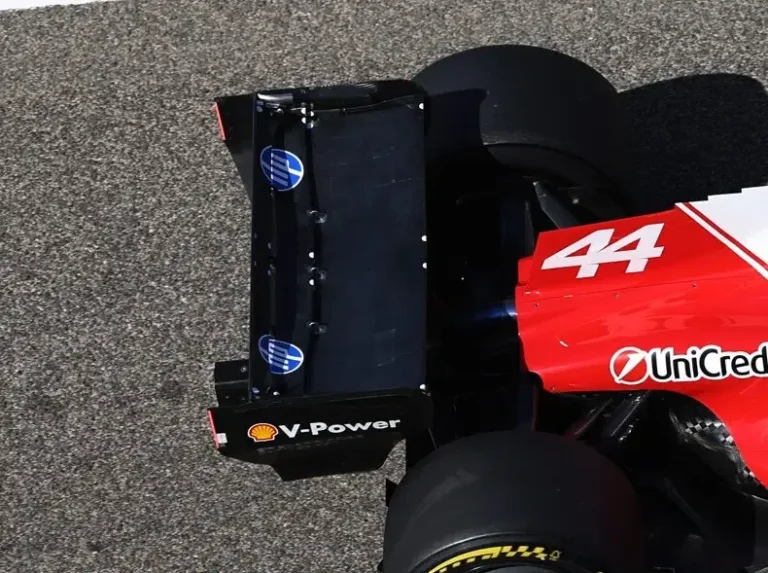
In Bahrain, the Scuderia brought not only a new element in the area behind the exhaust, which makes optimal use of the installation space allowed by the new rules from 2026, but also a rear wing with an innovative opening mechanism that can rotate 180 degrees.
Furthermore, the SF-26 offers other interesting technical aspects. Particularly noteworthy is the completely redesigned control system that enables the wing movement.
To ensure a 180-degree rotation, the engineers had to develop a completely new actuator. A central component on the main surface was no longer an option for this, as it would have restricted the range of motion too much.
Therefore, the engineers integrated the actuator that controls the movement of the flap directly into the side endplate. This solution is technically very demanding, as it must withstand high loads.
Normally, the rear actuators are quite voluminous – so much so that some teams try to compensate for losses by making changes to the central wing area.
What makes the Ferrari solution so difficult
The solution at Ferrari is reminiscent of Mercedes in 2011. Back then, the Brackley-based team had installed an actuator in the endplates, which was controversial at the time and ultimately paved the way for the later-banned double DRS.
Even if Ferrari did not adopt this concept directly, it shows how old ideas can return in a new form.
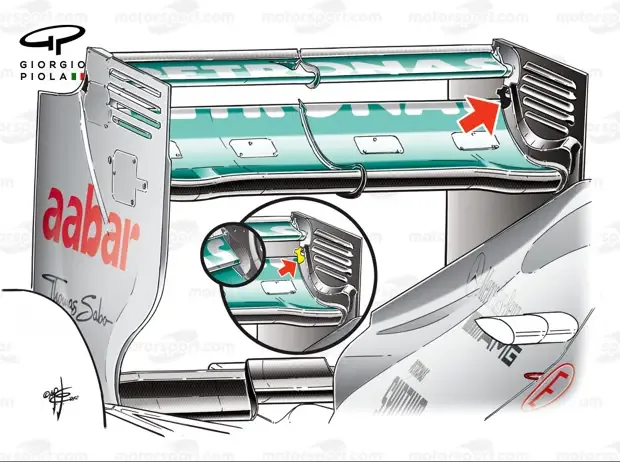
However, the basic principle is different, as is the implementation. The SF-26’s control system must allow for a full 180-degree rotation and withstand significantly higher forces when closed, not only because of the higher speeds but also because the flaps are larger.
Read more Explained: What the new lights at the rear and side mirrors mean
Since the system will be active up to four times per lap on some tracks, it will be used much more frequently than DRS used to be. Reliability will therefore become a decisive factor.
The compact mechanics in the endplate are particularly challenged, as the regulations require a safety mechanism to automatically close the flaps in the event of a malfunction.
Why the Ferrari wing is legal
When building the new wing, it wasn’t just about relocating the actuator. The pivot point around which the wing moves was shifted further towards the center – to the point where the connection to the actuator exists. In addition, the end of the first wing element was enlarged to accommodate the new geometry.
There were also discussions at the regulatory level about whether the wing exceeds the permitted volume when rotating, especially when it is almost vertical.
However, the new regulations deliberately give teams more leeway to reduce drag on the straights and thus lower energy consumption. The FIA has therefore classified Ferrari’s solution as compliant with the rules.
While the wing must still remain within a certain volume when closed, certain exceptions are now allowed when it is open.
Crucial point: The wing no longer has to be completely within the defined frame during movement. This allows for greater freedom of movement during rotation.
Read more Ten years after Haas’ shock F1 debut: «That is the American dream»