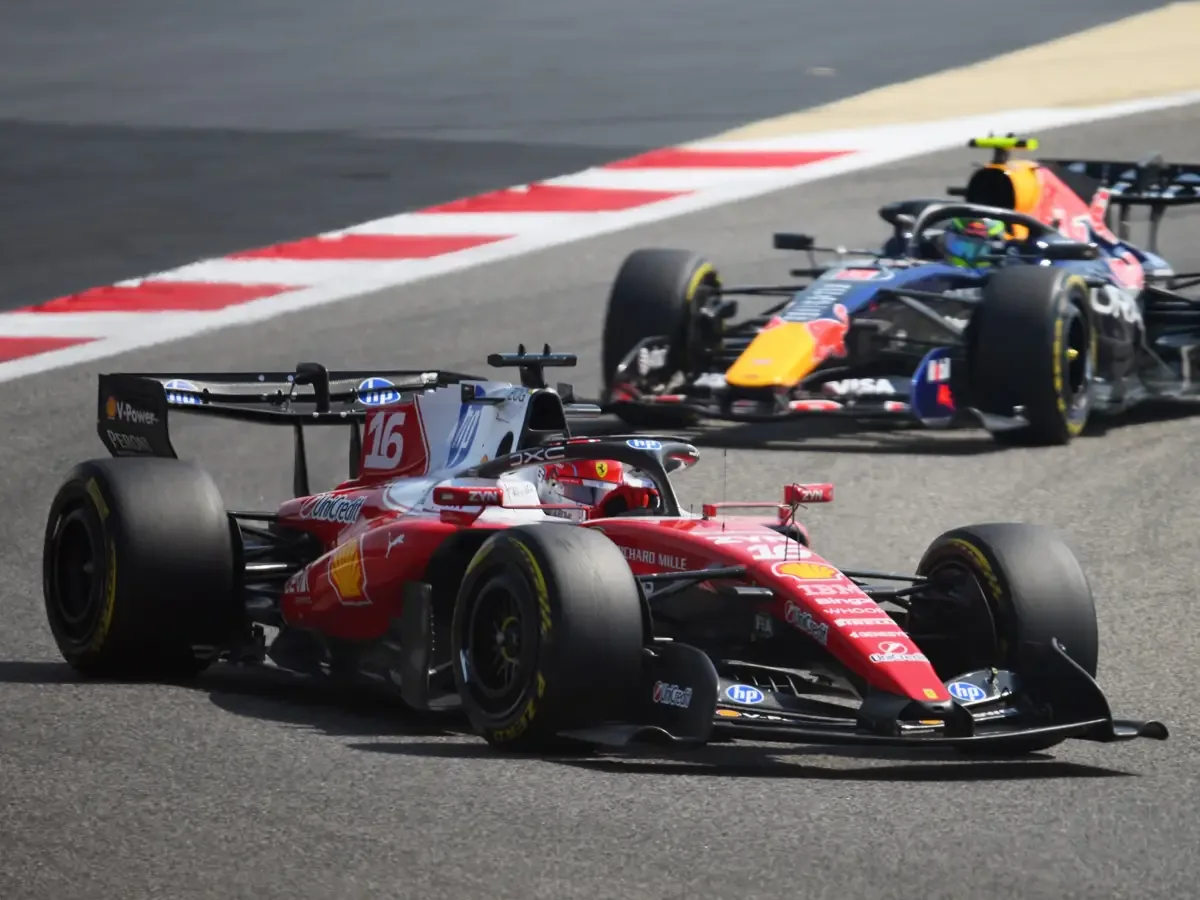
(Motorsport-Total.com) – In those days, when the Formula 1 calendar was significantly less bloated compared to today’s 24-race monster and only the top six drivers scored points, points were a much scarcer commodity.
Read more What is «Super-Clipping» in Formula 1?
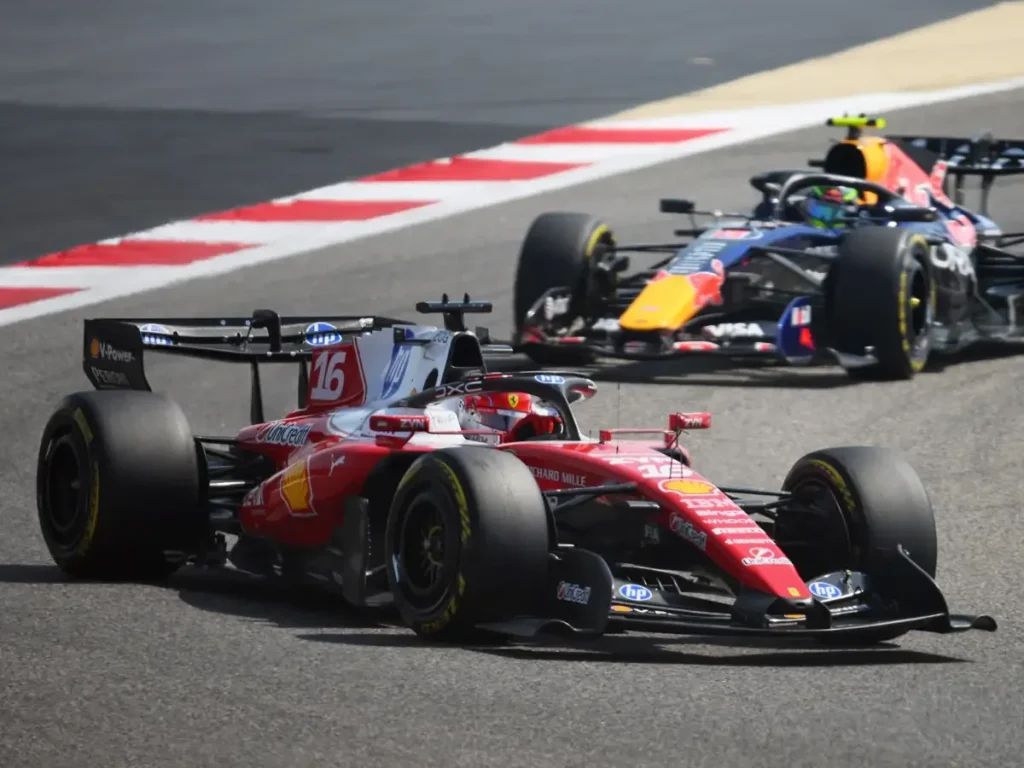
This was especially true for the teams at the back of the grid. A single point could be as valuable as gold dust, and it only took one race under extraordinary circumstances to bring an underdog team an unexpected windfall or a last-minute rescue in the midst of a desolate year.
Orgy of retirements or terrible weather could provide such opportunities. Examples abound: Arrows and Minardi, who scored their only points in 1999 in Australia and at the Nürburgring respectively, Jordan’s double strike in Japan in 1993, Andrea de Cesaris’ fourth place for Rial in Detroit in 1988 … and many more one-hit wonders in a season that put a team on the scoreboard in the first place.
The other circumstance, which was much more controllable, was to design a car for a specific range of race tracks. For a smaller team, this was a clever approach: although reliability could not be guaranteed, one potentially based their car on Spa and Silverstone to maximize performance on those tracks, accepting the losses everywhere else.
Perhaps other tracks also fell into this catchment area, but for a team with a tiny budget, the characteristics of a specific track definitely played a role in the design approach.
Today’s Formula 1 cars, given the length of the calendar, are designed to work on as many tracks as possible – but of course, there will always be a certain degree of variation.
Energy becomes the big factor
In recent years, Williams was considered a team capable of developing a car that was good on the straights but less so on other sections of the track. But the infrastructure overhaul carried out largely ensured that the team was competitive on most tracks in 2025.
Track-to-track variance was certainly a factor that engineers had to consider, although teams today generally try to keep this working window relatively wide through a modular approach to aerodynamic components.
The 2026 Formula 1 cars in their final designs on the race track
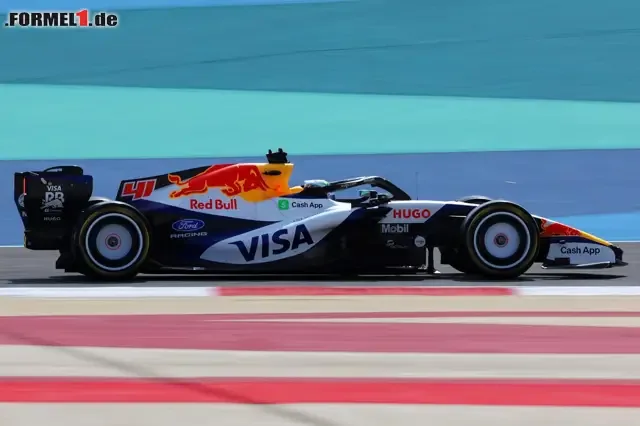
What engineers need to prepare for is that the 2026 regulations should show a stronger differentiation between track characteristics, especially regarding energy usage.
The tracks on the 2026 calendar will be categorized as either high-energy or low-energy. High-energy tracks are those where energy recovery will be very easy – sometimes so much so that the energy deployment strategy can almost be neglected.
In contrast, on low-energy tracks, drivers must hope that the electrical components of the powertrain exhibit good efficiency, as there will be comparatively few opportunities for energy recovery in slow corners.
Procession on high-energy tracks?
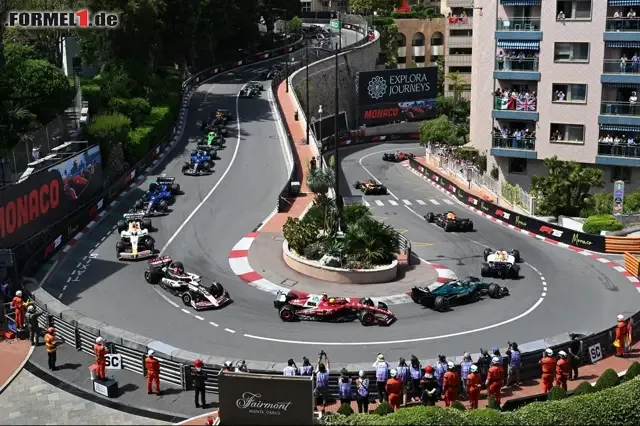
Tracks like Monaco and Singapore will make it very easy to recover energy over a lap. Furthermore, the energy loss required before cars can use super-clipping for recovery will be lower – at 50 kW per second instead of the standard 100 kW.
Other tight tracks like Zandvoort, the Hungaroring, and potentially the upcoming race in Madrid should also be high-energy tracks.
While most will be pleased that energy management is not a factor there, this will likely come at the cost of processional racing, as most cars will operate under the same management conditions.
It has already become apparent that the Overtake mode is losing effectiveness and will have limited utility on these slower tracks.
It will be difficult as early as Melbourne
In the other corner, we have the season opener in Melbourne as well as tracks like Baku, Las Vegas, Monza, and upper-midfield tracks like Barcelona. Due to their fast corners and long straights, recovering energy on these tracks will be a challenge.
Teams will not only have to rely on super-clipping to pull energy from the powertrain and pack it into the battery, but parts of the track will likely also have to be driven at less than full throttle to avoid triggering the MGU-K.
This primarily affects the outlap, where drivers must reach a charge of nearly 100 percent when coming out of the final corner before a qualifying lap to be able to use full power on the main straight.
The 2026 Formula 1 calendar to click through
Take Barcelona for example: after Turn 14, the driver will build speed and choose the moment to go full throttle, likely consuming the majority (if not all) of the energy stored in the battery pack.
Turns 1 and 2 offer some capacity for recovery, but Turn 3 will likely no longer be taken at full throttle to avoid wasting the energy just gained in an area that is less critical for acceleration.
Long-radius corners make it harder to recover energy, especially if they were historically taken in fourth gear. Additionally, saving energy out of Turn 5 to ensure more power is available for the exit of Turn 9 makes this a balancing act.
Conflicting interests
And it’s not just about energy recovery, but also about tire preparation. Haas team principal Ayao Komatsu noted that some of the approaches required for energy recovery on an outlap are often in conflict with the approaches needed to prepare the tires for a qualifying lap.
Read more Why McLaren wants to be «defensive» at the start of 2026
“I think the outlap will also be difficult,” explains Komatsu. “In Barcelona, the outlap is difficult, in [Bahrain] it’s easier – so again, it’s very track-dependent. I hope Melbourne will be okay – but imagine that under changeable conditions! That will be a huge challenge,” said the Japanese.
“The tracks that immediately come to mind are places like Baku or Vegas. It’s very difficult to get the tires to work as well, and the requirements to prepare the battery very well compared to tire preparation partially contradict each other. So you have this multi-dimensional optimization problem, you have to find the right compromise, so that will be challenging.”
Certain tracks should suit different cars, beyond the aerodynamic and mechanical configurations familiar to us. Take Red Bull as an example, as the team’s powertrain in partnership with Ford has been praised for its energy deployment – and associated with that, its ability for efficient recovery.
On these low-energy tracks, it will help immensely to have a car that offers a few extra seconds of energy deployment over a lap and is capable of capturing more energy in the slower sections of the track.
Red Bull at an advantage in Melbourne?
Melbourne will be an interesting test for this, as the current layout has very few areas left where drivers can lift off the throttle and let the engine recover energy.
If the Red Bull is indeed one of the better candidates in terms of energy deployment and not just the target of Mercedes’ diversionary tactics, then this could be worth a few tenths over a lap – simply due to the higher average speeds resulting from some of the expected lift-and-coast areas being eliminated.
Think of Baku, for example: if you have to lift less in the castle section and can go full throttle earlier on the Neftchilar Avenue straight, then you gain a significant chunk of extra lap time.
Formula 1 Quiz
How many Grands Prix did Valtteri Bottas need until his first victory?
Test yourself now in the Formula 1 quiz and compare yourself with other users
In contrast, such an advantage would be diluted on high-energy tracks. Although teams must also recover energy there, this should coincide with the cornering phases, making energy management and battery replenishment less problematic.
This should mean that the effectiveness of Red Bull’s alleged advantage in energy deployment decreases, as other teams will be able to maintain more of their electrically generated power for longer.
This gives hope to teams like Aston Martin, who are known to struggle with their own energy deployment from the Honda-developed powertrain.
Will the FIA still change super-clipping values?
By the time we race in Barcelona again, teams should have made significant progress in recovery and deployment – so it should be less of a shock than the scenario teams faced during the shakedown in January.
It could also be that the super-clipping limits are changed. Currently, teams can only use 250 kW of the electric motor for recovery, instead of the full 350 kW.
“All conditions are in place to enable this 350 kW recovery while the driver is at full throttle,” explained McLaren team principal Andrea Stella on the final day of testing in Bahrain, “which means the driver doesn’t have to lift-and-coast to gain 350 kW.”
“We have discussed this with the FIA, and it will ultimately be up to the FIA whether they introduce it or not. We tested it successfully [on Friday] and we are satisfied,” said the Italian.
As of now, the situation is as follows: you have the fast tracks where cars will be hungry for energy, and the slower ones where they will have a surplus. But as seen in the final days of the Bahrain test, the picture is constantly evolving.
While the first days of testing were characterized by drivers lifting-and-coasting through Turn 12 and when approaching Turn 13, some drivers experimented in the second week with the uphill right-hander as an area for energy deployment.
Special detail in Leclerc’s lap
Charles Leclerc carried less speed through this corner during his best time on the sixth day than Andrea Kimi Antonelli during his time on the fifth day, as teams learn to maximize the timing of their energy deployment and concentrate recovery on the less speed-critical parts of the lap.
What was interesting about Leclerc’s flying lap is a small detail in the GPS data: the Ferrari driver maintained a tiny bit of throttle in the corners to keep the engine speed up and had to use lift-and-coast at almost no point during his qualifying lap.
The fastest of the first test week: Where did they end up at the end of the season?
This will be less easy on certain tracks, but once teams have clearly divided the recovery points and acceleration points, the more “unnatural” elements of the 2026 era should be somewhat less noticeable.
The tracks that used to reward a heavy foot have now produced a completely different challenge. Stretching out the energy deployment phase will be a crucial attribute – at least for whoever masters it first …
Read more Christian Horner on Liam Lawson: «Not my decision»