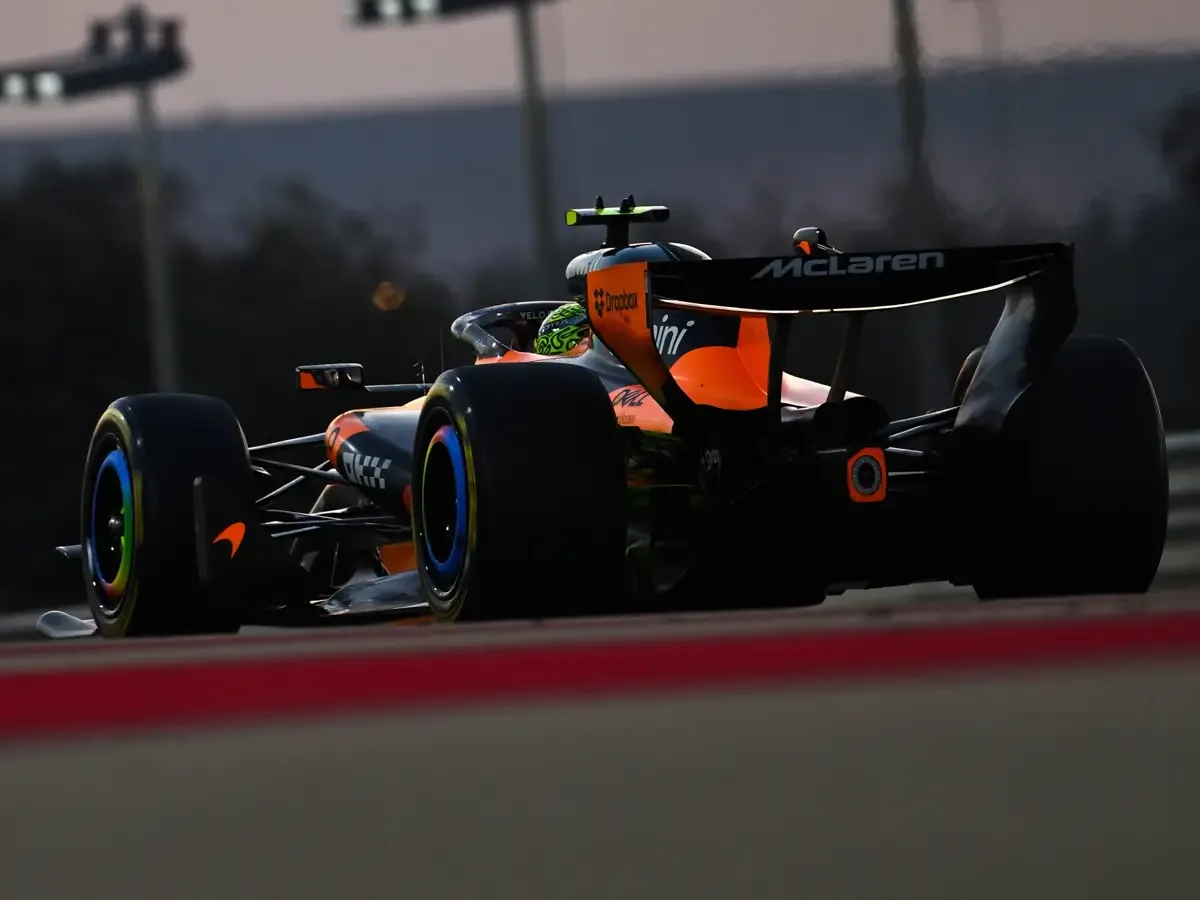
(Motorsport-Total.com) – When Andrea Stella spoke to the media in Bahrain on Friday evening a week ago, he shared something else alongside his first impressions of the new balance of power: McLaren had tested so-called “super-clipping” with up to 350 kilowatts that day.
Read more Why McLaren wants to be «defensive» at the start of 2026
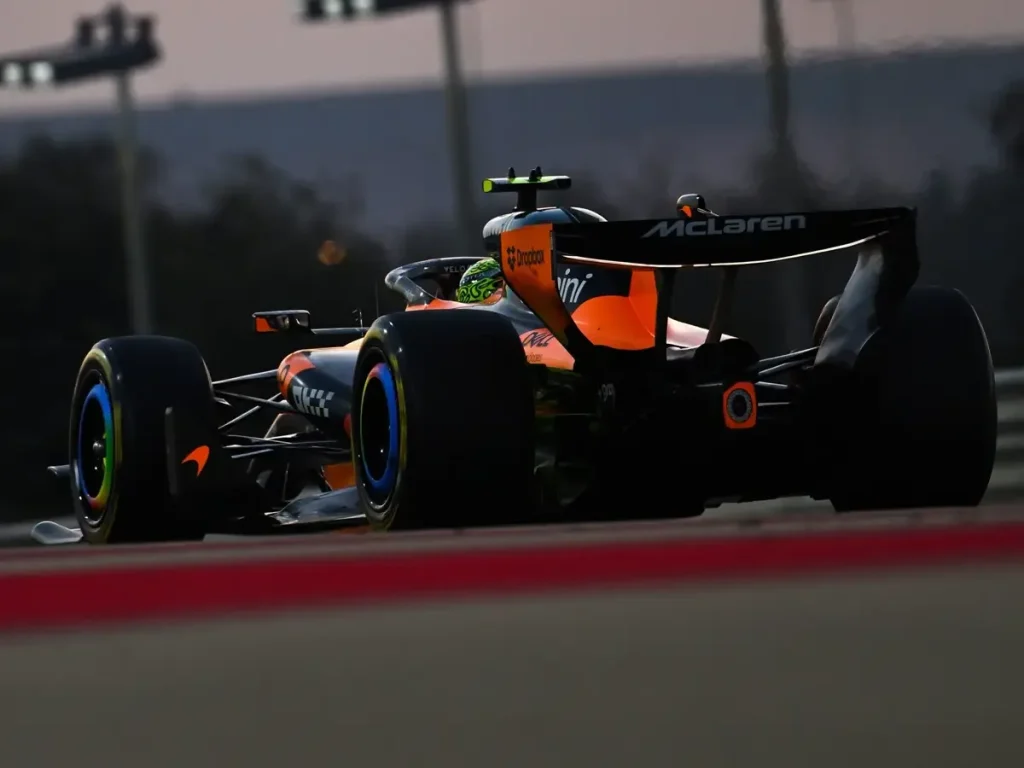
Simply put, super-clipping means that the 2026 season cars can recover energy while the driver is at full throttle. This sounds attractive for the new generation of cars, but it comes at a price – primarily a lower top speed.
During super-clipping, not all of the drive power reaches the rear wheels. Instead, a portion is stored via the MGU-K and retrieved later.
How does super-clipping show up in the data?
Super-clipping mainly occurs at the end of straights and in fast corners. When Fernando Alonso jokingly said in Bahrain that he could put the chef from the Aston Martin kitchen in the car, he was referring to Turn 12.
The data confirms that super-clipping occurred frequently there. Although the drivers were at full throttle, they lost speed at that point due to energy harvesting.
This is also evident in the comparison image below between Oscar Piastri’s fastest lap on Thursday and Lando Norris’ fastest lap on Friday, when McLaren tested super-clipping with up to 350 kW instead of 250 kW.
Although the lap times were almost identical (0.010 seconds difference), the speed profiles differed significantly. Piastri reached higher top speeds on the straights leading to Turns 1, 4, and 14.
Both were consistently at full throttle there, which is an indication that Norris used more super-clipping at those points, consistent with McLaren’s testing that day.
In Turn 12, it was the other way around. Both drivers were at full throttle, but Piastri was about 20 km/h slower there due to super-clipping. This significant speed effect explains why Alonso said the 2026 cars could be up to 50 km/h slower in fast corners and even a chef could drive them.
However, his figure describes the extreme case.
Could more super-clipping be a good Plan B?
Under the 2026 rules, the amount of energy recoverable via super-clipping is currently limited to 250 of the total 350 kW. Following his successful test, Stella is advocating for this limit to be raised to the full potential of 350 kW.
“At the moment it is limited to 250 kilowatts, but all the requirements are there to harvest 350 kilowatts even at full throttle. This means the driver would no longer have to lift off the throttle to recover 350 kilowatts,” explains the McLaren team principal.
“We have spoken to the FIA about it, and they will ultimately decide whether this is introduced or not. We tested it successfully today and are satisfied,” said Stella last Friday.
The FIA could consider this as an option if the new cars prove problematic in the first races and drivers have to do too many “unnatural things” in terms of energy management.
It would be conceivable to reduce the electrical power share in race mode to 250 kW – with less peak power but a more stable energy balance – or to expand super-clipping to the full 350 kW.
Read more Christian Horner on Liam Lawson: «Not my decision»
FIA single-seater director Nikolas Tombazis did not want to name any concrete plans during the winter tests but hinted that both levers could be adjusted if necessary.
“In principle, there could be different solutions for qualifying and the race, but I don’t want to anticipate that. Of course, there are different opinions, and we are open to suggestions from the teams,” said Tombazis.
Political and technical hurdles
A proposal like expanding super-clipping sounds simpler than it is. On the one hand, it was noted that implementation would not be equally easy for all manufacturers – Honda, for example. On the other hand, any change would be closely linked to the balance of power.
In the current regulations, efficiency in energy management is a key performance factor. Teams that have an advantage here would therefore have little interest in a rule change that reduces this advantage.
Both a reduction in the energy available in race mode and an expansion of super-clipping would make the field overall less “energy-starved.” This would mean that the most efficient manufacturers would lose some of their lead.
Ten years of Liberty Media: How Formula 1 has changed
Track characteristics also play a role. According to Stella, Bahrain is considered an “energy-recovery-rich” track. There, drivers can collect enough energy during braking and partial-load driving without constantly having to lift off the throttle unnaturally.
On tracks like Melbourne or Jeddah with less heavy braking points and fast sections, however, super-clipping could help avoid unnatural “lift and coast” and make the races more interesting for spectators.
At the same time, however, the most efficient manufacturers would benefit even more there – something they would likely be reluctant to give up.
FIA wants to wait for the first races
Should this discussion actually arise, for example if the first races are disappointing, the question arises: What counts more? The overall interest of the sport or the self-interest of the teams and manufacturers? Tombazis had already pointed out that these two factors can easily collide.
In any case, the FIA does not want to make any hasty decisions. It wants to wait for the first races to see if there is any need for action at all – and if so, in which direction.
Tombazis added: “We are learning step by step. The first real test is the first race, because here at the tests they aren’t really racing against each other. Such changes require discussions. This can take a few weeks and must also go through the formal decision-making process.”
“It’s unlikely between Australia and China, but it won’t be a months-long thing either. We will see where we stand, adjust our systems, and if necessary, pass on proposals to the teams and engine manufacturers.”
Read more Christian Horner on Liam Lawson: «Not my decision»