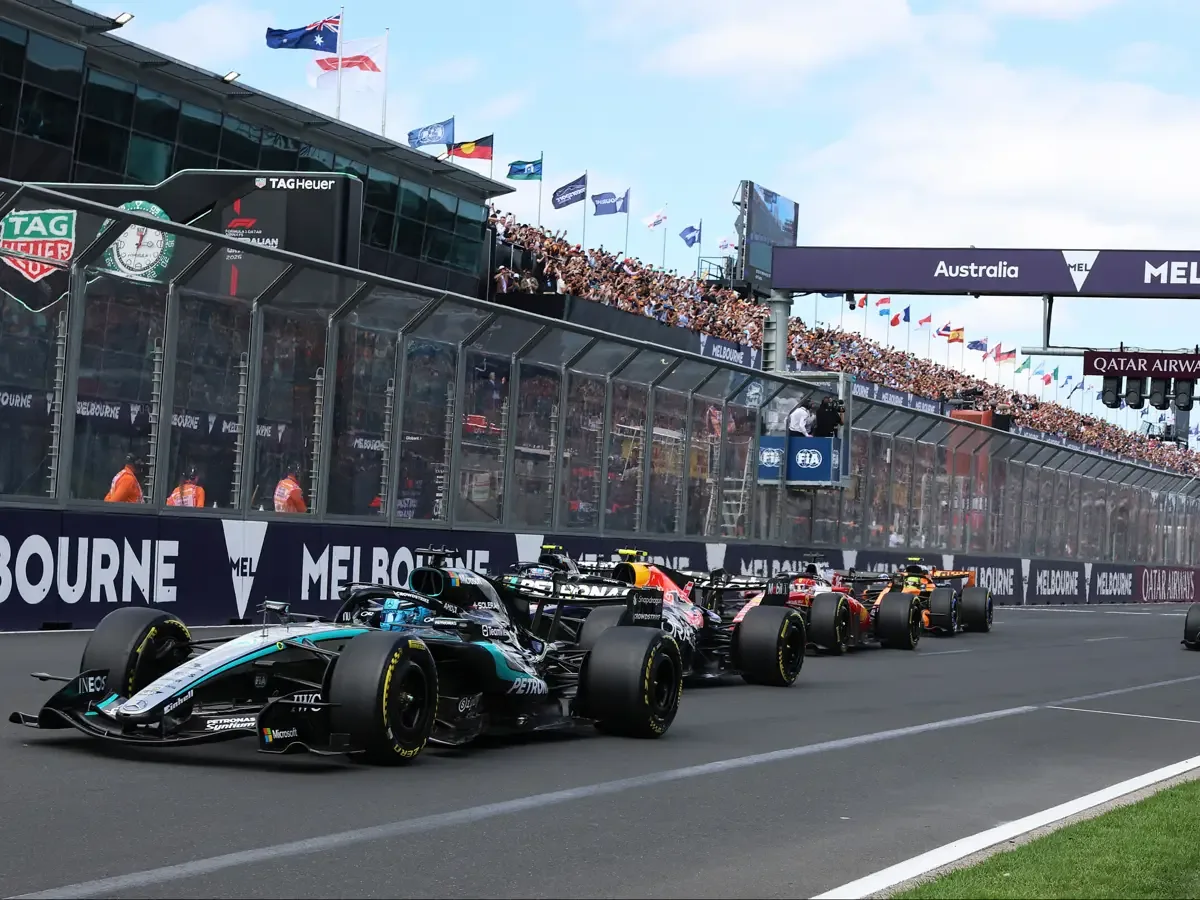
(Motorsport-Total.com) – The Formula 1 season opener in Australia has revealed a new problem with the 2026 rules. At the start in Melbourne, there was almost a serious accident when Franco Colapinto only narrowly managed to avoid the slow-starting Liam Lawson.
Read more The qualifying, sprint and race duels of the 2026 Formula 1 season
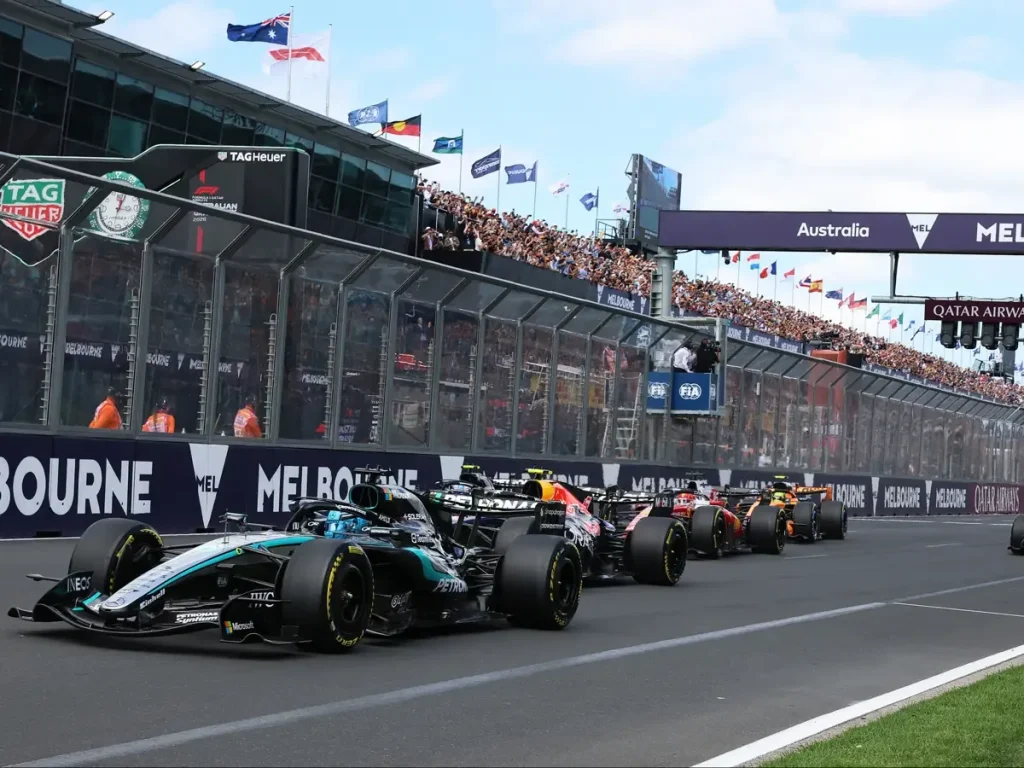
The technical causes are now known. However, a quick solution is currently failing primarily due to political interests in the paddock. When Lawson’s car failed to accelerate properly at the start, the Racing Bulls driver was already expecting an accident.
“To be honest, I was already expecting it in the car,” says Lawson. “I looked in the mirror and saw how close Franco was. I was sure he was going to hit me.” Colapinto was able to swerve at the last moment, preventing a possible high-speed collision.
The main problem lies in the new hybrid rules. The cars arrive at the start with batteries charged to different levels, which has a huge impact on acceleration.
Since the electrical component now accounts for about half of the total power, small differences in the state of charge can have a major impact on the start. In addition, drivers have to warm up tires and save energy at the same time during the formation lap. This makes energy management significantly more complicated.
Verstappen calls for changes
Max Verstappen also sees this as a safety issue. The world champion is calling for adjustments to the system. “Starting with a battery at zero percent is no fun and is also quite dangerous,” he says.
Verstappen believes that the problem could be solved relatively easily. “There are a few simple solutions. We are talking to the FIA about it.” Mercedes driver George Russell sees a central reason in the so-called harvest limit. This limits how much energy can be recovered per lap.
Read more Formula 1 Live Ticker: Mercedes Pole & Antonelli Investigation
In Melbourne, the limit was eight megajoules per lap. However, this created an unexpected effect: drivers further back in the field were able to collect more energy during the formation lap than the drivers at the front. “When I got to about halfway through the lap, I couldn’t charge my battery anymore,” Russell explains.
Teams block change
The FIA had apparently considered adjusting this rule at short notice. However, this would have required a supermajority of the teams – and this was not achieved. “Some teams that had good starts didn’t want to change that,” says Russell.
This means the problem remains for the time being, even if it creates unnecessary complexity from his point of view. Other voices in the paddock, on the other hand, warn against hasty rule changes. Haas team principal Ayao Komatsu does not think much of quick interventions after just one race.
“It’s much too early to change the rules after one event,” says Komatsu. In his opinion, teams and drivers must first learn how to deal with the new procedures. Haas also made mistakes at the season opener and used too much energy during the formation lap.
Komatsu therefore advocates observing the situation first. “The teams learn extremely quickly,” he says. “If we change something right now, new problems could arise.” Instead, Formula 1 should only carry out a comprehensive assessment after several races.
This means that the starting problem is likely to remain part of the new Formula 1 reality, at least in the short term. Teams and drivers must adapt their procedures to better control the different battery levels. George Russell sums it up: “Now all the teams know the problem – so we’ll find a way to drive around it.”
Read more Praise from the competition: Audi drive is «very, very good!»