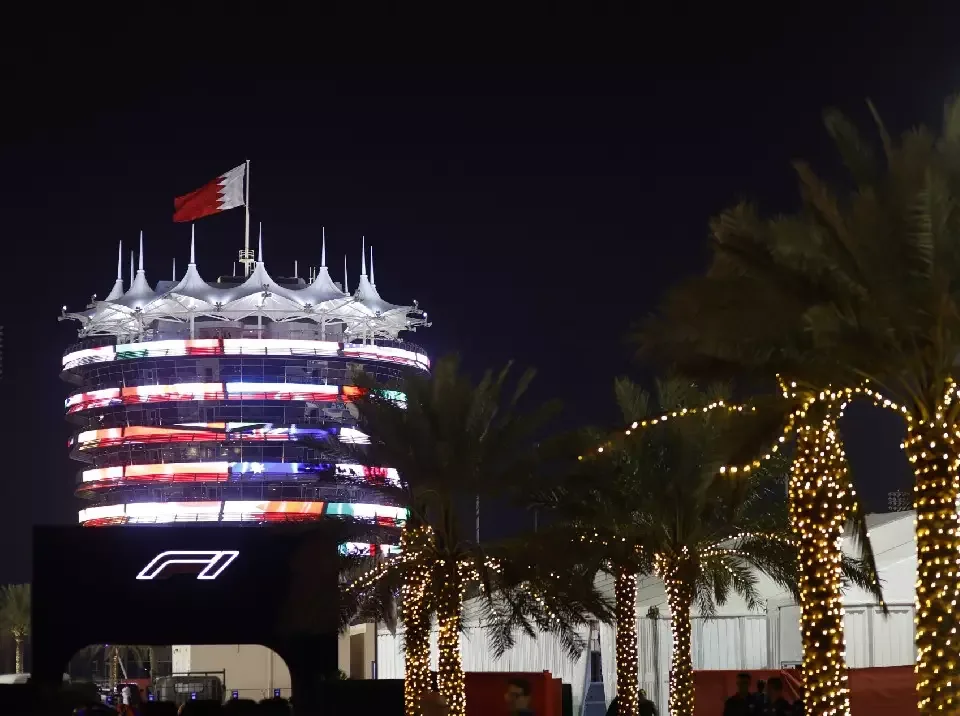
(Motorsport-Total.com) – The 2026 Formula 1 season is two races shorter. Fans must prepare for a race-free April, as the premier class has now officially cancelled the two Middle East races in Bahrain (April 12) and Saudi Arabia (April 19).
Read more «Inspector Seb» is back: Hamilton takes a close look at Mercedes
This leaves a five-week gap between the third race of the season in Japan (March 29) and the originally planned sixth race of the season in Miami (May 3), which will not be filled. This is because there is simply not enough preparation time for replacement races, such as in Imola or Portimao.
The background to the cancellation is the current geopolitical situation in the Middle East, which is influenced by the Iran war being waged by the USA and Israel. Because the safety of everyone involved cannot be guaranteed, the two races cannot take place.
How Formula 1 explains the double cancellation
“Even though it was a difficult decision, it is unfortunately the right one at this time given the current situation in the Middle East,” says Formula 1 boss Stefano Domenicali, adding: “I would like to take this opportunity to thank the FIA and our great promoters for their support and full understanding.”
“They were looking forward to welcoming us with their usual energy and passion. We can’t wait to return to them as soon as circumstances allow,” said Domenicali.
FIA President Mohammed Bin Sulayem adds: “The FIA will always put the safety and well-being of our community and our colleagues first. After careful consideration, we have made this decision, being fully aware of this responsibility.”
“We continue to hope for peace, security and a swift return to stability in the region. My thoughts are with all those affected by recent events. Bahrain and Saudi Arabia are incredibly important to the overall picture of our racing season and I look forward to returning to both countries as soon as circumstances permit,” said the FIA President.
On Thursday, Iran hit fuel and oil storage tanks in Bahrain – two weeks after the attack on the headquarters of the US Navy’s Fifth Fleet in the Gulf state, just a few kilometers from downtown Manama and in the immediate vicinity of the airport. Tire manufacturer Pirelli had to cancel a planned wet test at the Bahrain International Circuit at the end of February.
Formula 1 races that had to be cancelled
In addition to the tense security situation, Formula 1 would also face a logistical problem, as air traffic throughout the region is currently severely restricted. This had already led to difficulties traveling to Australia, as many flights are normally routed via the Middle East.
Drivers and teams can therefore now look forward to a race-free April, while regular work in the factories continues unabated – an additional factory shutdown like in the summer break is not planned.
For teams like Aston Martin in particular, the break should not come at an inconvenient time, as they will have more time to deal with their problems without falling further behind in sporting terms.
No replacement races planned
The 2026 Formula 1 calendar will thus be reduced by two races and will only comprise 22 races, as the cancelled Grands Prix are not to be rescheduled. There is simply no room in the calendar for additional races at the end of the year, and unlike in the 2020 corona season, the premier class is not dependent on adding races to fulfill TV contracts.
Read more Verstappen parallel at Mercedes: What Kimi Antonelli is still missing in the title fight
Replacement races in Europe are difficult anyway: the first European race in 2026 is currently scheduled for June 7, when Formula 1 moves to the streets of Monaco. Adding last-minute races seven or eight weeks earlier at venues like Portimao or Imola would cause enormous logistical headaches for F1, the FIA and local promoters alike.
Promoters would have to make emergency arrangements with local authorities and assemble a skeleton crew to run the circuit – whereas the requirements for a modern-day Formula 1 race normally take almost a full calendar year of planning.
Then there is the small matter of ticket sales, which would be problematic to organize and market at such short notice. A limited number of paying customers means little incentive for a promoter to pay a hosting fee that would be worth all the effort.
Why the races could not be saved
The two Arabian races are planned as a double-header to optimize Formula 1’s complicated logistics. Therefore, it would be difficult to hold only one of the two – although it is said that there was some hope of somehow saving the round in Jeddah.
Some of the teams’ and Pirelli’s freight is already in Bahrain, as it was never withdrawn after the pre-season tests. However, with the race scheduled for April 12, the rest of the freight would now have to be dispatched immediately.
To save the race in Saudi Arabia, personnel would also have to be able to travel to Bahrain to transport part of the freight across the border.
The Bahrain Grand Prix had already been cancelled once before in 2011, when political unrest in the country prevented it from being held. For Saudi Arabia, it is the first cancellation, although it came close in 2022 following attacks by the Yemeni Houthi militia near the track, when plumes of smoke were seen during free practice.
However, it is not only Formula 1 that is affected by the cancellation; the junior series Formula 2, Formula 3 and F1 Academy naturally cannot take place either. For them, the break will be even longer.
For the F1 Academy, the next race on the calendar is at the end of May in Montreal. For Formula 2 and Formula 3, the next race is not scheduled until the beginning of June in Monaco, meaning that for these two series there are a full three months between the first and second events of the season.
Formula 1 will return to the Middle East at the end of the year: the final two races of the season are planned for Qatar and Abu Dhabi in late November and early December – if the situation in the region has calmed down by then. Otherwise, there would at least be a little more time to arrange replacement races.
Read more Vasseur praises Hamilton: Two strong Ferrari drivers help development