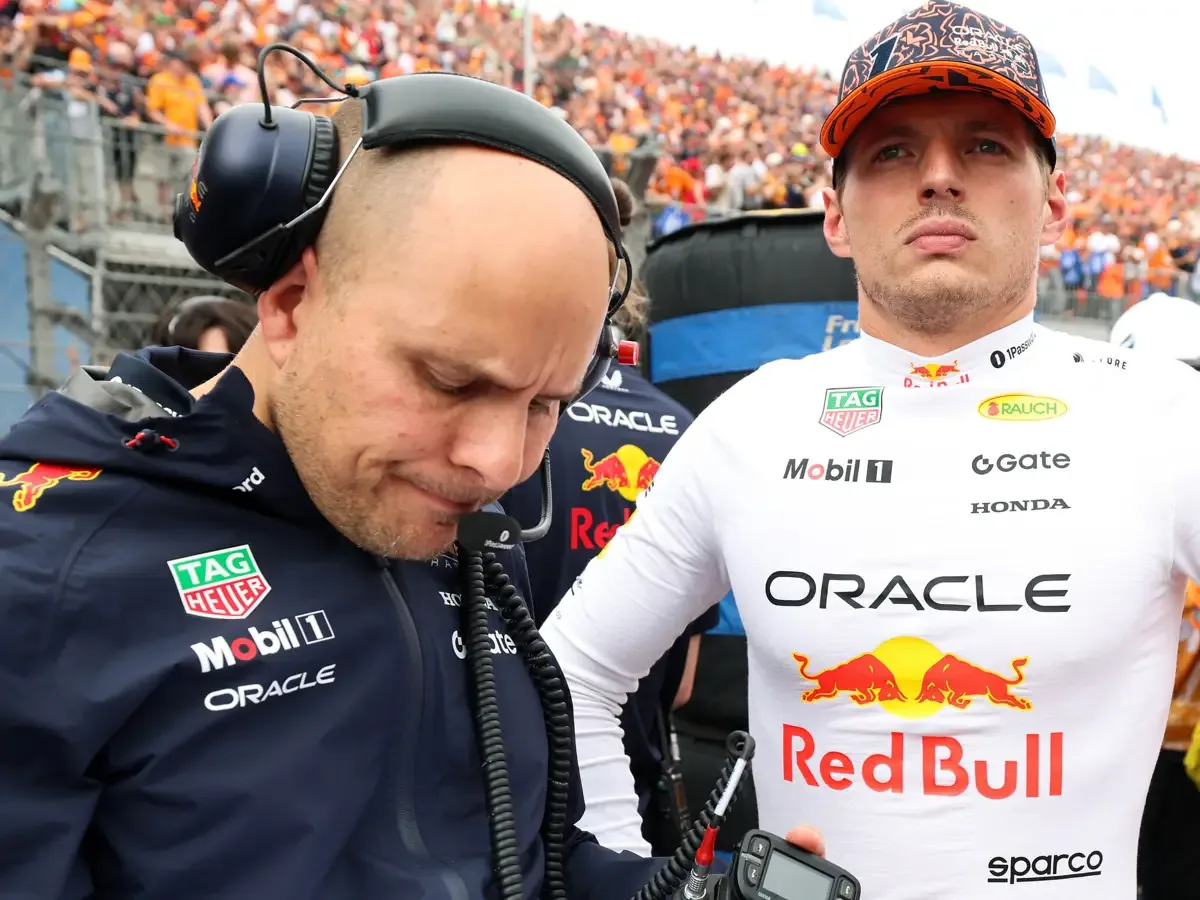
(Motorsport-Total.com) – With the major regulation change in 2026, not only is the technology of Formula 1 cars changing – the way drivers work is also becoming more complex. Energy management in particular is moving more into focus. As a result, radio communication between driver and race engineer is also increasing significantly.
Read more Carlos Sainz rules out team principal role: «Pure chaos»
Several team representatives pointed this out after the first test drives. Above all, the significantly larger share of electrical energy in the new power units presents teams and drivers with new challenges.
50 percent electrical energy: New complexity in the cockpit
Racing Bulls CEO Peter Bayer explains how complex the new generation of Formula 1 cars is: “The importance of the electrical component that is now part of the engine – 50 percent is electrical energy,” he says on Sky. This is exactly what creates a completely new complexity for the driver and team.
“For the driver, it’s primarily about energy: When does he have to charge, how does he have to charge, and when does he use this energy?”
Problems can arise, especially in the initial phase. During a test run, for example, a software problem occurred that initially caused difficulties. The solution was ultimately comparatively simple: “In principle, as is so often the case with these devices: turn it off, turn it on, reprogram it – then it works again.”
More radio traffic during the laps
The more complex energy management also means that drivers need more support from their engineers. Especially at the beginning of the tests, radio communication was significantly more intensive.
“At the beginning, there was a lot of communication towards the driver,” Bayer explains. It only became quieter as experience increased. “The driver starts to understand where he can get performance.”
Classic driving patterns are also changing. Even braking and acceleration points can shift. “The braking points are partly different,” says Bayer. “For drivers who know the tracks from last year, a lot of the behavioral patterns are changing.”
In addition, there is another challenge: after a fast lap, the driver sometimes has to drive at high revs again immediately to start the charging process for the battery. “It’s more complex,” Bayer admits – but adds: “I have the feeling that it’s working and slowly gaining momentum.”
Read more Leclerc jokes about Hamilton: «Maybe he’ll give me the world championship title»
Simulator becomes the key to preparation
Due to this new complexity, preparation in the simulator is also becoming more important. “We are trying to spend even more time in the simulator because it’s really about these processes,” Bayer explains. Drivers and engineers have to learn to perfectly coordinate the energy flows and processes in the car there.
The technology of the simulators is also constantly evolving. “The models are getting better from year to year,” says Bayer. Meanwhile, even artificial intelligence is helping to further improve the simulations.
Ferrari ambassador Marc Gene also confirms that simulator work is becoming increasingly important. From conversations with the drivers, one topic in particular has emerged: energy.
“The biggest difference is that there is a lot of feedback from the engineers to the drivers about how they can use the energy better,” Gene explains. Sometimes the engineer even gives very specific instructions: “For example, how he should start, where he can go full throttle, or how he should drive a certain corner.”
This can sometimes feel unusual for the driver. “Sometimes the driver even asks: ‘Why do you want me to do it like that?’ That’s why some driving behavior doesn’t always seem completely natural.”
Strategy work more important than vehicle development
Preparation in the simulator has also changed as a result. In the past, vehicle development was often the focus – today it is more about strategy and processes.
“Simulators today are not so much for car development, but for strategy development,” Gene explains. This can be crucial, especially during tightly scheduled race weekends.
That’s why drivers now spend significantly more time in the simulator than before. While in the past one preparation day per race was usually common, this has now expanded significantly. “I remember seeing Charles and Lewis in Maranello often,” says Gene. “Much more than last year in the simulator.”
Read more Williams in trouble: What «makes no sense» for Alex Albon in the cockpit