(Motorsport-Total.com) – Kimi Antonelli impresses in the 2026 Formula 1 season with speed and consistency. Six wins, six pole positions, and the lead in the drivers’ standings speak a clear language.
Read more Why Formula 1 newcomer Cadillac is not yet thinking about «fine-tuning»

A key factor is not only his extraordinary talent but also his driving style, which fits particularly well with the characteristics of the new generation of cars.
A year ago, it was different: At Spa-Francorchamps, Antonelli experienced one of his toughest race weekends in Formula 1 in 2025. At that time, he lacked confidence in the car due to problematic rear axle setup. Twelve months later, he won on the same track and went into the summer break as the championship leader.
Spa in particular illustrates how much Antonelli has developed—and why his driving style is especially effective with the 2026 cars. To understand this, it is worth looking back at the last generation of ground-effect cars.
Why the ground-effect cars were so special
These vehicles had enormous stability but could also surprise their drivers suddenly. Because as soon as the aerodynamic balance was lost, the rear could often break away without warning. Many drivers described in recent years how difficult it was to control a car in this borderline area.
Another challenge was the so-called combined load phase at corner entry: the moment when braking and steering happen simultaneously.
What changed for the 2026 season
With the introduction of 18-inch tires, the tire sidewall height was significantly reduced. This also reduced the contact patch of the tire. Drivers who brake particularly aggressively into corners lost part of their previous advantage and had to adapt their driving style.
Black Gold: All F1 Tire Manufacturers
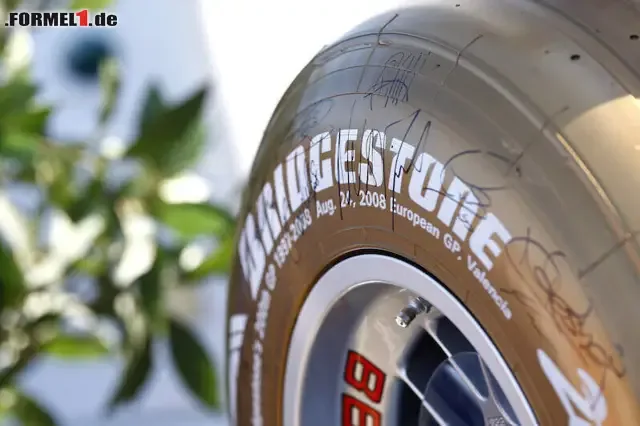
Pirelli tried to mitigate these effects, but they could not be completely avoided. Pirelli’s sporting director Dario Marrafuschi explained in an interview with Motorsport.com Italy, a sister platform of Motorsport-Total.com at Motorsport Network: “When the contact patch becomes shorter, the transition between grip and loss of grip is much more abrupt. Therefore, it was expected that drivers would have greater difficulties especially when turning in.”
With the new regulations, the situation has changed again: The tires have become narrower to reduce air resistance. This made the phase between braking and turning even more demanding.
McLaren team principal Andrea Stella describes the problem as follows: “Especially during the transition from braking to turning, it is extremely difficult to protect the front tires from locking up. At the same time, the tires lack some ability to cleanly transition from longitudinal to lateral load.”
Another feature of the new cars is that the rear is less stable than with the previous ground-effect vehicles but reacts more predictably. This allows drivers to work more with the vehicle balance. Several drivers already reported after the first test drives that the 2026 cars are more pleasant and intuitive to drive despite lower downforce.
The quick steering impulse stabilizes the car
Therefore, driving style plays an even bigger role. Marrafuschi explains what Pirelli has observed here: “Some drivers deliberately load the front tires. They turn the steering wheel very quickly to a large steering angle. This causes the car to initially go somewhat straight, which in turn stabilizes the rear.” Only then does the front axle progressively build the necessary grip.
Formula 1 Quiz
How many start-to-finish wins has the Mercedes team achieved in F1?
Test yourself now in the Formula 1 quiz and compare yourself with other users
However, this driving style also significantly affects tire wear and tire temperatures. According to Pirelli, these differences between individual drivers can be clearly proven in the tire data.
Read more Mercedes clarifies: Did not «dominate» in the first half of the season
How Antonelli drives into corners
Antonelli makes use of exactly this principle. His trademark is an extremely aggressive corner entry: shortly before the apex, he steers quickly and forcefully. This impulse supports the rotation of the vehicle.
Antonelli describes his style himself as follows: “I try to shorten the corner radius and keep the time between braking and the neutral phase as short as possible. I fold the corner somewhat like a handkerchief. I steer very late and very aggressively.” This forces the car to rotate more strongly.
However, this style does not work equally well everywhere: At the Catalonia Grand Prix in Barcelona, Antonelli said he demanded too much from the car in qualifying. The high temperatures caused the rear tires to overheat early.
Where Kimi Antonelli lost the most points in the 2026 championship battle

He also had to adapt his style in Silverstone: There, many long high-speed corners characterize the track layout, where a smoother driving style brings advantages. In Spa, however, his aggressive driving style was clearly visible again—especially in “La Source” and the “Bus Stop” chicane.
What George Russell does differently than Kimi Antonelli
The difference within the Mercedes team is also clearly visible: While Antonelli steers very aggressively, George Russell works much more gently and progressively with the steering wheel. This style fit excellently with the ground-effect cars of recent years.
Andrea Stella said about this: “Between Russell and Antonelli, you can see a clearly different driving style. You can already see this in the onboard footage and how both use the steering wheel.”
According to the McLaren team principal, Antonelli’s strong race pace and good tire management cannot be explained solely by the car: “If it were only down to downforce, these differences with the teammate would not be explainable.”

According to Stella, the fundamental characteristic of the new generation of cars is clear: “This year’s car demands drivers to constantly attack. Those who try to drive particularly cleanly and smoothly and mainly let the car roll over the front axle are currently hardly rewarded with lap time.”
Why Antonelli currently benefits
Antonelli’s natural driving style therefore fits exceptionally well with the demands of the 2026 cars. His aggressive way of turning in helps him especially on tracks with little grip because there the quick achievement of the optimal tire temperature window is crucial.
Already in 2025, it was noticeable that Antonelli was often particularly competitive under difficult grip conditions. In 2026, this advantage seems to come into play even more strongly.
His success is therefore not solely based on extraordinary talent. It is also crucial that his natural driving style brings exactly those qualities that the current generation of cars demands: decisive turning in, high vehicle control, and an exceptionally fine sense for tires and balance.
Read more Williams team principal admits: «The extent of our crash surprises me»