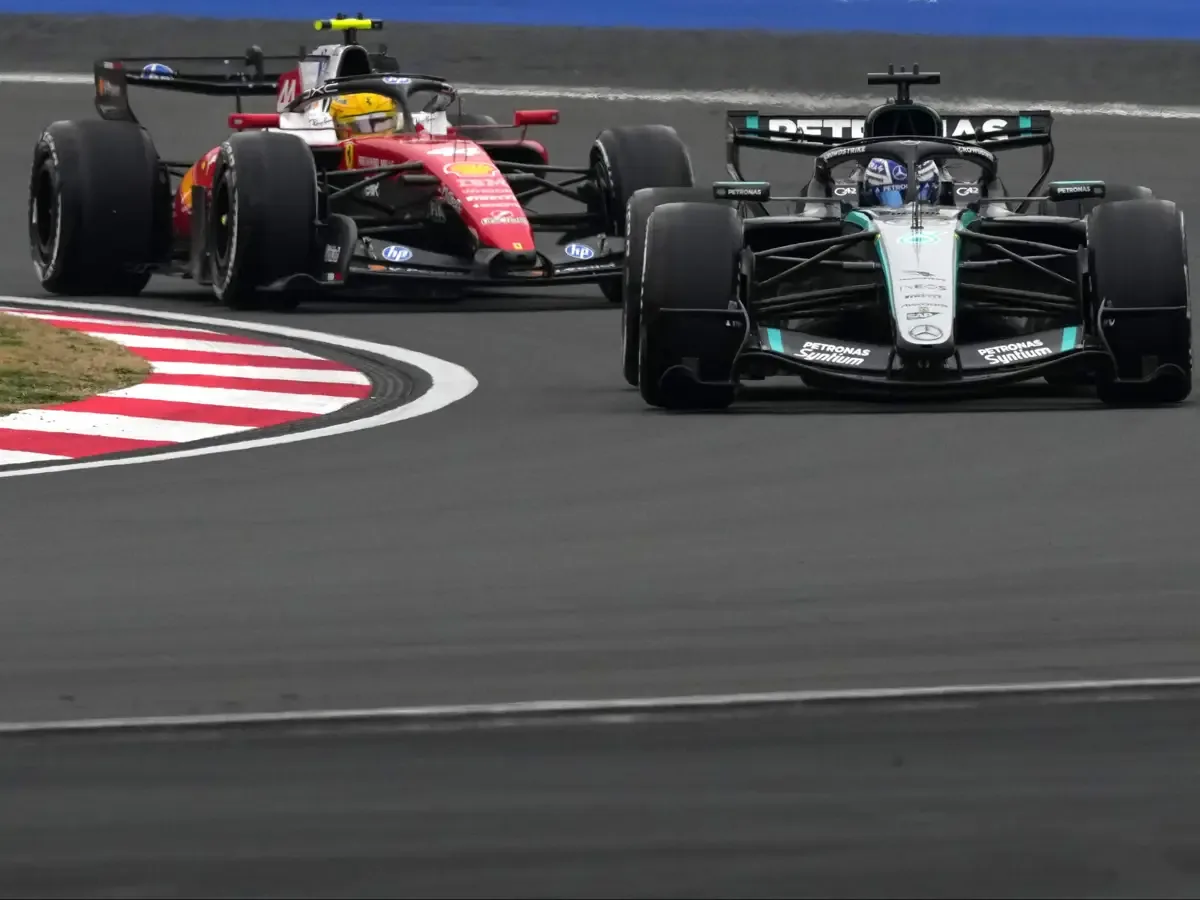
(Motorsport-Total.com) – After two Grands Prix and a sprint race in the 2026 Formula 1 season, the winner has been Mercedes every time so far. However, these victories were not quite as effortless as the results might suggest.
Read more Aston Martin: Probably not much faster even without Honda engine vibrations
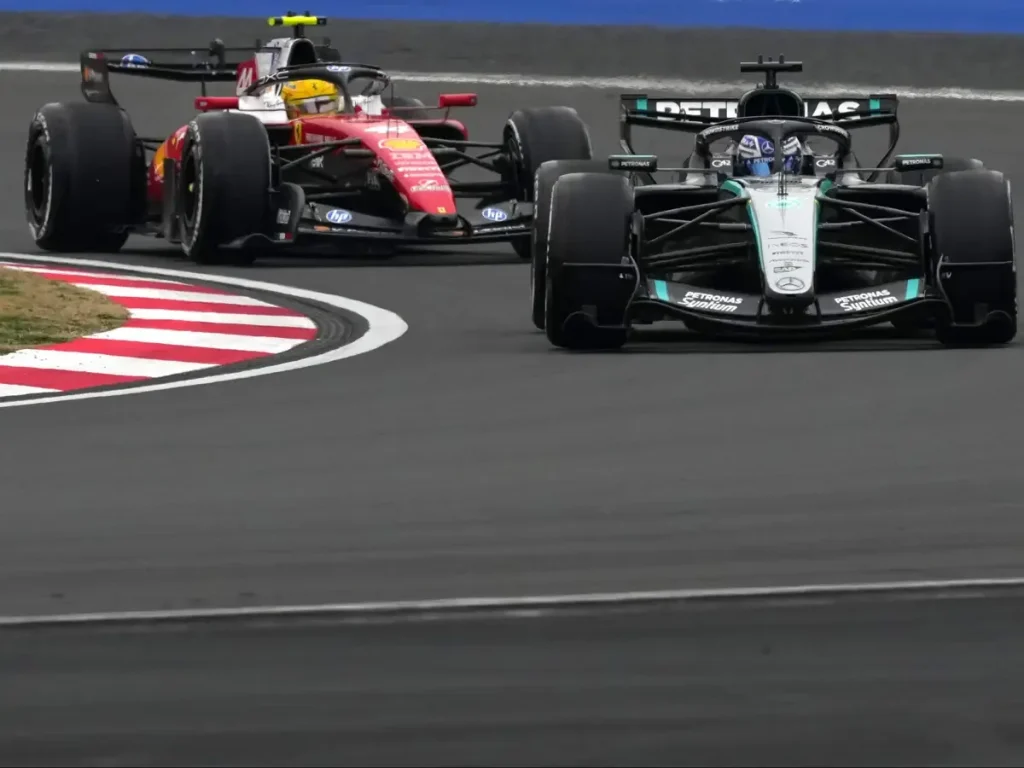
In all three races, the Silver Arrows had to seriously defend themselves against Ferrari. Above all, the Scuderia’s strong starts ensured that Ferrari was able to take the lead initially in each case. (ADVERTISEMENT: Experience the complete premier class of motorsport live on Sky!)
However, Ferrari has not yet been able to turn this into a race victory, as Mercedes has had the faster overall package so far. The central question is therefore: How close is Ferrari actually to its first Grand Prix victory of the season – and is the team a serious challenger in the fight for the world championship title?
Where Ferrari loses time to Mercedes
A look at the data provides the first clues. At the season opener in Australia, Ferrari was 0,809 seconds behind Mercedes’ pole position in qualifying. In Shanghai, this gap narrowed to “only” 0,351 seconds. The reason for this lies primarily in energy management: in Melbourne, this factor played a significantly larger role, allowing the Mercedes engine to exploit its advantage more effectively.
In the corners, on the other hand, the Ferrari SF-26 seems to be almost on a par with Mercedes – possibly even slightly faster. This is indicated by the sector data from qualifying in China. A large part of the gap of a good three and a half tenths of a second occurred in the last sector with its long straight.
In the first sector of Q3, Mercedes was only 0,060 seconds faster than Ferrari. In the twisty second sector, which contains practically no straights, Charles Leclerc even set the fastest time – 0,004 seconds faster than Kimi Antonelli. It was only in the top-speed-heavy third sector that Mercedes was able to make up significant time.
There, Lewis Hamilton lost 0,148 seconds to pole-setter Antonelli, and Leclerc even lost 0,263 seconds. A similar picture emerged in Sunday’s race: Ferrari was competitive in the second sector, lost a little time in the first sector, but the biggest gap again occurred in the third sector.
The telemetry data shows a clear problem: Mercedes not only reaches a higher top speed, but also loses significantly less speed at the end of the straights during so-called “super-clipping”. This exact point played a decisive role in Australia. There, super-clipping was particularly pronounced – and allowed Mercedes a larger lead.
Lack of top speed not Ferrari’s only problem
Reducing the gap solely to a lack of top speed would be an oversimplification – even if engine power undoubtedly accounts for the largest share of the performance difference. Another important factor seems to be tire management.
Already in Melbourne, it was noticeable that the Ferrari worked significantly better on the medium tires at the start of the race. Charles Leclerc was able to defend himself against George Russell for a long time, although the use of boost mode likely played a role and may have kept Leclerc at the front artificially.
In the second stint, however, a different picture emerged. Ferrari had hard tires that were 13 laps fresher than those of Mercedes. According to the data, this should have provided a pace advantage of around nine tenths per lap. In fact, Leclerc was only three hundredths per lap faster than Russell. The hard C3 tire therefore seemed to work significantly less effectively on the Ferrari.
Ferrari: Round 29 in China causes the break
In China, a different pattern was noticeable. Ferrari was able to keep up well with Mercedes, especially at the beginning of the stints, but was later overtaken and finally clearly distanced. The phase after the safety car restart in lap 14 is particularly interesting.
Ferrari initially managed not only to overtake Russell back on the track but also to keep him behind for a relatively long time. Apparently, the Ferrari brought the tires up to temperature faster. But after Russell finally overtook the Ferraris in lap 29, there was a clear drop in performance.
Between lap 14 and lap 29, the Ferrari drivers drove an average time of 1:37,2 minutes. Kimi Antonelli at the front achieved an average lap time of 1:36,9 minutes in the same period – so only three tenths faster. And this despite the fact that the Ferraris were constantly fighting each other and Russell during this phase.
Read more No rule changes before Japan: Toto Wolff warns of «political intrigue»
If, on the other hand, you look at the phase from lap 30 to lap 56, a significantly different picture emerges: Mercedes drove an average time of 1:35,8, while Ferrari managed a 1:36,5. The gap suddenly grew to seven tenths per lap – even though the intense duels were largely over by this point.
Data shows: Mercedes has the advantage in tire management
A closer look at the tire wear data provides a possible explanation. Overall, tire degradation in Shanghai was relatively low, so a one-stop strategy was easily possible. Nevertheless, there were differences between the teams.
Over the entire race distance, Mercedes lost an average of 0,021 seconds per lap due to tire wear. For Ferrari, this value was 0,037 seconds per lap.
After the first two races, a possible pattern is emerging: Mercedes apparently takes a little longer to bring the tires up to temperature, but can then keep them in the optimal window for significantly longer. Especially towards the end of the stints, the Mercedes therefore suffers less from wear than the Ferrari.
However, it is still too early in the season for a final judgment.
Ferrari further from the top than in 2025
A particularly sobering look emerges when comparing race pace. In Australia, Ferrari was – adjusted for strategy – 0,64 seconds per lap behind Mercedes. In China, the gap was 0,58 seconds per lap. This currently results in a season average of 0,61 seconds per lap.
With such a gap, last year you would have even had to worry about making it into Q3. However, the field has spread further apart overall due to the new regulations. In 2025, Ferrari was only the fourth fastest car in the field, but over the entire season it was on average “only” 0,55 seconds per lap behind McLaren in race pace.
The gap was also smaller in qualifying back then: on average, Ferrari was around 0,44 seconds behind the world championship team in 2025. In the current 2026 season, after two races, it is already 0,58 seconds behind Mercedes. From a purely statistical point of view, Ferrari is therefore further from the top than in the previous year.
Mercedes dominance: Ferrari far from a world championship chance
Or to put it another way: Mercedes is currently presenting itself as extremely dominant – to an extent that was last observed at the beginning of the hybrid era. The current lead even exceeds the dominance of McLaren in 2025 (0,31 seconds lead) and the dominance of Red Bull in 2023 (0,57 seconds), when Max Verstappen won 19 of the 22 races of the season.
Even 2020 – the year of the famous DAS system and 13 wins from 17 races – Mercedes was statistically less superior. At that time, the average lead was 0,55 seconds over Red Bull. A comparable dominance was therefore last seen between 2014 and 2016 – also from Mercedes.
In view of these figures, it seems questionable how realistic Ferrari’s chances in the fight for the world championship title actually are. As a rule of thumb in Formula 1, teams can find about eight tenths of a second in lap time through further developments within a year – including the winter break.
If you apply this rule to the current situation, Ferrari is currently almost a full development year behind Mercedes. At the same time, it can be assumed that the Silver Arrows will also continue to improve their car. However, the development rate could currently be higher than usual, as the new regulations are still relatively at the beginning.
Nevertheless, one thing is certain: Ferrari is currently still a long way from a car that can fight for victories on its own. The strong starts and the numerous duels with Mercedes – often artificially caused by battery use – can therefore easily give a false impression.
The reality is currently clear: Mercedes is dominant. More dominant than ever before. And Ferrari still has a lot of work ahead of it.
Read more Spectator surge in Shanghai: 230.000 see Antonelli victory on-site