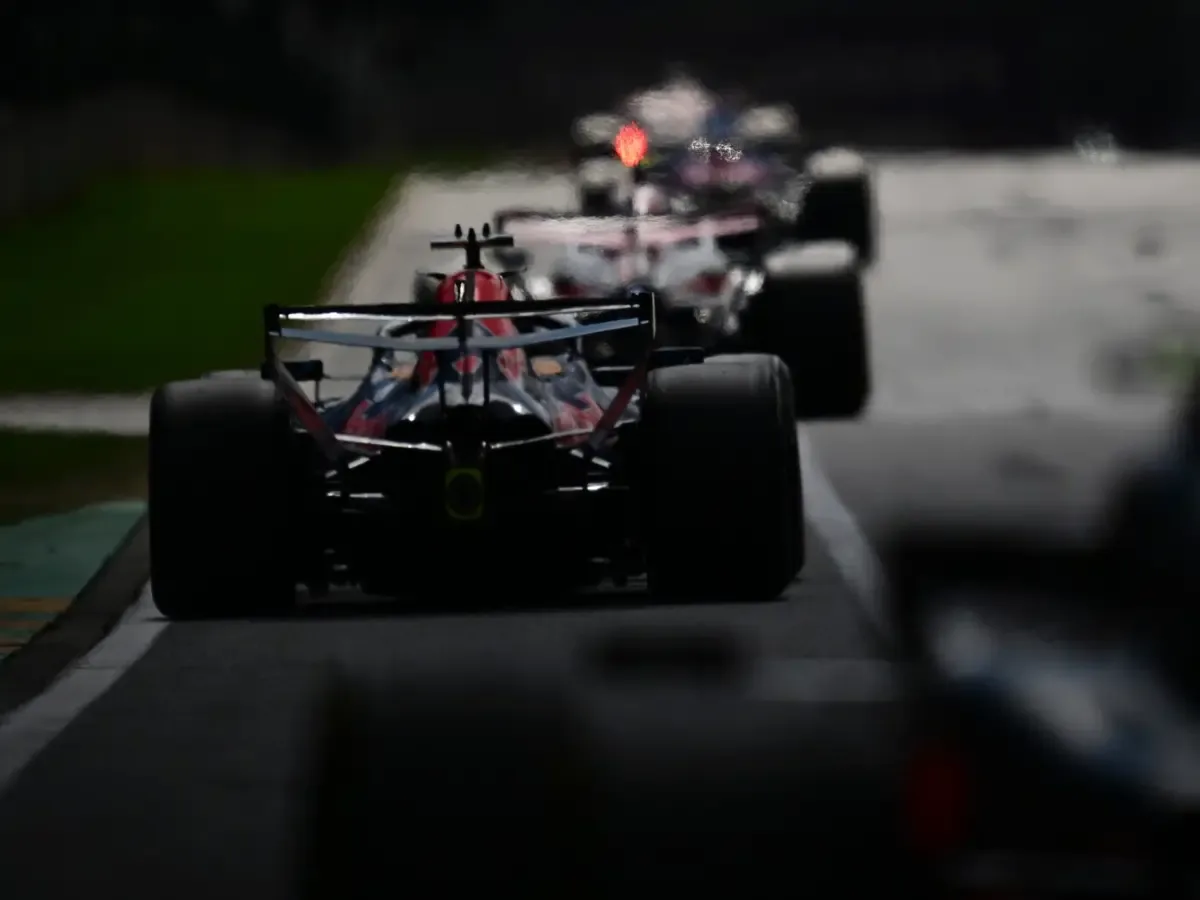
(Motorsport-Total.com) – “I’m not quite sure what to make of it,” was the consensus in the Melbourne Media Center after Mercedes driver George Russell won the Australian Grand Prix. Because what exactly had we all actually seen: an entertaining spectacle or artificial racing that is quite far from what Formula 1 should be at its core?
Read more «Engineers love him»: Formula 1 rookie Arvid Lindblad impresses Racing Bulls
Yes, especially in the first half of the race, there were numerous overtaking maneuvers. But does that automatically mean a high entertainment value? As expected, Formula 1 highlighted the number of overtakes on social media. However, the crucial question that inevitably follows is: what kind of overtaking maneuvers were they actually?
In most cases, these were maneuvers resulting from large differences in energy management, sometimes even unintentional, as Gabriel Bortoleto explained. In the early stages, a kind of yo-yo effect effectively developed: a driver used electrical power on a straight to initiate an overtake, but was then left with an empty battery – and was promptly countered on the next straight.
Many overtakes, but not in the desired way
Yes, that officially counts as two overtakes, but is it really the image we want to see of Formula 1 when someone simply flies past on the straights due to a large energy delta? For purists who already found DRS overtakes artificial, this development goes one step further.
The overtaking maneuvers that usually receive the greatest appreciation from fans look different. Just think of how Max Verstappen went around the outside of Oscar Piastri in Imola last year, or how Piastri overtook Lewis Hamilton on the outside at the 2025 Australian Grand Prix.
Drivers coming side-by-side into the braking zone – these are exactly the scenes we hardly saw in the first race of 2026. So while the pure number of overtakes was high, the way they came about remained only partially memorable.
Formula 1 drivers critical: From Formula E to Mario Kart
While the prevailing feeling among many journalists immediately after the race was more of a cautious “We’re not quite sure what to make of it,” the drivers were much more open after the short walk to the so-called Media Pen, where they answer journalists’ questions.
Lando Norris had already said on Saturday that, in his view, Formula 1 had gone from the best cars of all time to the worst, and on Sunday, when asked about the 2026 racing, he simply replied: “Even worse.”
Whether last year’s cars were actually the best of all time is a matter of debate; many in the paddock see it differently given the numerous disadvantages of the ground-effect era. But Norris was by no means alone in his criticism that the race felt “too artificial.”
Almost every driver who spoke to the written media shared this view. The most entertaining anecdote was provided by Oliver Bearman: “In lap 1 and lap 2, I didn’t really know what was happening. I just thought: I’ll try this boost button and see how it works.”
“And then I just flew past everyone on the straights, so that was quite funny. It was like I was in Formula 1 and everyone else was in Formula 2. But of course, you have to recharge the battery afterwards, otherwise you’re done for on the next straight,” said the Haas driver.
“To be honest, it’s a bit ridiculous to have so much delta in one button and lose so much on the next straight. It’s also very non-linear: what you gain on the straights where you use the boost is only a quarter of what you lose again on the next straight.”
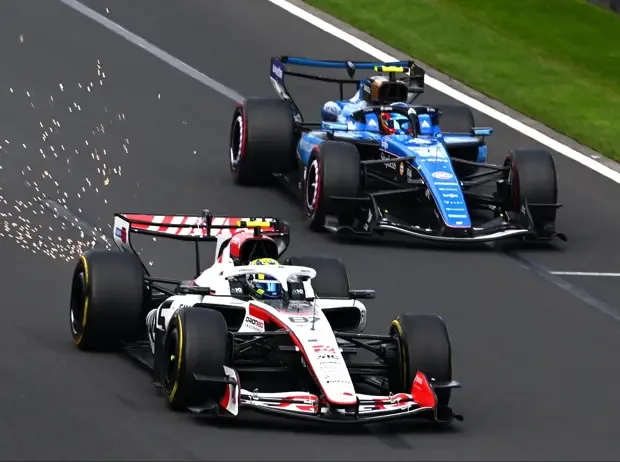
Bearman’s conclusion was clear and similar to what Max Verstappen had already said in Bahrain: “This isn’t racing, this is Formula E.” Verstappen himself told a Dutch TV crew this time that he had seen many “Mario Kart-like things” in the midfield.
If you put all the quotes from Sunday side-by-side, it becomes clear that only the Mercedes and Ferrari drivers spoke relatively positively about the new regulations. Not entirely by chance, these are the two teams that have proven to be the most competitive so far.
Read more Williams Team Principal reveals: There are «four or five suggestions» for rule adjustments
Balance between production relevance and purist product
The overall picture shows that the mood among the drivers is largely negative. However, it should be taken into account that Melbourne is one of the most demanding tracks on the calendar in terms of energy management. On other circuits, the picture might be less extreme. The FIA has already announced that it will evaluate the situation after the Chinese Grand Prix to see if adjustments are necessary.
These adjustments could affect both the so-called harvesting side – for example, by allowing super-clipping up to the full 350 kW – and the deployment side, where reducing the proportion of electrical power in race mode would be an option, at least theoretically.
Max Verstappen and Carlos Sainz, among others, have already called on the FIA to examine possible adjustments. However, such changes would hardly alter the fundamental DNA of these regulations; it’s simply too late for that.
This DNA has a lot to do with how these regulations came about in the first place. First, the power unit rules were finalized, partly to encourage Audi, and thus the Volkswagen Group, to enter and at the same time keep Honda on board.
The chassis rules were then partially designed around this engine formula to make the overall package functional at all, which Pierre Waché once aptly described as “patch upon patch.” Red Bull’s Technical Director was referring to how the rule-makers moved from one problem to the next.
Because drag had to be significantly reduced, active aerodynamics systems were introduced. This in turn made DRS redundant as an overtaking aid and required the introduction of an overtake mode. The result is a package that has become significantly more complex than most drivers would like – and one that, in their view, has pushed pure racing somewhat into the background.
All of this, however, perfectly illustrates the tension between two factors that the FIA and Formula 1 must reconcile: keeping the sport relevant and attractive for car manufacturers – and at the same time delivering a product that convinces both fans and drivers.
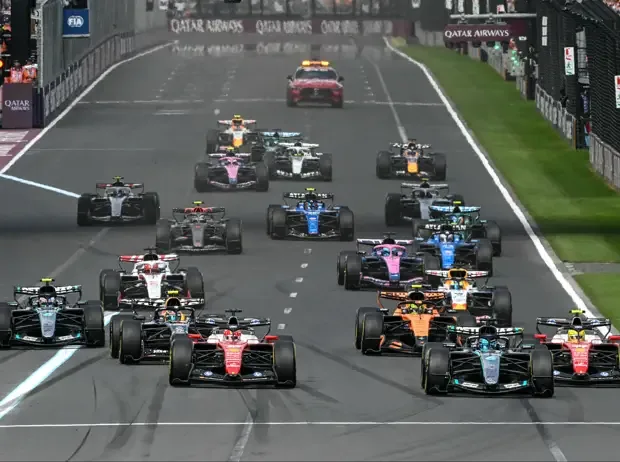
It’s a difficult puzzle. Because, as several teams in the paddock rightly point out: without its manufacturers, Formula 1 is nothing. With only Ferrari, Mercedes, and perhaps Red Bull as power unit manufacturers, the balance would possibly be extremely fragile.
With five manufacturers, Formula 1 is now firmly anchored, even if the question remains at what price this happens. In defense of the FIA and the current rules, however, it must be noted that the broader automotive world has changed somewhat since the 2026 rules were finalized.
Ford Racing Director Mark Rushbrook told Autosport that the brand’s overarching strategy has shifted recently. Originally, the American manufacturer had planned to stop production of road cars with pure internal combustion engines, but has since moved away from that decision.
Together with FIA President Mohammed bin Sulayem, who had already tried to prepare the ground for an alternative engine formula last year, it might be possible to steer things in a different direction for the future, perhaps even earlier than 2031.
After the sprint weekend in China, an initial assessment will take place, where according to Williams team principal James Vowles, “four or five suggestions are on the table.” The big question remains, however, to what extent these options can actually have a noticeable impact.
Because the current complaints concern the fundamentals of the regulations, and these are directly related to everything described above: the balancing act between relevance for manufacturers and delivering a strong racing product for drivers and fans. Finding the ideal balance remains a difficult task – as the weekend in Melbourne clearly showed.
Read more Ferrari: Lewis Hamilton believes in catch-up against Mercedes