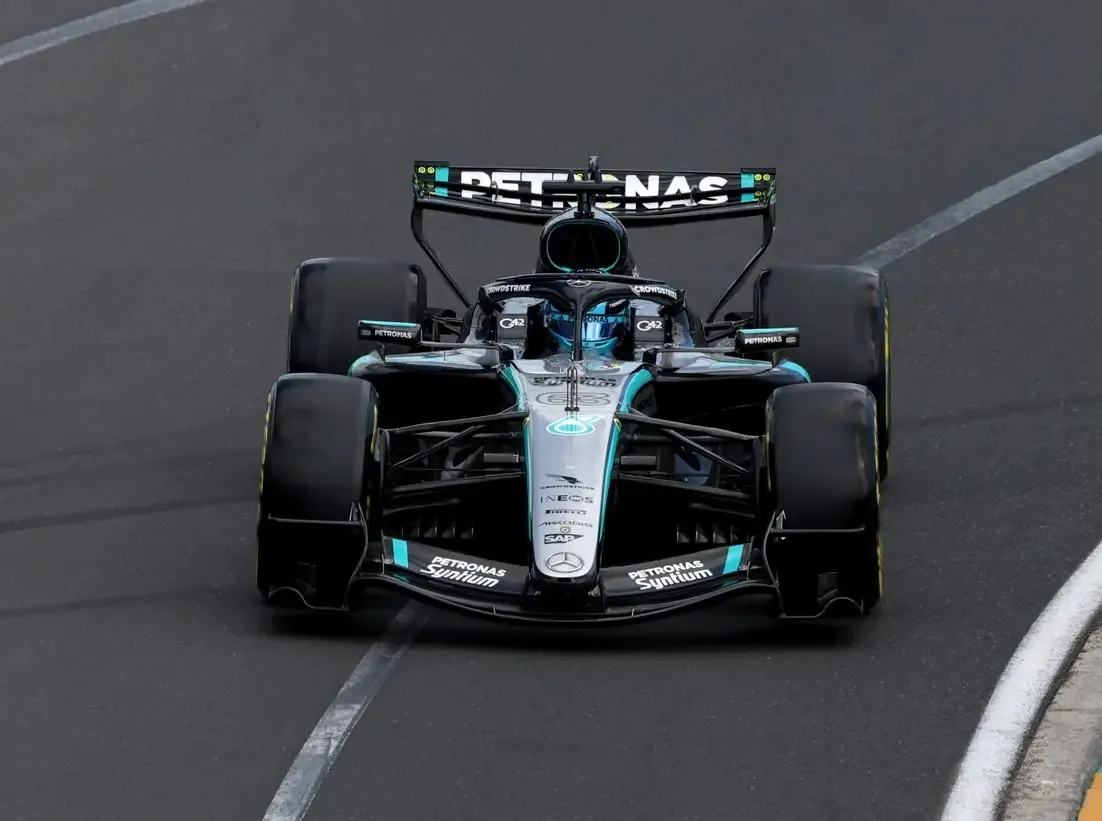
(Motorsport-Total.com) – After the season opener in Melbourne, discussions in the paddock, alongside the usual rule frustration, revolved primarily around one topic: Mercedes has finally flexed its muscles. Although Toto Wolff played it down after George Russell’s victory, saying they still had a “tough fight ahead” against Ferrari, between the lines in Albert Park there were clear signals that the Silver Arrows have pulled away from the competition.
Read more Montoya explains: Why Lewis Hamilton must win the duel against Leclerc
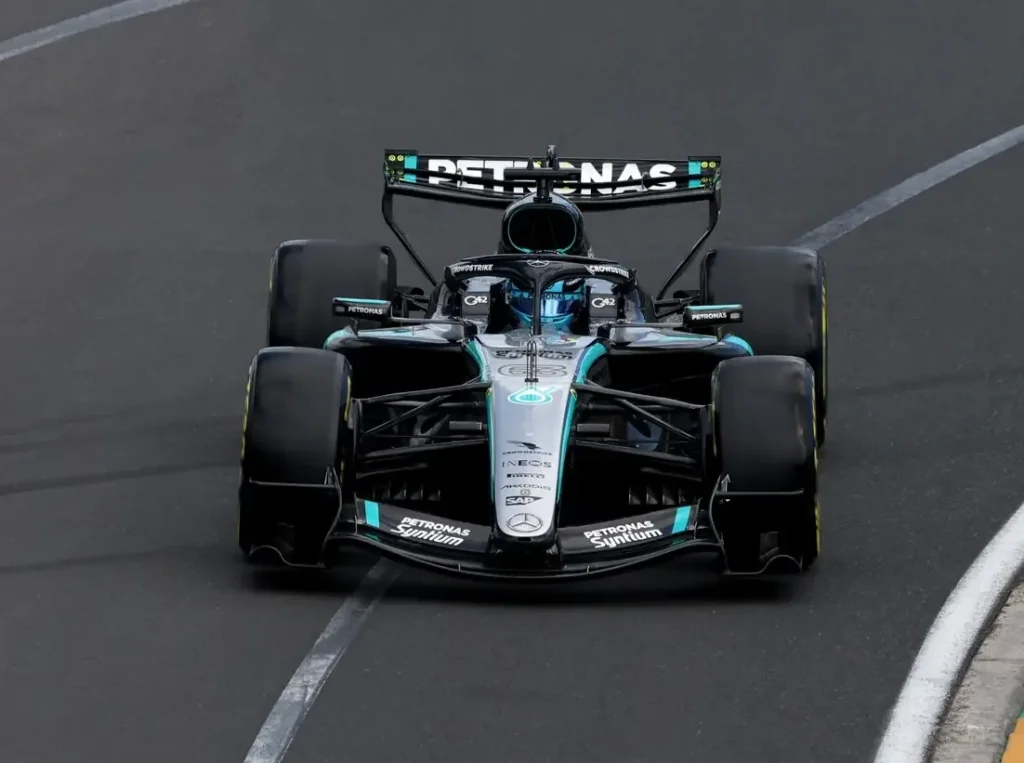
The fact that the opening phase seemed closer than expected was also due to the nature of the current regulations. Energy management has become a yo-yo game: whoever overtakes often pays a high price in top speed on the following straights, making counter-attacks more likely than ever before.
This is exactly why Lando Norris described the racing as “even worse” than qualifying and criticized it as “far too artificial.” A side effect: even with more pace in hand, it is extremely difficult to pull away. Only when Mercedes had clear air did the true advantage become visible – especially when Russell even set faster lap times on older tires after the Ferrari stop.
Mercedes faster everywhere
The key to success lies in the highly efficient energy delivery. This was already shown by Saturday’s data analysis. In a direct comparison between Russell’s pole lap and Oscar Piastri’s fastest McLaren lap, the GPS data proves: the Mercedes was faster in almost every corner.
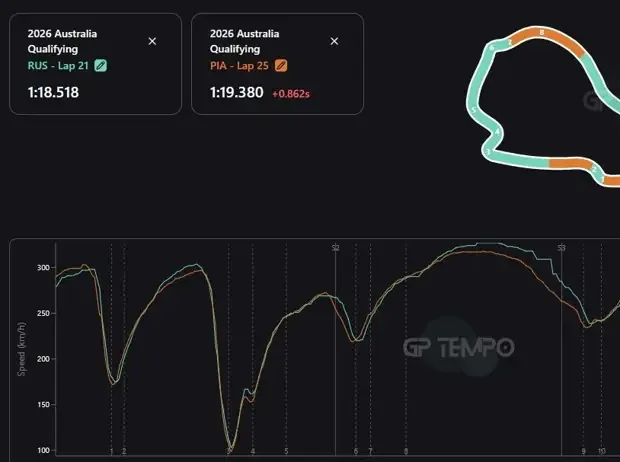
Normally, a car pays for this on the straights – but not the Mercedes. And that’s exactly where the catch lies. Although Russell didn’t appear at the top of the FIA speed traps, he gained massive time on McLaren over the entire length of the straights.
This became particularly clear on the way to Turn 6 and in the section towards Turn 9. The GPS curves reveal: Piastri lifted off earlier before Turn 6, while Russell stayed flat out longer, which normally means less energy recovery.
Where does the efficiency come from?
Actually, the Mercedes driver should have paid for this on the full-throttle section towards Turn 9, but the opposite was the case: the delta even increased, while Piastri fell into so-called “super-clipping” significantly earlier.
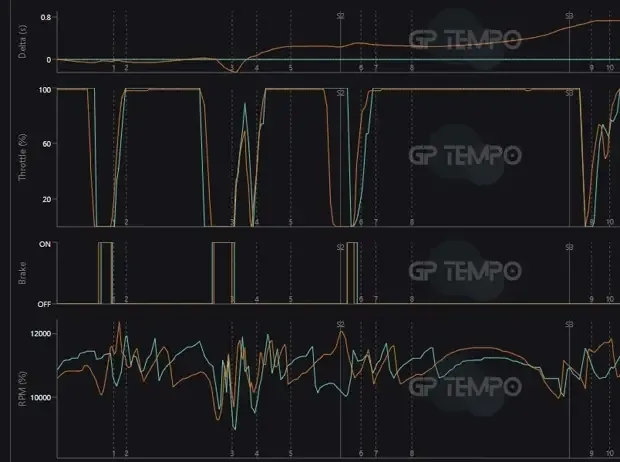
This speaks volumes about the factory team’s efficiency advantage. The Star is faster in the corners, yet still recovers enough energy – partly through more frequent use of lower gears – so as not to starve on the straights.
The big question is: how can Mercedes be so much more efficient with basically the same power unit package? Part of it certainly lies in the chassis and aerodynamics, but that’s not the whole truth. Much more decisive is how much more Mercedes is squeezing out of the brand-new power unit in terms of energy management.
Stella satisfied with Mercedes
“We looked at many overlays, especially from Mercedes,” McLaren team principal Andrea Stella admitted after the race in Melbourne. “The analysis clearly shows: as a team, in collaboration with the HPP engineers (Mercedes engine department in Brixworth), we have to do our homework. When I see what HPP is getting out of the power unit, there is obviously still a lot of untapped potential.”
Read more Max Verstappen with new criticism: «That’s what I do when I play Mario Kart»
Stella adds: “It’s not obvious how to do it. We are on a learning curve – and it’s naturally steeper for the factory team. The guys in Brackley have been working closely with HPP for ages. We will now intensify the cooperation because there are some low-hanging fruits that we need to harvest.”
But there is probably more to it. The Mercedes customer teams were running a different specification of the 2026 engine during the tests in Bahrain – a base version, also in terms of mappings. While this was all perfectly legitimate contractually, it meant that the factory team was already able to gather valuable insights into the real package, while the customers were left in the dark.
Williams also loyal
James Vowles knows both sides of the coin. He knows Mercedes inside out through his years of experience in Brackley, but is now a customer of HPP as Williams team principal. He too was surprised in Melbourne by the gap to the factory team.
“What Mercedes is doing with the power unit caught us completely off guard,” said Vowles. “We only realized in qualifying how far away we are. That’s an estimated three-tenths of a second.”
However, he does not accept the accusation that Mercedes is intentionally withholding information from customers: “Mercedes is incredibly fair to the customer teams. We have access to everything they have. They were simply cleverer than us, and it’s our job to catch up. I’m just a bit shocked at how much cleverer they were.”
Mercedes as a factory team at an advantage
According to Vowles, there is no “open door” for all internal performance delivery tricks – that’s part of the competition. “We have to acknowledge that we at Williams don’t have the technological sophistication that Mercedes possesses. That’s on us, not them.”
Despite the current disadvantages, McLaren is not thinking of following Red Bull’s example and starting its own engine project from scratch.
“We are very happy with HPP,” emphasizes Zak Brown. “We won championships when everyone said it was impossible as a customer. I’m impressed by what Red Bull is doing, but it’s not a cheap adventure. If an opportunity arises, we’ll look at it, but you also see the risks if you don’t get it right.”
In Melbourne, one thing became clear: the customers know they have a competitive engine in the back. At the same time, the weekend highlighted the ugly side of dependency. The fact that the hierarchy has now shifted back after years in which Mercedes was sometimes beaten by its customers is unlikely to give Toto Wolff any sleepless nights.
Read more Record in Melbourne: 484.000 spectators at the Formula 1 opener