(Motorsport-Total.com) – Fears that the 2026 Formula 1 races will be dominated by energy management and that qualifying will no longer be an uncompromising spectacle have triggered a tiring and false wave of nostalgia.
Read more Engine advantage: George Russell amazed by Red Bull
In the long-running BBC quiz show “QI”, a loud, discordant sound accompanied by a dramatic light change is one of the show’s defining elements – whenever one of the contestants gives an answer that is not only wrong but also embarrassingly predictable.
It is high time that Formula 1 introduced something similar that can be triggered as soon as anyone raves about a vaguely remembered, supposedly “golden era” in which drivers were allegedly able to drive flat out at all times.
Excursion: The brave new world of Formula 1
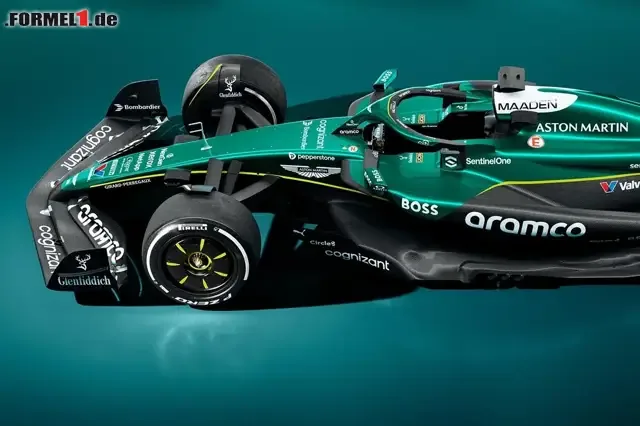
Those unfortunates who had turned up in person for the presentation of the new Aston Martin AMR26 these days would have been perfectly within their rights to press the button immediately. The event had much in common with tearing open an exquisitely wrapped Christmas present, only to find a pair of burgundy socks inside.
Imagine the scene: the long journey to Saudi Arabia to speak with a typically disinterested and uninvolved Lance Stroll; Adrian Newey stays away except for a dutiful stage appearance; and only VIPs are allowed to take photos of the car – which is irrelevant anyway, as it is merely a new livery on a show car.
Formula 1 2025: The Aston Martin AMR25 of Alonso and Stroll
Those following the whole thing from home, meanwhile, are stuck in an endless loop because someone forgot to play the pre-recorded images of the unveiling; in parallel, the TikTok feed is literally spinning out in the gravel trap. No one hits on the idea that the whole thing would gain significantly if Lance were to dance through the room at the end.
But I digress.
Much is still unknown or at least uncertain about how qualifying and racing will develop in 2026 under the new regulations. Naturally, this has triggered significant competitive paranoia, combined with a desire to return everything to where it once was – even if that is merely a place where it is located in memory.
Given the frequency with which the cycle of energy recovery and deployment must take place in every lap, energy management will also play a role in qualifying. This is likely to represent the biggest adjustment, as this session is about setting the fastest lap. Understandable – but the skepticism about it is seeping into a generally dystopian view of the new regulations, as shown by Stroll’s answer to the question about qualifying.
How Lance Stroll describes the new Formula 1
“Unfortunately, motorsport has moved more in this direction,” he said. “Since I’ve been involved, so in the last ten years, even in the races it’s about fuel management, tire management, so you just don’t drive flat out permanently. And even with the tires we have now, and even in many qualifying laps under certain conditions, you don’t drive flat out.”
“So yes, I would like to drive in an era of Formula 1 where we saw races with refueling, with light cars, good tires, where it was always flat out. But unfortunately, we don’t have that today.”
So – it used to be better. But when exactly was “before”?
Was everything really better in the past?
Denis Jenkinson, revered as the doyen of motorsport journalists, took aim at deceptive nostalgia in all its subjectivity in a 1973 column titled “When Did You Lose Interest?”
“I can almost guarantee,” he wrote, “that if I walk through the paddock at Brands Hatch to look at the new Shadow, I will encounter someone who says: ‘Grand Prix cars aren’t what they used to be, are they?’, in the hope of involving me in a conversation about his personal dislike.”
There were many of these dislikes. The common denominator was the disdain for “modern” racing compared to a transfigured memory of past times.
“The objections cover a wide range, such as: ‘they all look the same’, ‘you can’t see the driver working’, ‘all these fancy sponsors’, ‘the colors they paint them in these days’, ‘you can’t see the driver’s face with these spaceman helmets’ and ‘they all have Cosworth engines’. While I listen to all these complaints, I have the feeling that people who have ‘lost interest’ are remarkably well informed about the current scene!”
When did Formula 1 stop being Formula 1?
One imagines: if “Jenks” had stood still long enough, some elderly gentleman with his walker would have approached him – and whispered in his ear that motorsport had gone downhill when Rudolf Caracciola crashed into the wall at “Tabac” and shattered his leg.
“Occasionally I can pinpoint a specific time in the history of Grand Prix racing, such as ‘when Alfa Romeo withdrew the 158’ or ‘when Hawthorn and Collins died’ or even ‘when Jim Clark died’, but that is rare, and most grumblers cannot say exactly when they lost interest.”
The greatest Formula 1 conspiracy theories
“They only know exactly that they don’t like ‘Stewart and his team’ or ‘the black and gold Lotus’ or ‘the little roller-skate wheels’ or ‘the advertising and the strange colors’ – in short, they don’t like anything that is current. To be honest, they are professional grumblers who follow all the latest trends just so they can complain.”
Read more Energy management advantage? The new Red Bull engine stuns Russell
Tires were already a big topic in the past
In our present day, the popular misconception is rampant that in earlier eras of Formula 1 history, drivers always drove flat out and that the management of factors such as fuel and tires is a modern invention forced upon fans. Nonsense – as Stirling Moss could have reported after his victory at the 1958 Argentine Grand Prix against stronger Ferraris: he won through clever tire management.
At a McLaren event in the winter, Oscar Piastri received a suggestive question from a journalist present. To the effect: no one understands energy management and the 2026 regulations are an affront to the core philosophy of Formula 1. Piastri fended it off as best he could, but Martin Brundle, the evening’s moderator, stepped in with necessary context.
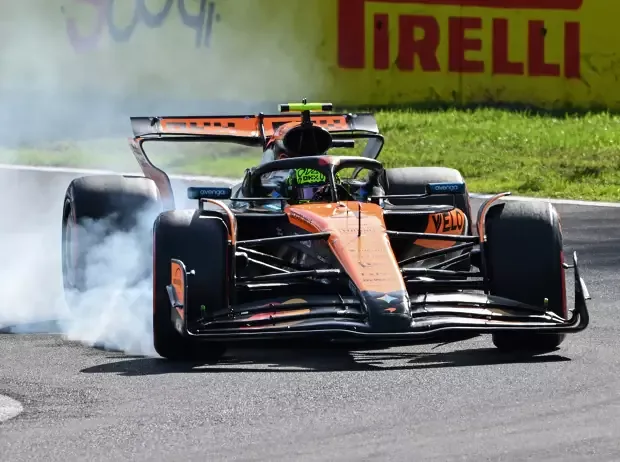
Brundle said: “It was always the same, whether with Stirling Moss and Juan Manuel Fangio back then or with Jackie Stewart, Graham Hill and Jim Clark. Back then it was drive shafts, universal joints, gearboxes in general, engines, suspension, clutch – we were always conserving something.”
“Even in the terrifying turbo years of the 1980s, we had 220 liters of fuel, so we were brutally lifting and coasting throughout the race because that was the only way to finish with halfway competitive performance and remaining fuel.”
“I once broke down on the way to the finish line and lost third place in Adelaide because I wasn’t careful enough with it. So you always had to conserve something,” Brundle explained.
Was there ever a “flat-out Formula 1”?
Was there ever a phase in Grand Prix racing where you could actually drive flat out the whole time? Well, yes – for a short window of time. But was that really good? That’s debatable.
Brabham laid the foundation in 1982 when the team reintroduced refueling as a strategic element – rather than a practical necessity, as it had been in the early years of the World Championship. Designer Gordon Murray optimized the BT50 for a small tank so that the car could drive faster between stops, but the realities of reliability at the time (followed by the ban on refueling from 1983) obscured the possibilities.
When refueling returned in 1994, some teams recognized the tactical possibilities of different fuel loads and their influence on race pace faster than others. Reliability also played a role. But by the late 1990s, races were effectively flat-out sprints between pit stops.
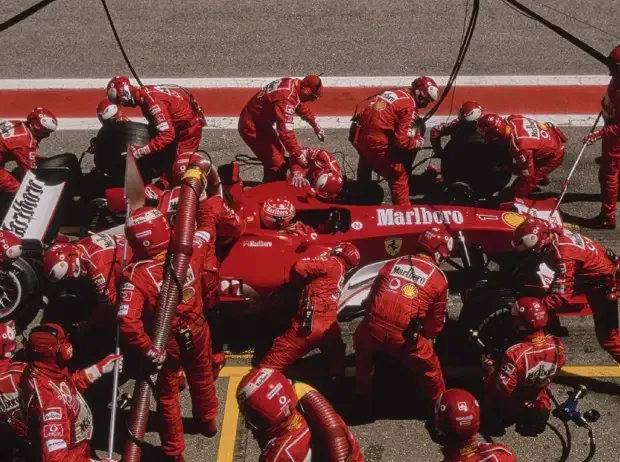
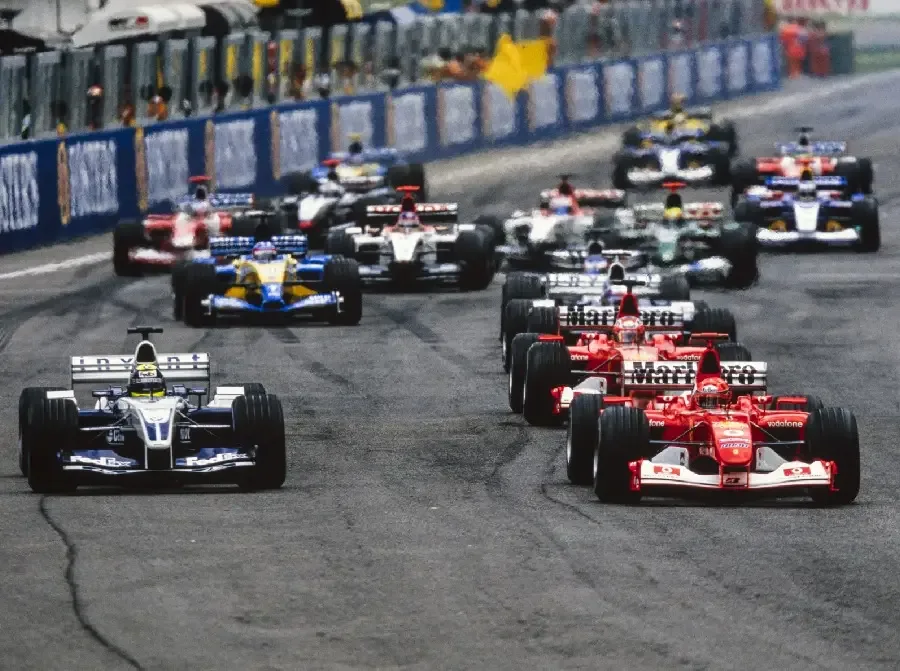
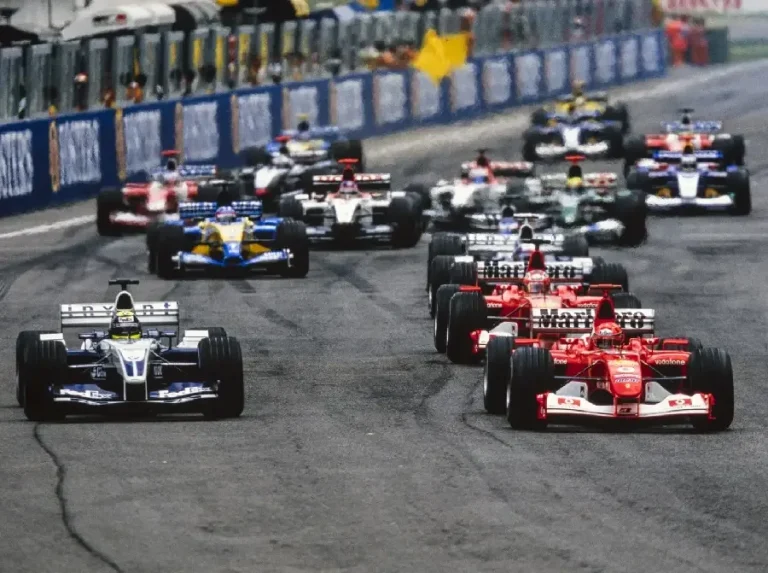
It was an era of spectacularly fast cars, but also of dominance by a single team. The Ferrari cars from 2001 to 2004 were all optimized for the philosophy of small tanks and perfected the sprint-stop-sprint-stop-sprint concept, now supported by higher reliability. Many fans remember this as a rather boring phase.
The attempt to “save” Formula 1
This is not a purely subjective view, because around this time the Bernie Ecclestone and Max Mosley axis began to panic about the impact of single-team dominance on global television ratings and started a ridiculous series of rule changes pulled out of a hat in a desperate attempt to improve the spectacle.
In 2005 alone, a season distorted by the absurd ban on tire changes in the race, the qualifying system was revised so often that it would not have been surprising if Mosley had announced that the field would in future be determined by a game of “spin the bottle”. (Photo gallery: 10 memorable rule changes)
The ten most memorable F1 rule changes
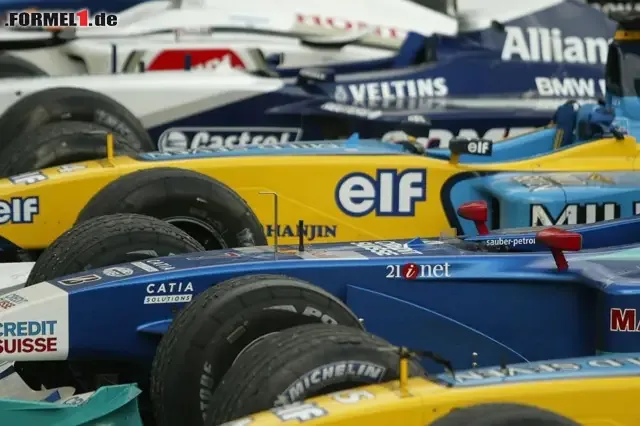
Ultimately, refueling was banned again and the system of mandatory tire changes with different compounds was introduced – with the explicit aim of ending flat-out racing because it was actually quite boring. Anyone who wants to return to this era voluntarily should remember that.
Why we like to remember
But nostalgia is, after all, the return to the carefree days of childhood and youth, isn’t it? Those who long for the 1990s and 2000s grew up during this time, blissfully unaware that their elders considered the 1980s to be better.
And in the 1980s, in turn, those who had matured by then disdained current events and longed for the wide-tired, supposedly golden era of the 1970s – which, as “Jenks” noted, left many racing fans of a certain age bewildered.
One could go on – but Rudolf Caracciola is already standing by. Please hold his beer. And his walking stick.
Note: This article originally appeared in English on our sister platform Autosport – subscribe now and read all Autosport content!
Read more Rob Smedley reveals: Why Verstappen is a “winning machine”