(Motorsport-Total.com) – For 35 years, Barcelona was the home of the Spanish Grand Prix. Since 1991, Formula 1 has been held without interruption at the Circuit de Barcelona-Catalunya (all statistics in the Formula 1 database!). In 2026, Madrid will take over the Spanish Grand Prix – but why?
Read more Williams strategy: Why Albon and Sainz have no set-up secrets

The simple explanation that Madrid outbid Barcelona with more money falls short. How much Madrid pays Formula 1 for its contract from 2026 to 2035 is not officially known. There is also no indication that Formula 1 was fundamentally dissatisfied with the track in Barcelona. Rather, the decisive factor is the overall package that Madrid offered.
The new “Madring” was created around the IFEMA exhibition center and is only about 16 kilometers from the city center and just a few kilometers from Madrid-Barajas Airport. Metro, train, and bus serve the area. When awarding the contract, it was assumed that around 90 percent of spectators could arrive by public transport. Keyword: sustainability.
Where Madrid has an advantage over Barcelona
This is an advantage compared to Barcelona. There, especially the influx of visitors in 2022 caused massive traffic problems and long queues. Formula 1 described the situation at the time as “unacceptable.” Barcelona then responded with improvements.
Even more important, however, is Madrid’s commercial potential. Around the track, the event spaces of IFEMA are available. They offer space for hospitality, VIP offers, sponsor activities, and entertainment. In the first expansion phase, there should be 110,000 grandstand seats, later up to 140,000 seats.
New Formula 1 tracks since 2000
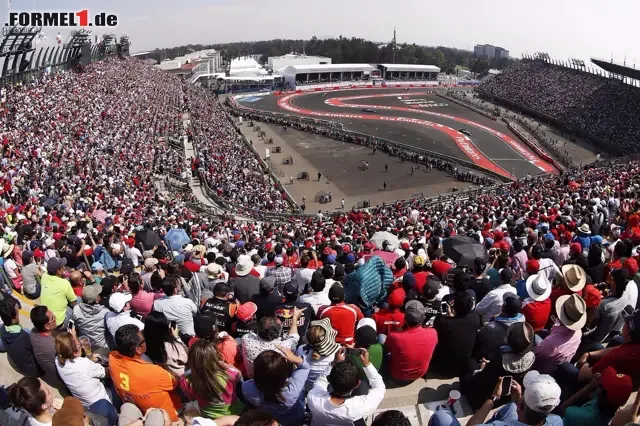
Formula 1 under Liberty Media is increasingly relying on exactly this: A Grand Prix is no longer just a car race, but a multi-day major event. Formula 1 CEO Stefano Domenicali explained at the awarding that Madrid fits the vision of a spectacle of sport and entertainment. He envisions “a multi-day sports and entertainment spectacle” that “offers fans maximum benefit and includes innovation and sustainability.”
Read more Experts: World Championship train for George Russell to Monza probably gone
The big city itself will also be part of the product: airport, hotels, gastronomy, and leisure facilities are practically on the doorstep. In addition, there is a long-term contract until 2035 inclusive.
Are tracks like Barcelona becoming obsolete?
So has Barcelona lost? Only partially. Barcelona rather represents the traditional Grand Prix model: a permanent race track outside the city, whose event was strongly publicly supported. Madrid, on the other hand, promises an event more focused on hospitality and additional revenues.
However, Barcelona has now responded: the track and hospitality have been modernized, and commercial marketing reorganized. And Formula 1 is sticking with the track: after 2026, races will also take place there in 2028, 2030, and 2032, but no longer as the “Spanish Grand Prix,” but as the “Barcelona-Catalonia Grand Prix” – and in rotation with Spa-Francorchamps.
This makes it clear: Madrid has not displaced Barcelona from Formula 1. Madrid has mainly taken away Barcelona’s status as Spain’s most important Formula 1 organizer.
Why? Because Madrid offers exactly what modern Formula 1 relies on: big city location, good accessibility, extensive hospitality, entertainment, and great commercial potential. So the decisive factor was apparently not only which race track is better – but also what can be organized and sold around this race track.
Read more Toto Wolff warns: Mercedes may not be capable of winning in Madrid