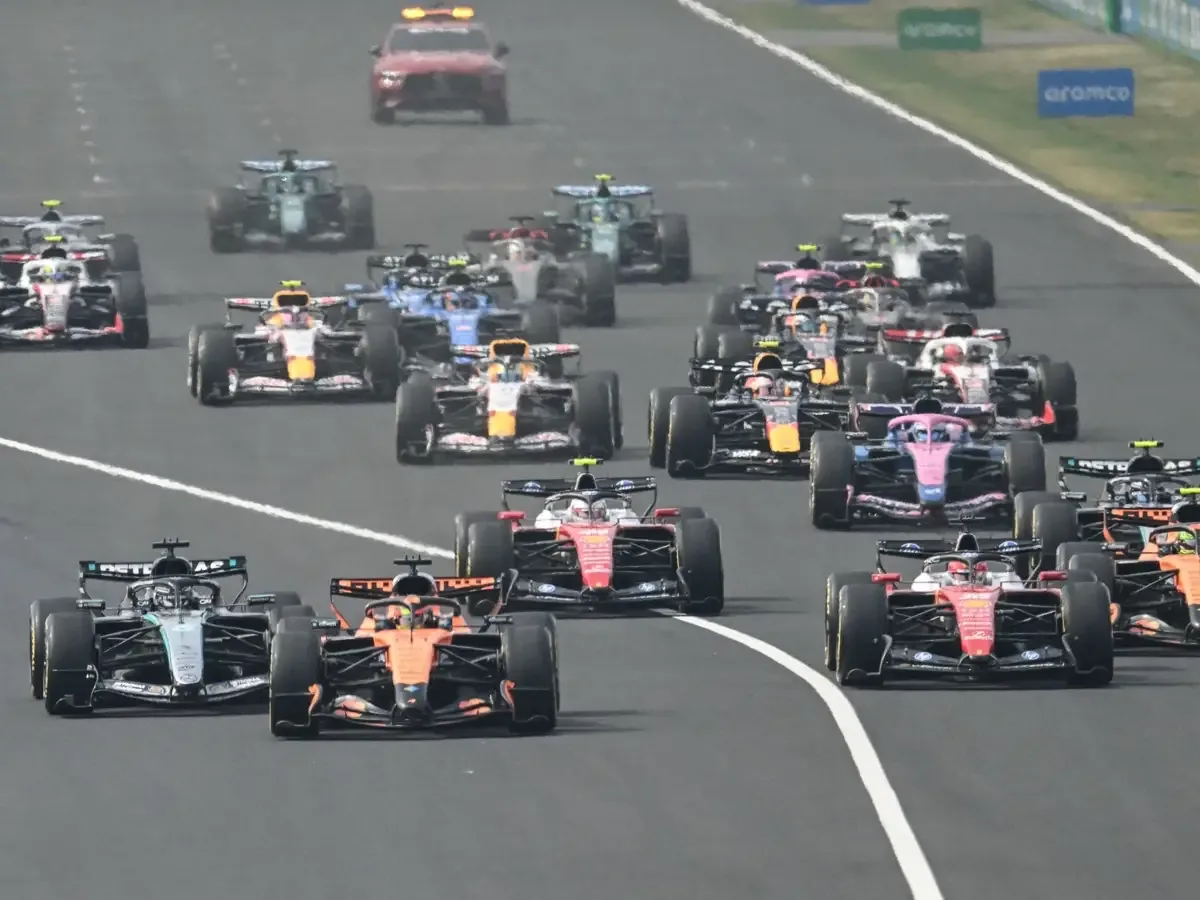
(Motorsport-Total.com) – With the new Formula 1 regulations for 2026, the race start is gaining massive importance: the revised power units deliver significantly more hybrid power, but do without the previous MGU-H on the turbo. As a result, the power delivery during a standing start becomes more uneven – the behavior of the cars in the first few meters is difficult to predict.
Read more Max Verstappen: Helmut Marko explains missing «Max factor»
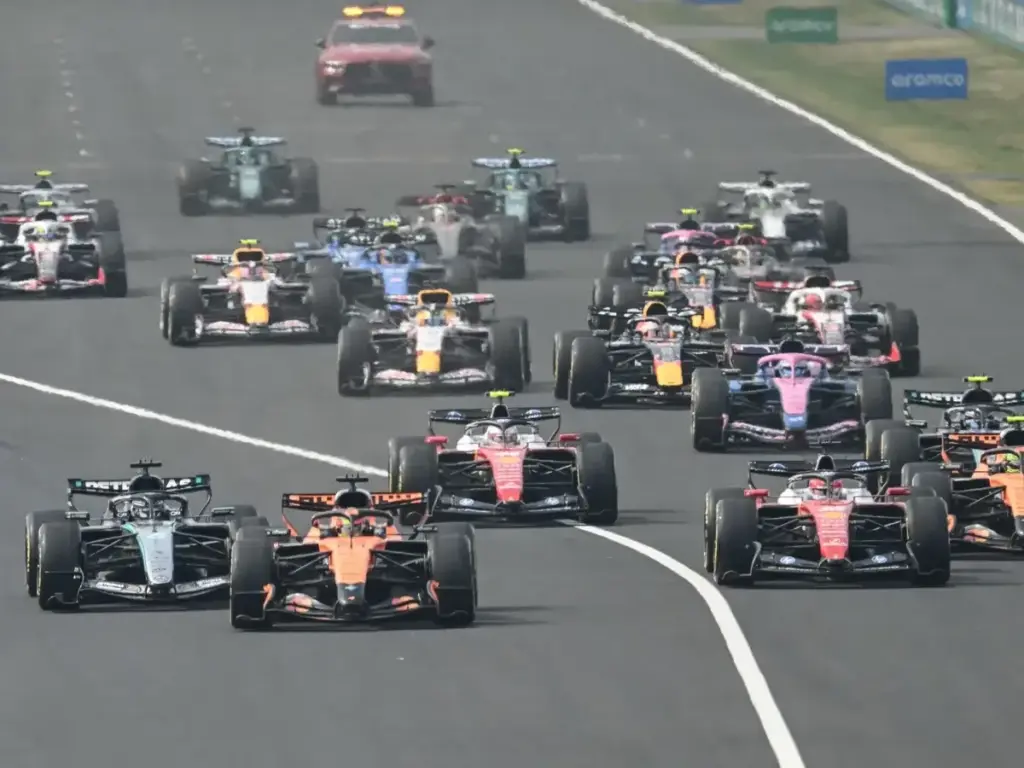
For drivers and teams, this creates a particularly critical phase in which every tenth of a second can decide positions and overtaking opportunities. Ferrari had already warned of these challenges before the start of the season, and the FIA also felt compelled to adjust the start procedure.
After the first three race weekends, it is now clearly evident how differently the teams are coping with the new conditions: some drivers regularly gain positions, while others lose significant ground. The analysis of the start phase thus provides exciting insights into who is benefiting from the new regulations – and who still has significant potential for improvement.
25 places gained: Ferrari engine the best for the start
In the four races of the 2026 season so far – including the sprint in China – all Ferrari-powered teams together have made up 25 positions in the first lap. No other engine manufacturer has reached a higher value, even if the distribution naturally varies, as Audi and Honda each supply only one team.
Aston Martin has gained 14 places in lap one so far, making it statistically the second-best engine at the start – at least at first glance. However, caution is advised: the team often starts from the back of the grid, where position gains are more likely, while losses are hardly possible.
The Mercedes engine follows with eight positions gained, with the customer teams being particularly convincing here. Things look significantly worse for Red Bull and Audi: the Red Bull-powered vehicles have lost 21 places in the first lap so far, Audi as many as 26 – even though they only supply their own team.
Best team at the start: It is not Ferrari
Surprisingly, no Ferrari-powered team is the most successful at the start. This role is currently held by Williams with a total of 18 positions gained in lap one. The Ferrari works team follows closely behind with 17 places.
However, Williams’ performance is put into perspective by their mostly rear starting positions. Ferrari, on the other hand, usually starts from the top 5, making position gains significantly harder to achieve. In this context, the Scuderia’s performance seems particularly impressive – the intensive preparation for the start is clearly paying off.
The two other Ferrari teams, Haas and Cadillac, only managed a combined four positions gained. This shows: even with an identical engine, performance at the start sometimes differs considerably – a pattern that is also confirmed at Mercedes.
Read more How Oliver Bearman is already working on his Formula 1 future with Ferrari
Start problems: What are the customer teams doing better than Mercedes?
Within the Mercedes-powered teams, the works team of all teams performs the weakest. While it is understandable that no positions can be gained from front starting positions, 22 lost places after only four starts is nevertheless striking.
Because not only Williams is convincing as a customer team, but also Alpine and McLaren – even though they also frequently start the race from better positions. Alpine gained ten places in the first lap, McLaren at least two. Oscar Piastri’s strong start in Japan was particularly striking.
The engine alone cannot therefore be the cause of the starting problems. Rather, the starting procedure itself – i.e., processes, setup, and implementation – seems to be a clear weak point at Mercedes at the moment.
Drivers: Sainz the start master, Hülkenberg’s misery
A look at the driver statistics confirms the picture: Carlos Sainz has been the most successful starter of the season so far with a total of 12 positions gained in the first lap – an average of three per race. He is followed by Fernando Alonso (10), Charles Leclerc (9), and Lewis Hamilton (8).
The large discrepancy within the Mercedes team is striking: George Russell has lost five places in lap one so far, while teammate Kimi Antonelli has lost a total of 17.
Nico Hülkenberg stands out particularly negatively: the German lost a total of 21 positions in the first lap in just three races – after not even starting in Australia.
Differences are also evident among the Red Bull-powered teams: while the Racing Bulls are largely able to maintain their positions, the works team is falling significantly behind. Both Max Verstappen and Isack Hadjar have each lost eleven places in the first lap so far.
Read more Test in Fiorano: Almost 300 laps for Lewis Hamilton