(Motorsport-Total.com) – When it comes to how to improve the sporting spectacle of Formula 1, one suggestion is heard above all from many (especially long-time) fans: refueling. Because currently only the tires are the decisive factor for pit stops, many Grands Prix have become boring one-stop races.
Read more How Red Bull wants to use Verstappen’s contract extension

Refueling would increase the number of pit stops and thus also the tactical variety, according to widespread opinion, but for safety reasons it was banned by the FIA in 2010. In addition, the association hoped that overtaking maneuvers would then take place more on the track rather than in the pit lane.
In recent years, however, the topic of refueling has been repeatedly discussed, as Racing Bulls CEO Peter Bayer reveals. Not long ago, he himself was still employed as Secretary General at the FIA and recalls a working group around then Formula 1 boss Ross Brawn.
Formula 1 Fails: These rule changes were a flop
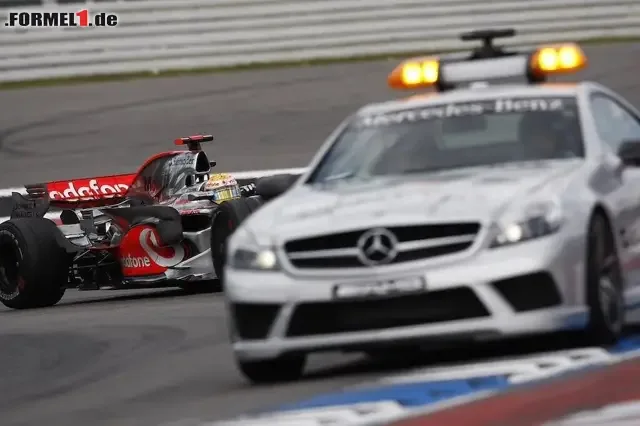
Even back then, it was about how to improve the show and spectacle. “One of the big ideas from some people was refueling,” says Bayer. But a thorough analysis of the topic yielded sobering results.
“We delved very deeply into historical footage and data available to us, and it turned out that refueling – apart from a few very spectacular and dangerous images – actually brought nothing to the sport,” he says. “The majority of overtaking maneuvers suddenly took place in the pit lane.”
Therefore, Bayer would not be a big fan of it, “because it has been proven that it actually does not add much to the show”.
Read more Hand injury: Isack Hadjar follows advice from Marc Marquez
Williams team principal James Vowles sees it similarly – apart from the fact that he does not want to wear a racing suit again at the command stand, as it gets quite warm in it. The Brit sees another danger: the strategy would become too predictable, he believes.

“We could basically predict exactly when the car will come to the pits,” says Vowles, as cars would always drive until the tank is empty, since the car is naturally fastest then due to the lower weight.
“That means today you can calculate exactly what will happen – whether someone is on a two-, three- or one-stop strategy, it doesn’t matter.” And while there was less information available in the past, that is different in today’s Formula 1 era.
“Nowadays, with the flow of information outward, everyone would have this data immediately,” says Vowles. “For me, that takes away a lot of the excitement. I think the concept behind it is rather: Let’s keep the weight of the cars low. I fully support that. However, the return to refueling is not the right solution for that.”
Read more Steiner: Has Gene Haas lost interest in Formula 1?