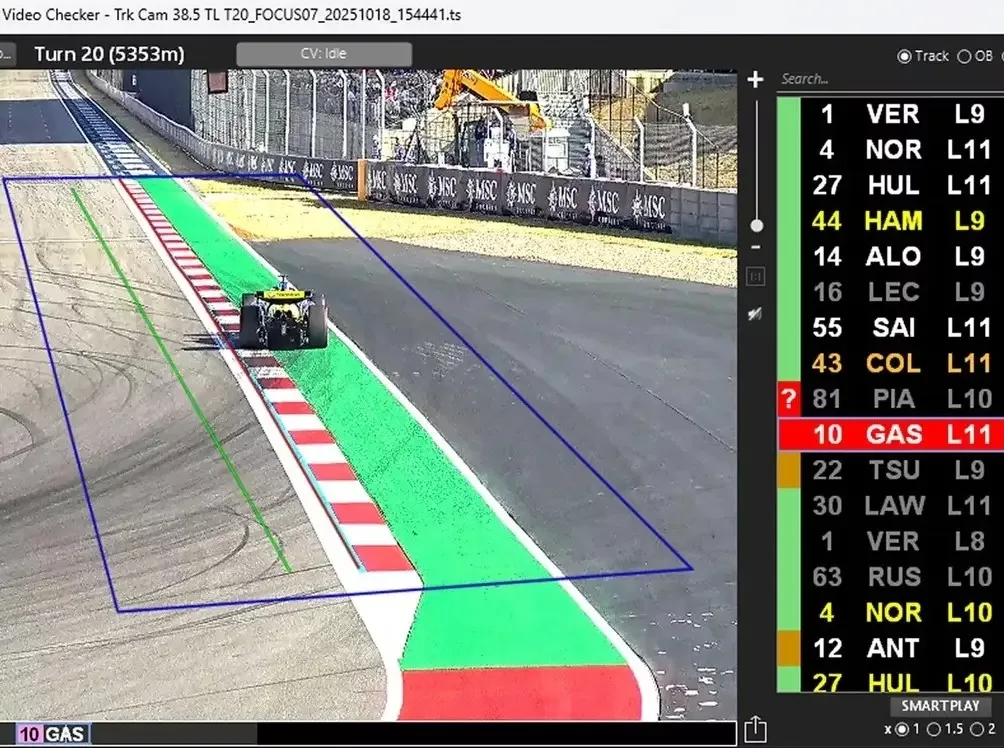
(Motorsport-Total.com) – For years, especially until the 2023 season, track limits were one of the constant topics of conversation during Formula 1 race weekends. At certain events, such as the Austrian Grand Prix that year, the FIA ultimately had to review over a thousand incidents in a single race – a number that makes it clear how essential more advanced tools had become to speed up the process.
Read more Former rival opens up: Kimi Antonelli was already unbeatable in karting
Behind the scenes, the association and Catapult worked on integrating an automated tool into the RaceWatch platform. This is used by race control and the Remote Operations Center to monitor everything on the track.
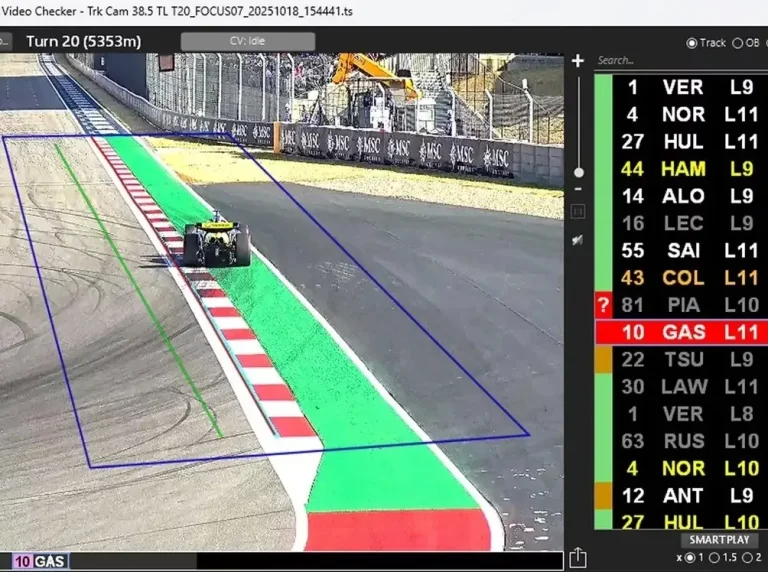
The tool is capable of precisely detecting when a car crosses the white line. It is a support system designed to optimize the review process and reduce the number of cases that need to be forwarded to the stewards.
When a single race can generate hundreds of potential incidents for review, it is easy to understand why a system was needed that can support the stewards, speed up the review process, and make it possible to inform teams of a potential violation within seconds.
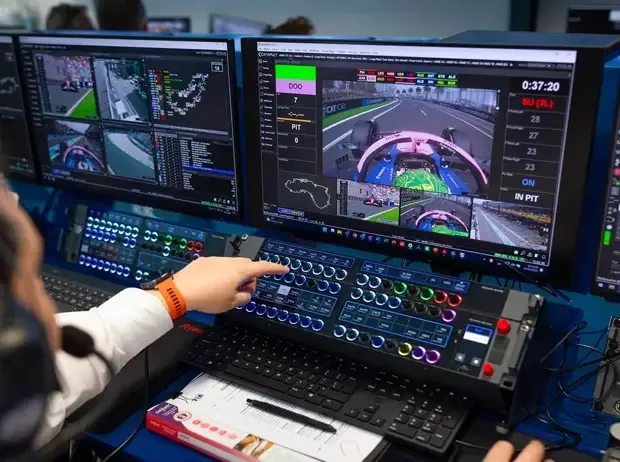
According to the FIA, this tool has reduced the number of cases where human intervention is required for a decision by 95 percent.
FIA sends video material directly to the teams
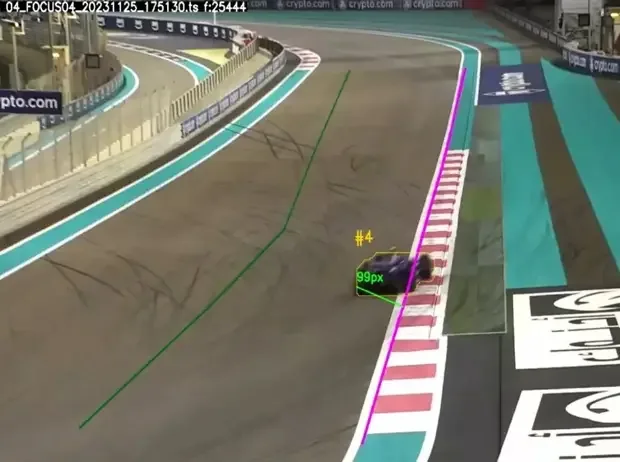
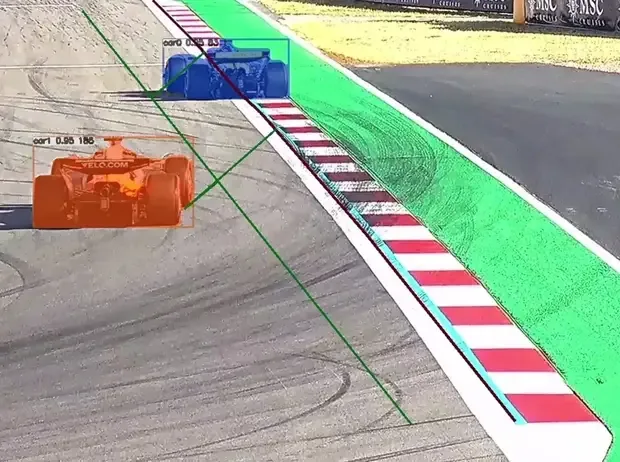
The system integrated into RaceWatch can recognize the silhouette of a car and analyze its behavior based on predefined reference points captured by a camera. This makes it possible to determine whether a car has crossed the now-famous blue line – which was introduced in 2024 specifically to simplify this process – and thus disregarded the track limits.
Looking ahead to 2026, several practical and functional updates are planned. The first is that the FIA can send the video material of all track limit violations committed by their drivers directly to the teams.
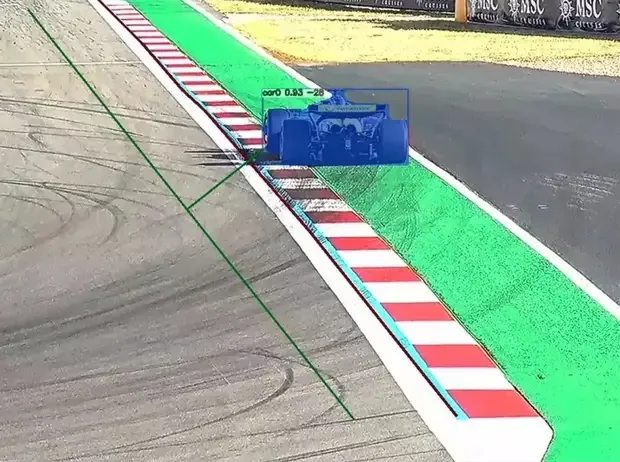
This makes the process even more transparent and eliminates the need for additional inquiries from the teams. This also helps to streamline and speed up the workflow, providing teams with faster feedback.
The other update – arguably the most significant and fascinating – concerns the way track limits will be recorded in the future. This is done thanks to a more advanced system that also rethinks the entire data analysis workflow.
The AI-based detection now relies on high-performance GPUs to process all the information required to review every single lap in real-time. This increases both the accuracy and the speed of the reviews.
A new system for analyzing larger amounts of data
“What we are working on for this year is a centralized camera control system. Previously, the computer vision system ran on each individual machine: it used the GPU of that machine, and we have very powerful GPUs for running virtual machines, which is ideal for computer vision,” explains Chris Bentley, Head of Information Systems Strategy for single-seaters at the FIA, in an exclusive interview with the Italian edition of Motorsport.com.
“The new system will instead be based on centralized camera control. This will allow us to set all distances from a single point, but also to distribute the required computing power,” he says.
“We will be able to run the computer vision software on any machine in the network, send the video part to be processed there, and receive the result, which enables us to process more and more data.”
It is estimated that the FIA operates an average of between 30 and 40 virtualized machines at the racetrack at any given time.
The crucial point is that the association will be able to analyze a much larger volume of data. This fits perfectly with another tool that the governing body has developed together with Catapult: a highly sophisticated positioning system.
Thanks to the innovations introduced in recent years, the FIA is now able to estimate the position of a car on the track with ever-increasing precision by combining multiple data sources.
This is not just about absolute coordinates: the system reconciles positioning data, sector times, and racing lines with each other, creating a “digital twin” of what is happening on the track in near real-time.
Read more Jack Doohan opens up: Received «serious death threats» at Alpine
“This allows us to use all the data we have to keep an eye on the white line around the track. Even if it might not be covered by any specific camera,” says Bentley.
“The camera becomes somewhat secondary in these cases because we will use geofencing with the positioning data. We will use time delays with which cars arrive at certain positions to find out where they went off track.”
“Similarly, we look at changes in the line the car follows – because obviously there is an optimal line that all cars follow. It is very rare for them to deviate from this ideal line.”
How the new ECAT system will work
The core concept is called “Every Car All Turns (ECAT)”. The idea behind it is that the system interprets a car’s behavior by measuring it against a reference model.
By comparing this information with the timing data of the micro-sectors, RaceWatch can understand what happened at that specific point on the track and flag the incident for a potential review.
“If a car deviates from the ideal line, it potentially covers more distance. This allows us to detect a difference in sector time and go back to understand where it went off track or exactly what happened,” says Bentley.
“The idea is to use all the data, enrich it with the available video material, and track these elements so that the system tells us what is happening instead of having to search for it manually,” he adds.
“The goal is to take the system to the next level. It works on the entire track and at all times, so it can automatically understand what is going on. That is the evolution of our project – the transition from a manual process to a semi-automated process.”
“There will still be a manual component because you have to evaluate offenses (strikes) as well as the black-and-white flags.”
The FIA is actively working with the racetracks to improve camera coverage and identify the best positions. However, this is not always possible and varies from track to track. With this new system, cameras are still important but are no longer the sole foundation of the analysis.
This means that the system can now detect a potential track limit violation purely based on positioning data: if there is an abnormal deviation, if the car enters a virtual zone marked on the track, or if its path deviates too far from the ideal line, RaceWatch can generate an alert.
“It has allowed us to move up a level, manage all cameras in one place, distribute