(Motorsport-Total.com) – “Betteridge’s Law” of headlines states that any headline that ends in a question mark can be answered by the word “no” and ignored. And indeed, a quick look at the bookmakers’ odds shows that the favorite for the 2026 Formula 1 season, George Russell, continues to lead the way with betting providers – albeit with a shrinking lead.
Read more Formula 1 break: Who benefits the most — and who even loses
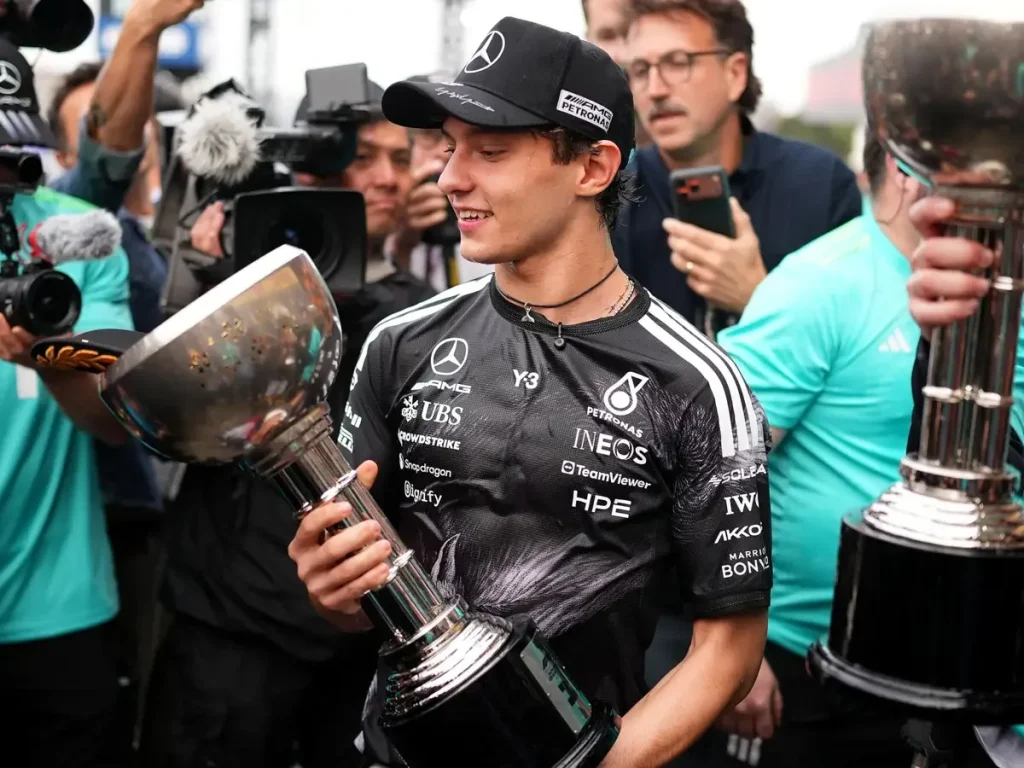
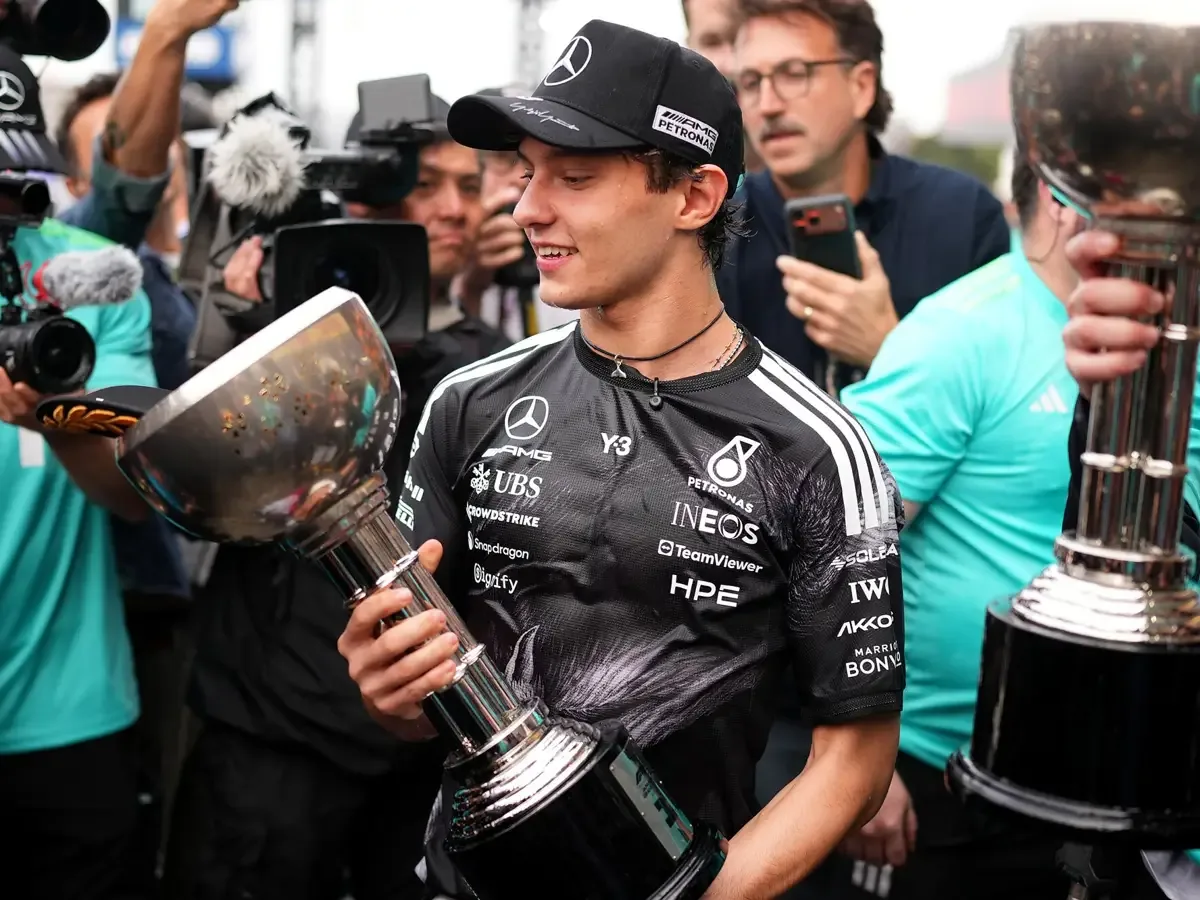
Although we are only three Grand Prix weekends into a 22-race season, Kimi Antonelli’s performance in Suzuka was more than just another step on the development curve and: It was a clear declaration of war in terms of the World Championship!
Before the start of last season, there were voices suggesting that time was running out for Lando Norris to win a title, as his McLaren teammate Oscar Piastri was developing so rapidly that he – assuming constant progress – would soon be the dominant driver in this pairing. Even though 2025 took some turns, and at times it looked like Piastri would deliver sooner than expected, this hypothesis remains valid.
Can Antonelli maintain the trend?
It’s a similar story at Mercedes: Many in the paddock believe that 2026 is the last chance for Russell – who is now entering his eighth Formula 1 season – to hold his own against his teammate Antonelli, who is only in his second year. Russell has managed every internal team rival in his career so far, including Lewis Hamilton – albeit with the caveat that the ground-effect cars didn’t exactly suit Hamilton’s driving style. Last year, Russell stepped up his quality once again and regularly got the maximum out of an often difficult car.
The question he must now ask himself: Will this upward trend continue, considering how quickly his teammate is raising his own level?
There were never any doubts about Antonelli’s basic speed or his entertainment value for Formula 1. It is rather his often impetuous approach to a race weekend that raises the blood pressure at Mercedes and for team principal Toto Wolff – who is personally very committed to Antonelli’s career.
Antonelli is knocking off the rough edges
This career had its ups and downs even before Formula 1, and Antonelli often needed a lecture from Wolff or an encouraging arm around the shoulder to find his focus again. Last year, he experienced a long, grueling dry spell mid-season, which was attributed to a rear suspension upgrade that later ended up in the dustbin of Grand Prix history. This was followed by a significant improvement in form, including strong performances in Sao Paulo and Las Vegas.
But Sao Paulo also showed that trait that continues to haunt him: He delivers a strong weekend until a small but costly mistake clouds the picture – in this case, a messy restart after the safety car that ended in a three-car collision at Turn 1.
We have already seen this several times this season: a heavy crash in the third practice session in Australia that almost cost him qualifying, followed by a poor start. In China, there were two more weak starts, an unnecessary collision with Isack Hadjar in the first lap of the sprint, and another flawed safety car restart. And of course, the lock-up shortly before the end of the race while leading, which required a call from the pit wall.
Potential not yet fully realized
All of this reinforced the impression that Antonelli is not yet the finished version of himself.
And then came Japan. Throughout the entire weekend, he was faster than Russell. The latter reacted with a set-up change in qualifying that had a negative impact on rear-end performance. This continued into the race, where Russell was further hampered by energy delivery problems due to a software error.
Although Antonelli also had a poor start in Japan, it likely had a different cause than in Australia or China. There, it was wheelspin caused by low tire temperatures – a consequence of a lack of electrical power on the formation lap.
Read more Cadillac: Colton Herta took a month to decide on F2
The victory in Japan
In Suzuka, it was a classic driving error: he misjudged his finger position on the clutch, whereas Russell’s weak start was due to the fact that he still had residual pressure on the brake, as the start-finish straight has a gradient.
In the race, Antonelli made up good ground after dropping back to sixth place. Russell, on the other hand, was worried about an undercut by Charles Leclerc’s Ferrari, which resulted in anxious radio messages suggesting that extending the first stint was a bad idea.
This led to the early stop, which ultimately cost Russell positions, as Oliver Bearman crashed his Haas shortly afterwards, triggering a safety car that gave Antonelli and Hamilton “cheap” pit stops.
Russell struggles with the safety car
“If the stop had come one lap later, we would have won the race,” Russell said afterwards. “If the crash hadn’t happened, we might have regretted not stopping. In racing, things go for you sometimes and against you sometimes.”
There is a bit of wishful thinking involved here. One could argue that the safety car saved the Mercedes strategists from a difficult discussion with Russell, as it was likely that Antonelli would have caught him anyway.
The Italian was fast enough to win the race on his own merit and showed no signs of wear on the medium Pirellis at the time of Russell’s stop. Furthermore, he mastered energy management – this controversial but essential element of the 2026 regulations – perfectly, even better than Russell, who was previously considered a master of this discipline.
Is experience still the difference?
In contrast, Russell struggled with deployment. A change in harvesting parameters to have more boost in the duel with Hamilton triggered unexpected “super-clipping,” which cost him the position to Leclerc.
Formula 1 drivers who took their first two victories back-to-back
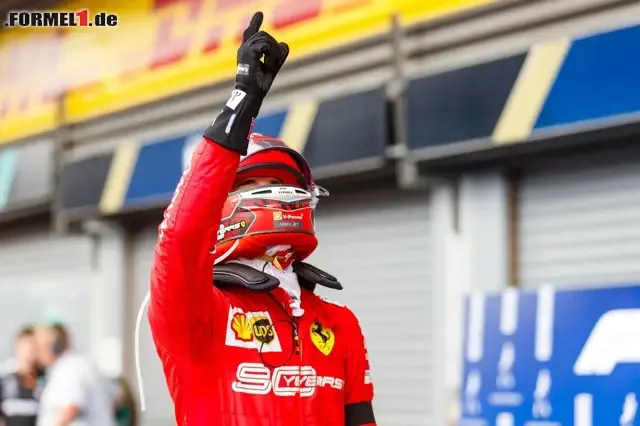
“It was a big step,” Antonelli said after the race. “Experience makes a big difference. Last year I went through a lot, which taught me more than I expected. That definitely helps me this year. Of course, there is still a lot to do, but I feel much more confident in the situation.”
Russell, for his part, emphasized that this was only the third of 22 races. But it will worry him that his young teammate had an advantage in exactly those areas where Russell had previously set the tone.
Snapshot after Japan
Ultimately, the Japanese Grand Prix is only a snapshot, but it was a timely warning shot for Russell: he must maximize every weekend to take advantage of (currently) the best car in the field – because this picture can change quickly if the competition catches up.
“We have to keep our feet on the ground,” warns Toto Wolff. “Three races have been run, and we look like heroes. But in three races, people could say: heroism is over because the others have become stronger.”
Read more Toto Wolff warns: Why Mercedes’ advantage is melting