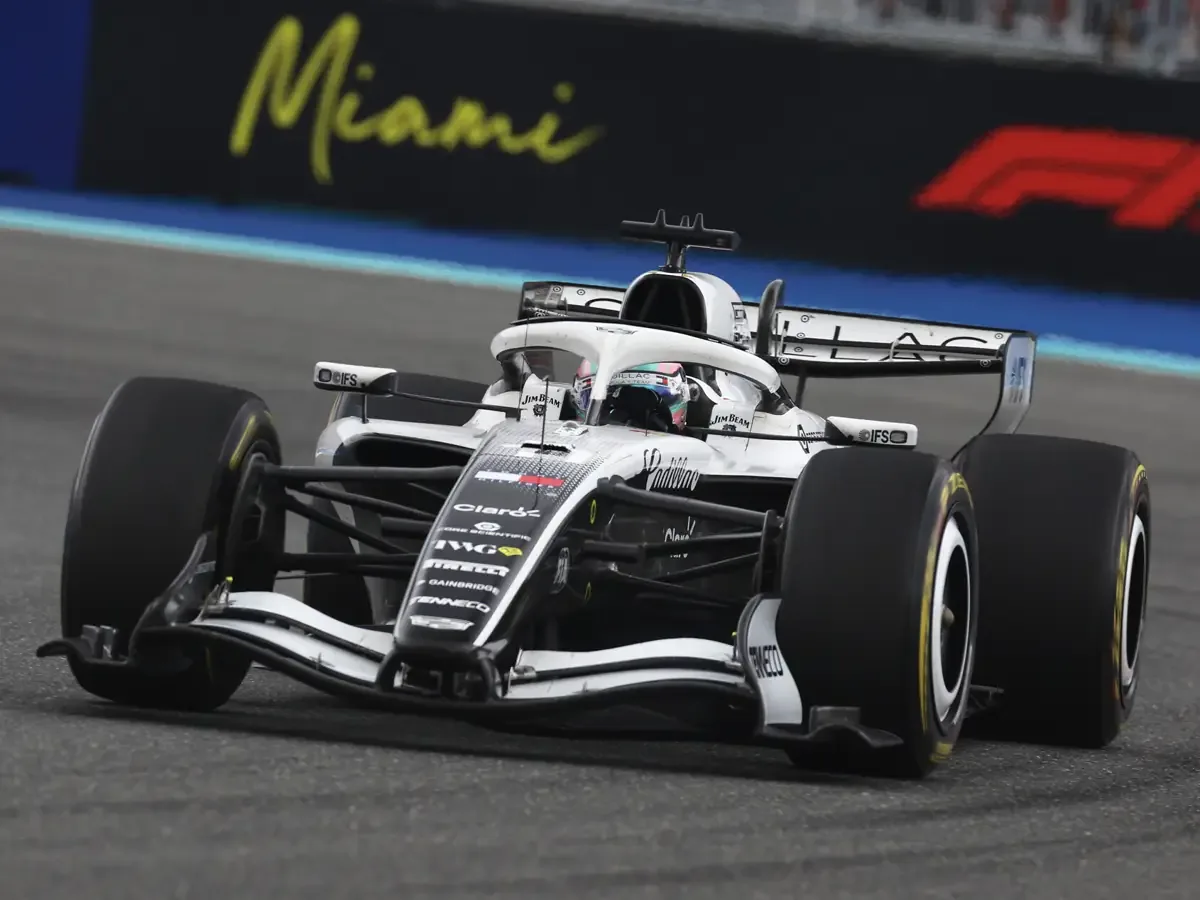
(Motorsport-Total.com) – In motorsport, there are few greater challenges than setting up a brand-new Formula 1 team. But building a team spread across multiple continents with the new rules for 2026 seemed almost impossible.
Read more After a horror start: How Honda wants to save Aston Martin
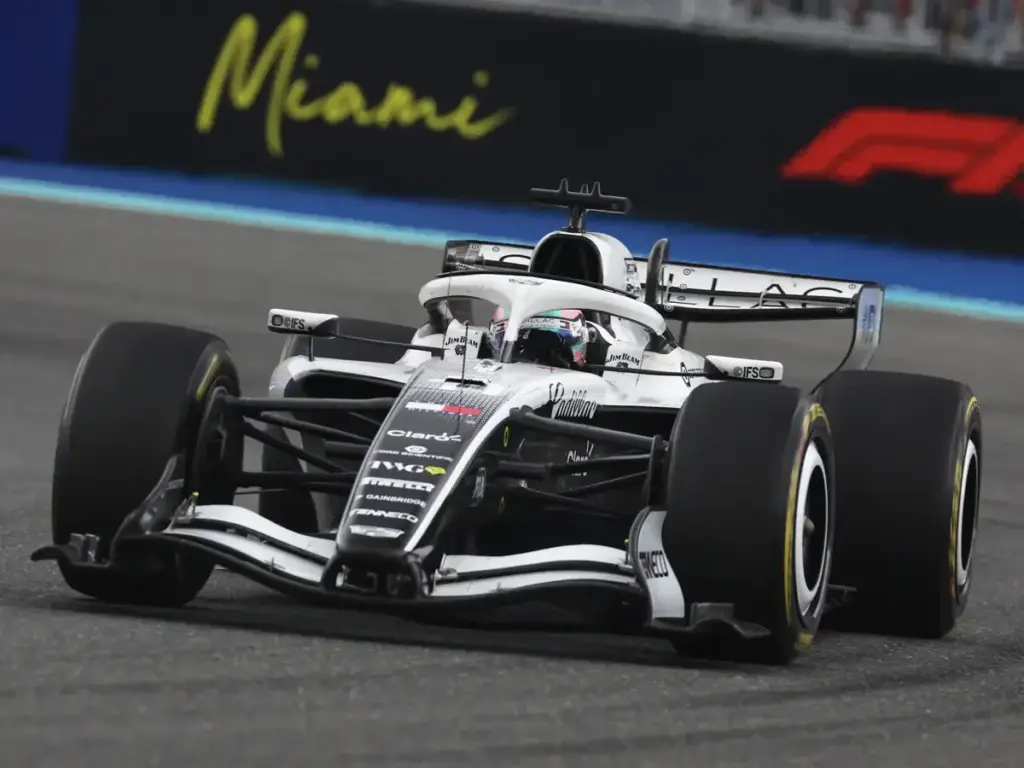
Nevertheless, Cadillac has achieved exactly that, met every deadline, and earned a lot of respect from the start. It is a testament to the work of hundreds of men and women who had to be hired within a very short time. Many did not even know at the start of their jobs whether they would actually compete in Formula 1.
Still, the team emphasizes that they would not have succeeded without the help of the parent company General Motors. Cadillac’s rocky path into Formula 1 is well documented. It started as a project by Michael Andretti before becoming a quasi-factory team for GM. The corporation holds a minority stake in the team, which is largely owned by TWG Global.
More than just a sticker
Not only the marketing power of GM or an upcoming factory engine, which is currently being worked on while still using Ferrari engines, have supported the Cadillac Formula 1 team.
Alongside many racing projects including NASCAR, IndyCar, and sports cars, Cadillac was able to access GM’s resources for the development of their first Formula 1 car.
“Of course, GM as a shareholder in the team has a great interest in its development,” explains Eric Warren, GM Vice President of Global Motorsports Competition, in an interview with Motorsport.com.
“Not only is the chassis called Cadillac or the team the Cadillac Formula 1 Team, but we also see it as our team. Since we joined, we wanted to be involved as much as possible.”
“We had to learn a lot. Of course, you always have to act with a certain humility when entering a new racing series. But we didn’t want to be just a sticker. We really wanted to be part [of the team].”
“I was there from the beginning when there were only three people. Then it grew step by step, we looked at it and said: ‘Okay, what competencies can we provide to get this rolling?'”
“Let’s be honest: In the first one or two years, it was about proving to the FIA and Formula 1 management that this was not just a start-up or an IndyCar team. This was a real GM project with partners like TWG. At the beginning, it was about building the technical foundation the team needed to operate at the Formula 1 level.”
The Cadillac design for 2026
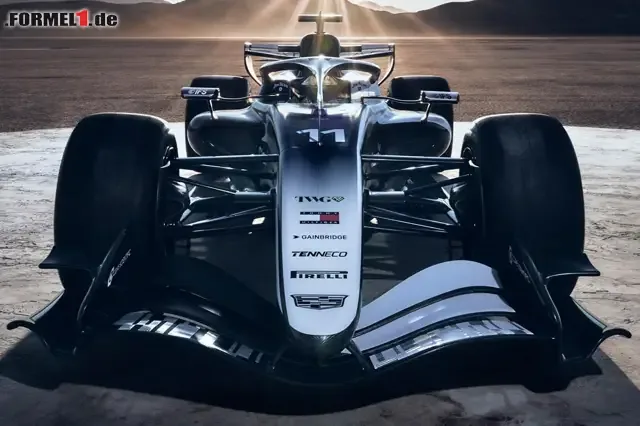
Before Cadillac could compete on track with ten established rivals, it had to enter a race against time. The goal? The start of the 2026 season in Australia in early March.
This tight schedule between the fundamental setup of the team, the official invitation, and the 2026 debut meant it was impossible to have all hardware and infrastructure ready at the Silverstone base. Besides, that would not have been very efficient.
This is where the GM Charlotte Technical Center comes into play. Opened in 2022 on the campus of NASCAR veteran Hendrick Motorsport in Concord, North Carolina, the facility spans two floors, covers 130,000 square feet (about 12,077 square meters), and includes a variety of simulators and performance programs. These include test centers for aerodynamics and suspension.
“Our involvement in various racing series is always a bit different,” explains Warren. “I like to compare it to a hospital. If you have a problem or illness, you go to the hospital and say: ‘Hey, I have this problem.'”
“Then an expert looks at it, finds a solution, sets up a treatment plan, and you can go home. Technically, we are an engineering service provider with a strong interest in being successful.”
“We have four simulators here that operate full-time. We prepare for a total of seven across all series, and we even have to rent time to build new facilities. Regarding DIL [Driver-in-the-loop], we didn’t have to build a new cockpit since we used the IndyCar cockpit for a long time.”
“Of course, you try to replicate the right pedals, steering columns, steering wheels, or the right interface for the drivers. But all other systems, most software, and models are a combination of what we are hired for and what they work on. We also work with Ferrari on engine simulation.”
Preparation for the real deal
As part of the new headquarters in Fishers, Indiana, a brand-new state-of-the-art Formula 1 simulator is currently being built. But until this building is completed, the Formula 1 team will have completed all tests with an experienced team in the “Driver-in-the-Loop” simulator in North Carolina.
This includes drivers like Indy 500 champion Simon Pagenaud, two-time Grand Prix driver Pietro Fittipaldi, and Corvette factory driver Charlie Eastwood.
This opportunity was crucial for the team’s “Race Ready” program. This was the plan to simulate several races in real-time in 2025 as if they were the eleventh team on the grid. For a team with over 400 experienced people, many of whom had never worked together before, it was important to get used to each other in reality before the debut.
“Without the GM facility in Charlotte last year, we wouldn’t be here now,” says Pat Symonds, an experienced Formula 1 engineer who works as Senior Engineering Consultant alongside Technical Director Nick Chester.
“Of course, there is the car development, which, to be honest, surprises me by how well it works there. But we mainly used it for rehearsals. We operated the simulator as if it were a race car, and that was priceless. Without that, we wouldn’t be anywhere near race-ready.”
“GM does more for us in many ways than just providing a simulator. Their entire vehicle development division in Charlotte has really, really helped us. Much of our software was developed by GM. We use a system called ‘Race Vehicle Getaway,’ which acts as a database for everything in our cars. GM developed that long before entering Formula 1.”
“Then there are areas in design where they help us. They work with us on thermal modeling and AIML [Artificial Intelligence and Machine Learning]. We are working on some good projects there.”
One of the people trying to hold the various areas of Cadillac together is Head of Performance Analysis James Knapton. He is an engineer who has worked at Jordan/Force India, Sauber, Manor, and Red Bull Advanced Technologies during his long career. There, he was involved in Adrian Newey’s Valkyrie project.
Read more F1 Academy: Susie Wolff on the tough battle behind the scenes
“Having GM on board was very good because we could quickly access tools, models, solutions, and their simulator,” adds Knapton. “Otherwise, developing such projects would have taken two or three years. So that gave us a head start from the beginning.”
“The ability to draw from their skillset, which consists of various engineering fields, was very helpful. If we had to start from scratch, we would be much further behind now.”
Formula 1 Quiz
How many race finishes did Valtteri Bottas achieve in Formula 1?
Test yourself now in the Formula 1 quiz and compare yourself with other users
But Cadillac could benefit not only from GM’s simulators but also from knowledge and personnel. Although NASCAR seems like a different world compared to Formula 1, and that is true in many areas.
However, in Europe, people often underestimate how advanced the engineering is in the stock car series. The sophisticated tire models are an area that has opened many eyes, and some things are indeed transferable.
“In some areas, yes, but not everything that happens in Formula 1 operates technically at the absolute limit,” explains Warren. “In Formula 1, you have more freedom in design. It is still technically a meritocracy. But in other series, you play with the limits. Take NASCAR as an example. Many people think the cars are [not particularly advanced technically].”
“It’s not about the car. It’s about the engineering behind it. Look at the number of different tire types, asphalt types, or tracks. That’s such a rich field of data to build a thermal model from.”
“In Formula 1, the tire is much simpler because there are five different variants you run all year long. The changes in asphalt are much smaller. We have people on board who know technologies and physical problems that you don’t even face in Formula 1. That gives us the opportunity to bring important ideas into play.”
“There are certainly overlaps,” adds Symonds. “The Head of Tyre Science [Dr. Heather Bobbitt] is an employee at GM. And she is probably the best tire scientist I have ever worked with. The models she developed are used at GM and with us, and we are very happy with them.”
Knapton adds: “Tire models in NASCAR are very advanced, and transferring these models to Formula 1 was relatively smooth. After all, these are models that operate at the Formula 1 level in terms of modeling and development.”
“At the same time, we have a great group here for vehicle modeling. We have collaborated in various areas. This includes rig testing, some work on the aerodynamics of brake ducts, or aerothermal modeling for cooling.”
Technology transfer back to the corporation
However, it is not just a one-way street. Warren is confident that GM will benefit from the high-tech ecosystem, methods, and unusual perspectives on work processes in Formula 1.
“What is especially outstanding about Formula 1 is how much data there is from the car,” explains Warren, whose career began as an aerodynamicist and later Technical Director in NASCAR. “The level of tools and the ability to understand how a car reacts, and the level of correlation, are the biggest factors that Formula 1 gives back to GM.”
“You can use pitot tube arrays to look at the air turbulence behind a tire live in practice. Such things would not be feasible or allowed by regulations in any other racing series. If the team grows to 400 or 500 engineers, there might be one or two people who say: ‘Hey, I have this idea on how we can model vehicle dynamics or optimize this here.'”
“This feedback loop is becoming deeper and more ideas are flying around. So I believe it gives us the opportunity to expand our tools faster. After all, there is more data and more people looking at specific things.”
“You learn to handle this amount of data and store it in a cloud and how different engineers can quickly access it. Formula 1 helps in developing such things.”
As difficult as the entry was for Cadillac, it is only the beginning of a long journey towards competitiveness. The US team did not enter Formula 1 just to be there. In a world of budget caps, it is part of strategically outsmarting the competition and beating them in development.
New pillars for 2027
An important pillar is the new US headquarters currently being built in Fishers, Indiana. This is intended to support the European outpost in Silverstone. “In Fishers, a state-of-the-art simulator awaits us,” says Knapton. “It is scheduled to start in early 2027. That should definitely help us. New forms of lap simulation are also on the way.”
“In Formula 1, it is often not the big steps but many small advances in all areas. Everything is constantly evolving. We know that in some areas we cannot yet match the leading teams. We have to improve. That’s why we are working on everything and trying to improve our tools while simultaneously designing and competing with a new car.”
“A saying here is that we are building a ship while it is already at sea. That’s not a bad analogy for what we are trying right now.”
GM engine for 2029
GM is building a Formula 1 engine in Charlotte. It is planned to debut as a V6 hybrid in 2029, but one must also be prepared for what might come after.
“Seeing it come to life is really exciting,” says Warren. “We build engines for all kinds of cars, right? Not just our passenger cars or high-performance vehicles. We are very proud of that. Therefore, as an OEM, it is really important to us; it is part of our DNA.”
“We haven’t been in Formula 1 before. So through testing and the various technologies developed for it, we immediately see how to apply that to the series. That simply makes us a better company.”
“We knew this was coming, and it only strengthens how much respect we have for this challenge. We want to make sure the foundation is right. We have to learn and earn our spurs.”
“Hopefully, we can continue to keep up and recruit top talents, learn, and grow. We will end up where we want to be. But the prizes are not given to you here.”
Read more No chance for Kimi Antonelli? Expert warns about Monaco