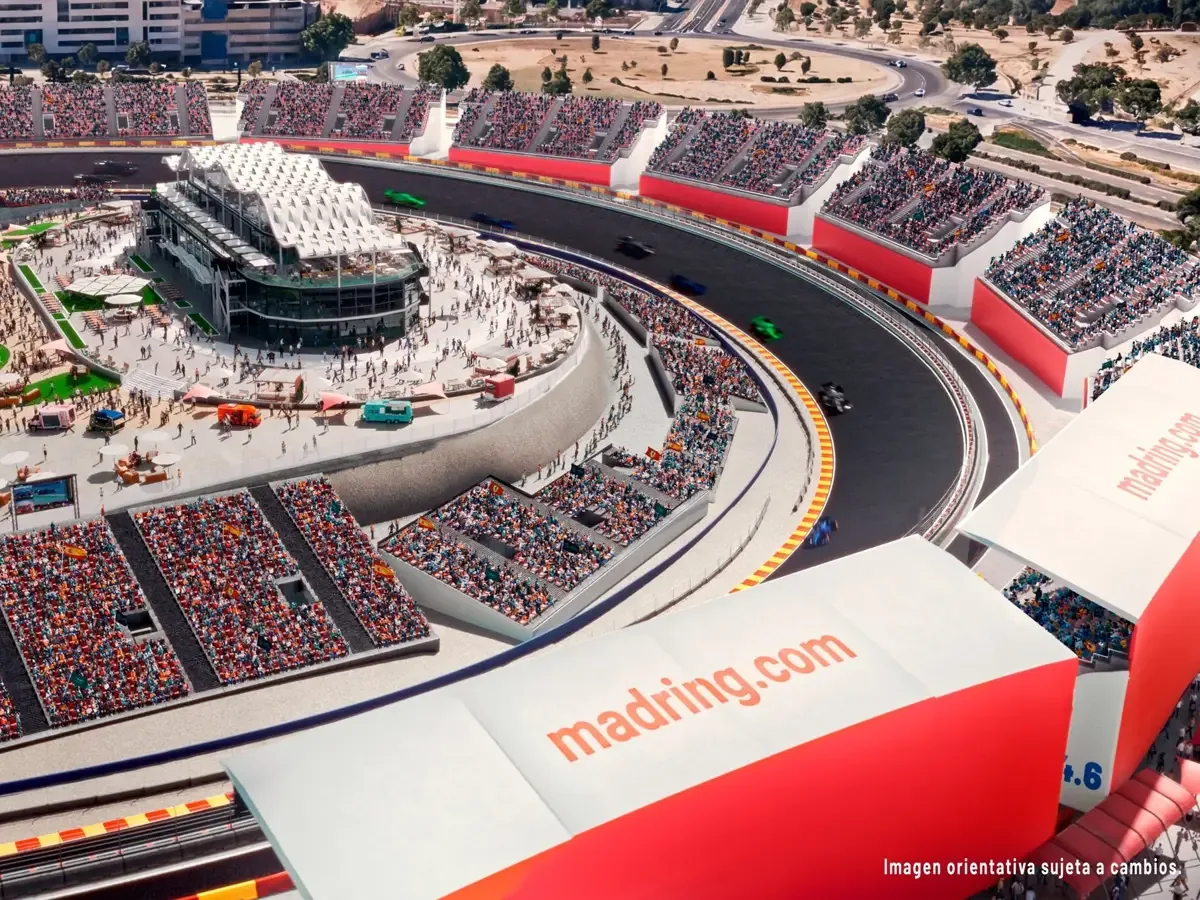
(Motorsport-Total.com) – Madrid’s ten-year contract as the venue for the Spanish Grand Prix, where the Grand Prix takes over the title from the now biennial race in Barcelona, is the latest attempt by Formula 1 to bring the series into urban metropolitan areas.
Read more These five Formula 1 cars you have to see
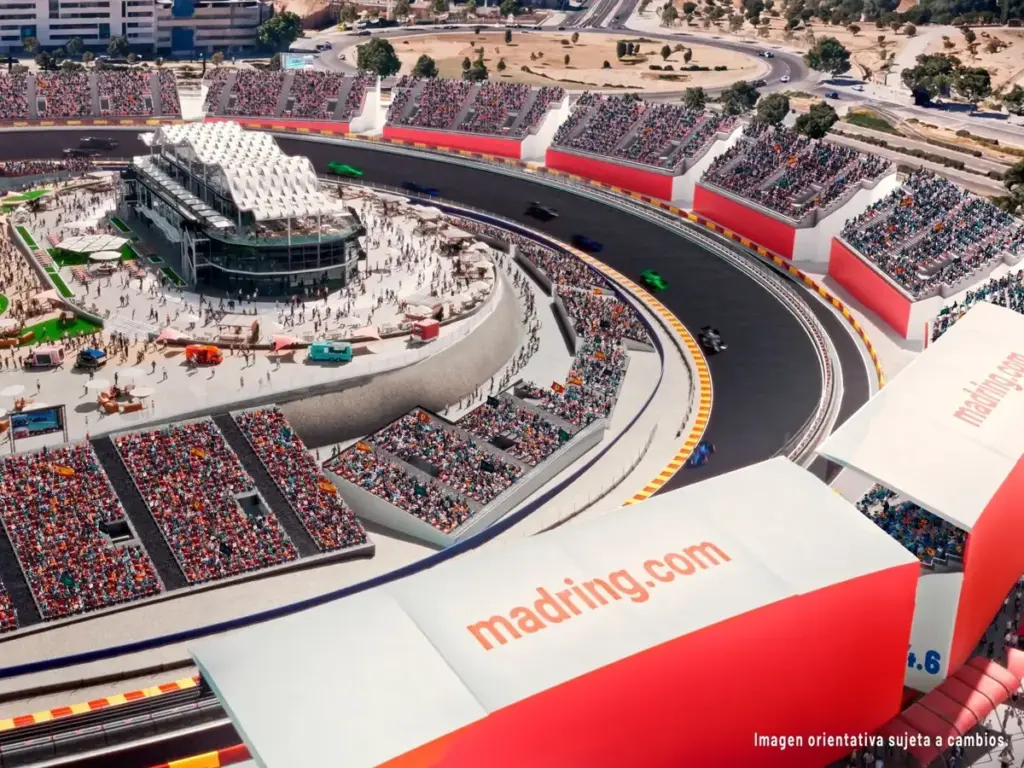
Initial concept renderings of the Madrid circuit sparked mixed reactions, with concerns that moving the Spanish GP from Barcelona’s permanent track to the Valdebebas district near Madrid’s main airport would give Formula 1 another generic street circuit – a concrete jungle soon to be abandoned again.
You don’t even have to look beyond Spain’s borders to recall memories of the long-defunct Valencia Grand Prix, an uninspired one-off in a paella-sized pan on what is now a ghost track.
Our first on-site visit in June suggested that the track, originally designed by Dromo and whose final construction phase was handed over to Tilke, is by far not as dramatic as feared. But it is also not a track like any other on the calendar.
A “monumental” challenge?
The area around the start-finish straight is located around the exhibition halls and public access roads of the IFEMA site, giving the first sector a stop-and-go feel reminiscent of Miami and Singapore.
However, the specially built sector on the former site of the Mad Cool Festival, where the designers had a blank canvas, combines demanding medium-fast to fast corners with numerous elevation changes – thus refuting any notion that the Madrid circuit will be a generic, interchangeable track without real challenge.
The outstanding landmark, also featured on the official race poster and other promotional material, is La Monumental: a long, fast, banked corner with the maximum allowed banking of 24 percent.
The 550-meter-long corner is significantly longer than Zandvoort’s comparable final corner, as it forms a 270-degree arc around the northern, specially built end of the track. The steep banking of La Monumental features continuously changing gradients and elevations.
New Formula 1 tracks since 2000
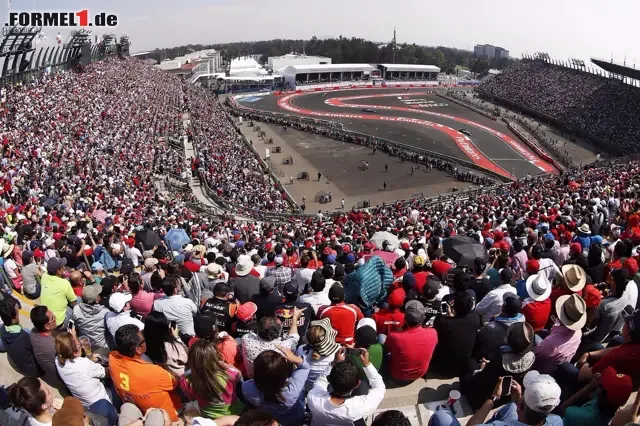
The towering corner, which features grandstands on the outside, made an impressive personal impression due to its constant changes in gradient and elevation, setting it apart from other banked corners on the calendar or those in oval racing.
“It is a very, very special corner,” said Charles Leclerc after exploring it during a dusty filming day with Ferrari. “It is a corner where I feel we have to be very brave in qualifying because it will be on the limit.”
“I think it can become one of the most iconic corners of the season, especially with the grandstand. That will enhance the experience of this corner even more. One thing is for sure: full commitment will be needed,” said Leclerc.
Following this corner are several high-speed direction changes with little runoff. As suggested by a Formula 3 test interrupted by numerous red flags, the track will be difficult to handle in its first year.
Will Madrid have an overtaking problem?
Early signs indicate that the Madrid circuit, even if it does not immediately become a driver favorite, will offer a respectable challenge in qualifying. Whether the track can deliver an exciting spectacle remains to be seen.
Read more Madrid: What to expect from the newest Formula 1 track
Due to its many braking zones, it is likely to rank mid-field in energy recovery challenges. Overtaking does not look particularly easy, with the straight between turns 3 and 5 offering the most obvious opportunity.
“It will be a very demanding track,” Leclerc said diplomatically. “I don’t know how overtaking will be, I’m not sure there will be many, I hope I’m wrong. But I think qualifying and the challenge of driving such a track will be one of the very cool ones of the season.”
What Madrid can offer that Barcelona struggles with
Where Madrid really wants to make a difference is accessibility. The track is not only a short drive from the airport but is also connected to Madrid’s extensive metro and suburban train network. Organizers promise smooth access to the track from anywhere in the capital – something that has long been a problem in Barcelona.
In this respect, it is exactly the kind of venue that Formula 1 management has fallen in love with: a street circuit well integrated into a “destination city,” with all amenities, built-in mobility and sustainability solutions, and space for extensive VIP facilities.
“Well, you know better than I do that coming and going at a traditional track is a nightmare. Here we have both the metro in the south and the suburban train in the north, which will be extremely convenient,” promises IFEMA COO Carlos Jimenez.
“Both are very fast lines with very few stops because they are designed to connect the airport quickly with the city center. So, the experience for fans to reach the track will, in our opinion, make a difference.”
The last 20 winners on new Formula 1 tracks

“It is very convenient, but the downside is that it obliges us to work harder to provide a good experience. Otherwise, fans will quickly return to hotels and restaurants in the city because we are competing with the city center.”
Whether Madrid can deliver on its promise to organize a smooth inaugural event for a maximum of 110,000 spectators remains to be seen. There have been many recent examples where the first year was a learning opportunity, including Miami and Las Vegas. The return of Formula 1 to Madrid will likely also be a bit rough around the edges, but organizers say they are prepared.
“It is not easy,” says Luis Garcia Abad, Fernando Alonso’s former manager and now managing director of the event. “I have been involved in Formula 1 for 25 years and never thought it would be so difficult regarding all the things you have to consider.”
“I have spoken with all promoters, and the problems are more or less the same when trying to build something from scratch. But IFEMA has offered us many solutions. We didn’t have a race track, but we had Wi-Fi, we had power, we had a metro station at the main entrance.”
“Trying to organize something at another track is a nightmare. But with all these parameters [already in place], we were able to build it. Now we have to deliver the best possible customer experience we can.”
Read more Live on TV and Stream: All Information about the Formula 1 Broadcast in Madrid