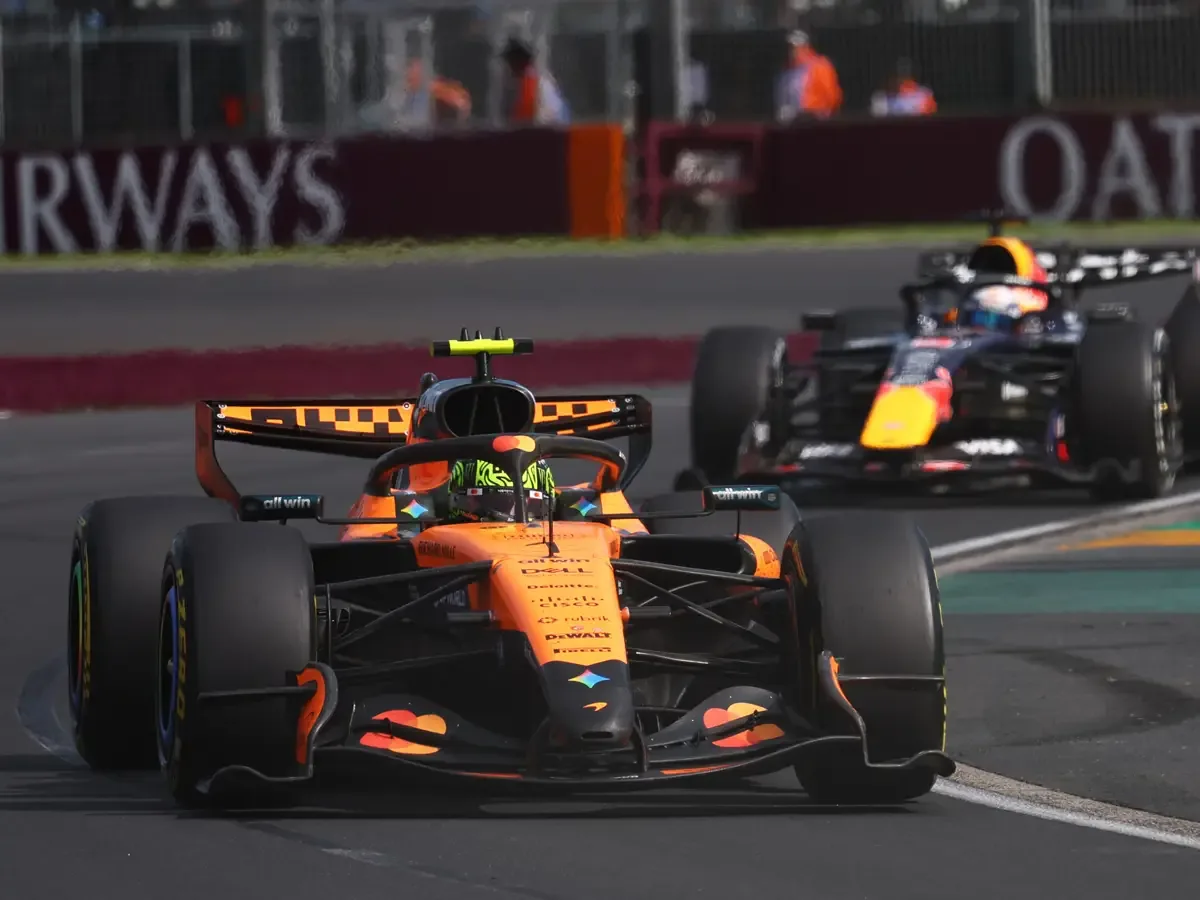
(Motorsport-Total.com) – McLaren driver Lando Norris stood with a smile behind Max Verstappen as the Dutchman gave his TV interview with Viaplay after the Japanese Grand Prix. The Red Bull star was talking about the regulations when the reporter pointed out the smiling Norris behind him.
Read more Cadillac facing a mammoth task: Developing better than the other teams
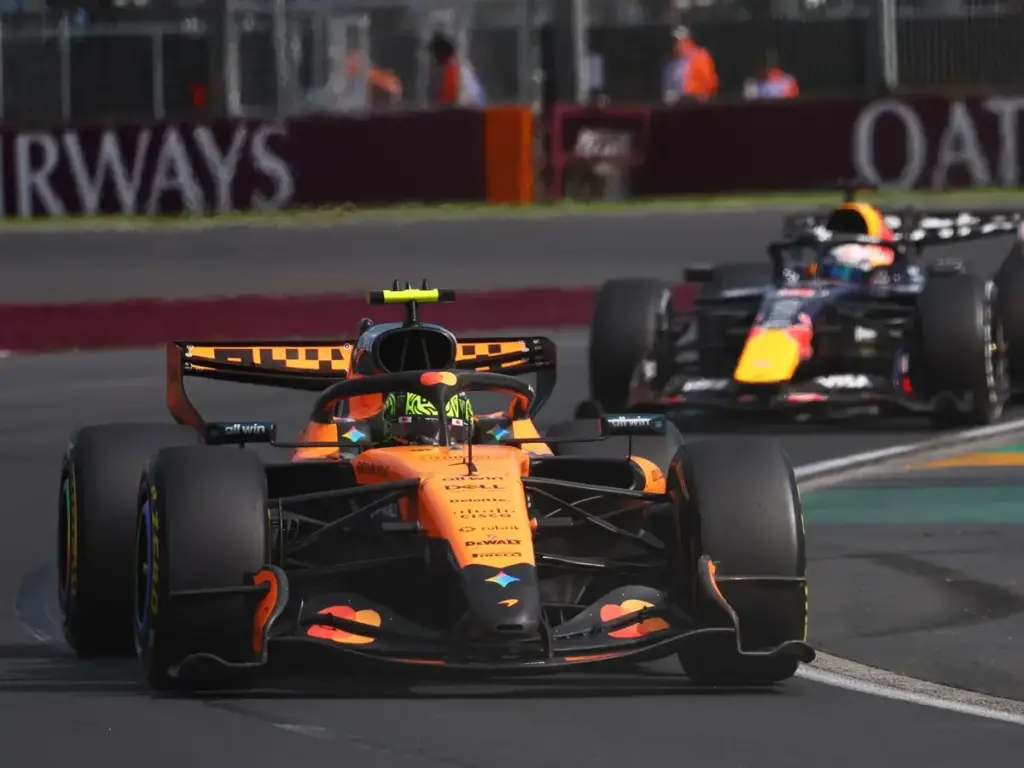
Verstappen looked back, also burst into laughter because he knew Norris shared his opinion, then the four-time world champion continued his narrative: “Well, I know we can’t change much for this season anyway.”
After Verstappen’s interview, it was Norris’ turn in front of the camera. When it was mentioned that he had talked to the Red Bull driver about energy management and the battery, the reigning world champion grinned. “Really? That’s strange, because I haven’t even mentioned that this year.”
To the follow-up question of whether the race in Japan had been frustrating for him, the McLaren driver continued: “Not at all. It’s probably the best racing I’ve ever seen!” When it was pointed out that Norris’ answers sounded quite sarcastic, the McLaren driver began to laugh even more.
After Norris had finished the round with all the TV crews, he made his way to the area of the so-called media pen, which is reserved for the written press. While the Briton made the remarks on Dutch television with a smile, he initially bit his tongue here in front of the journalists.
This corresponds to the approach currently followed by many key figures in the paddock: after having publicly expressed their main concerns in Melbourne and Shanghai a few times, many now consider it more constructive, after some encouragement from above, to keep this criticism behind closed doors.
When Norris was asked about the speed differences and Oliver Bearman’s accident, he also initially kept it brief: “My comments are the same as they have been all year, just like with certain other drivers, so I don’t need to dwell on it further.”
It was only when Autosport, a sister platform of Motorsport-Total.com in the Motorsport Network, confronted him with the fact that until Sunday morning there had been a consensus that qualifying needed adjustments, but the racing itself had been reasonably good, that Norris shared his clearer opinion.
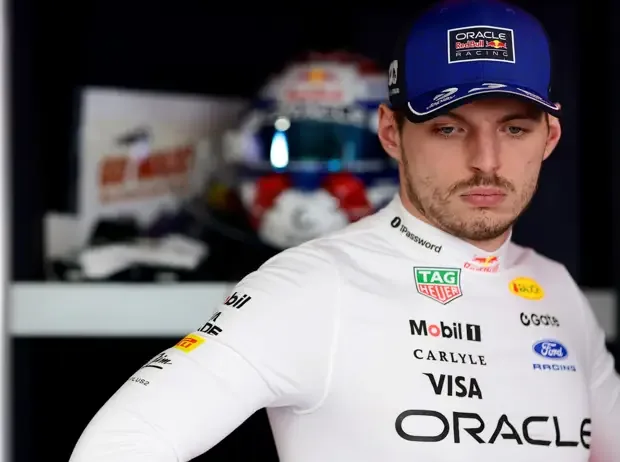
“To be honest, some of the racing … I didn’t even want to overtake Lewis. It’s just that my battery is deploying energy, I don’t even want that, but I can’t control it. So I overtake him, and then I have no battery left, so he just flies past.”
“That’s not racing, that’s a yo-yo effect. Even if he [Hamilton] says it isn’t, it’s a yo-yo effect. When you’re just at the mercy of what the power unit delivers, at least the driver should have control over it, and we don’t.”
Norris sees both sides of the coin
With these remarks, Norris hinted that the overall picture, i.e., not just qualifying but also the race itself, is not yet as it should be in his view. In this sense, he shared Verstappen’s opinion. Only Mercedes and Ferrari have so far expressed themselves much more positively about the races, which may also be related to the current balance of power.
Norris’ comments in Japan are particularly interesting, especially in the context of his statements throughout the weekend. On Sunday, the world champion provided a clear explanation of why he sometimes feels powerless behind the wheel, while three days earlier he had already spoken about the other side of the coin.
Together, Norris’ remarks illustrate very well the difficult balancing act facing Formula One Management (FOM) and the world governing body FIA. This other side of the story is related to the Chinese Grand Prix, where Norris had to watch the entire race from the sidelines due to his problems.
During the press conference on Thursday in Suzuka, he said that from a TV perspective he could understand why some fans would find it entertaining to watch, especially a younger generation who want to see constant action and might care less about the artificial nature of many position changes.
“It’s difficult. There are ways you can probably fix it quite easily in a way, but it’s hard because from the outside, and at the end of the day that’s exactly what it’s about, what you see, what the TV shows, is exactly what the fans want to see. If they’re happy, then that basically settles everything.”
Because of his early retirement in China, Norris was able to experience the difference in perspective himself, namely that of a TV viewer and that of the racing driver in the cockpit. “At the same time, I think as drivers we still just want to drive the best cars and cars where you feel like you’re on the limit, able to drive flat out, plan an overtake and then be able to defend.”
Read more Wheatley exit: Did Mattia Binotto unconsciously reveal the reason?
“In many cases, you make an overtake now and you can’t even defend because the guy passes you with 60 kilometers per hour more. These are the things where you feel like you’ve achieved something, you brake later, you’ve overtaken them, and then you’re just at the mercy of the battery you have left.”
“I think those are the situations that are just annoying and hard to handle when you’re in the car,” Norris admits.
A 0-0 at Champions League level or a goal fest?
From the perspective of a TV viewer, the Japanese Grands Prix of 2025 and 2026 very clearly showed the differences between the two seasons, especially because Suzuka is traditionally a track where overtaking is extremely difficult.
Last year’s race was a good example: Max Verstappen took pole with an outstanding qualifying lap. On Sunday, the two McLaren drivers were significantly faster, but overtaking in Suzuka proved to be almost impossible.
The biggest false starts by Formula 1 world champions
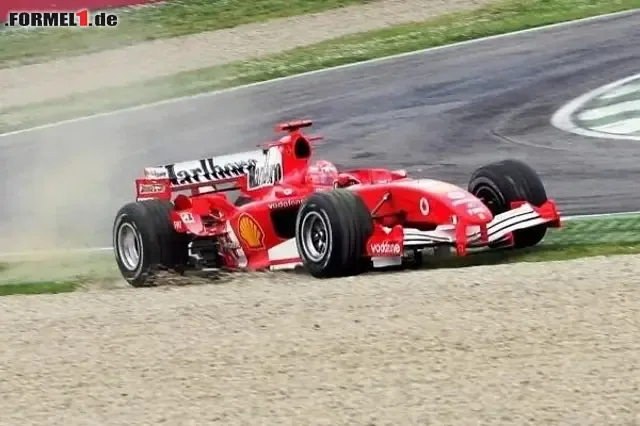
Several team members found the appropriate comparison after the 2026 race: the 2025 Grand Prix was basically a football match at an extremely high level that ended 0-0. Defensively, not a single mistake was made, which meant the ball simply didn’t go into the goal, even though both sides were acting at Champions League level.
Qualifying was on the limit, Verstappen’s defense on Sunday was flawless, and McLaren threw everything into the balance to convert its pace advantage into a victory. The 2026 Japanese Grand Prix, by comparison, was described as a football match that ended with a score of 12-12.
Many goals – in this case, overtakes – but the value of each individual goal was significantly lower because they occurred at a high frequency. Furthermore, based on this analogy, it could be argued that many of them resulted from minor errors, in the case of Formula 1, for example, due to differences in energy management.
The situation raises the question of which fan base the sport primarily wants to serve. For viewers who want to see an overtake every few seconds, the 2026 Japanese Grand Prix was possibly a step forward compared to the previous year.
For those, on the other hand, who weight overtakes less heavily and see themselves more as purists, the 2025 edition was probably the purer racing experience. Personally, I belong to the latter group, but ultimately it’s a matter of taste – and for Formula 1, above all, a matter of the target audience.
Where is the ideal point in this balancing act?
Finally, there is the driver’s perspective, which Norris also addressed. While opinions on the racing in the paddock are divided and still seem to take some getting used to for the drivers, there is broad agreement on one point: qualifying should be driven consistently at full load, without “lift and coast” or extreme energy management, as Norris put it.
“We just want to go flat out, I don’t want to lift here and lose 60 km/h from 130R to the last corner. Most other racing series have a higher top speed than we do, you know. So yes, some things can be improved, but the FIA knows that, and I hope they do. Yes, the racing might look great on TV, but the racing in the car is certainly not as authentic as it needs to be.”
Precisely because there is a consensus in the paddock about qualifying, adjustments before the Miami Grand Prix are considered likely. In racing, on the other hand, Norris’ statements exemplify the complex balancing act of the 2026 season, on two levels.
On the one hand, between different fan groups and the question of which audience should