(Motorsport-Total.com) – FIA President Mohammed bin Sulayem and his Formula 1 counterpart Stefano Domenicali wish for a return of the premier class to V8 naturally aspirated engines from 2031 or even as early as 2030. The majority of engine manufacturers seem to have agreed on advanced, sustainable fuels and a moderate level of electrification, which points to a more cost-effective and less complex formula.
Read more Different philosophy: This is behind McLaren’s gearbox approach

Besides costs, Sulayem names one of the main reasons for Formula 1 to become louder again. With louder V8 engines reminiscent of the era before 2014, they want to give fans what they want. But is that automatically a good idea? And does louder also mean better? Our editors weigh in.
It’s not about the volume
Kevin Turner
Arguing that Formula 1 should simply be louder would probably not be a smart move. Of all the challenges motorsport faces, “noise pollution” is not quite at the top of the list, but it is a topic. Engine noise is ultimately wasted energy, so maybe it shouldn’t be overly promoted…
Nevertheless, the sound of race cars is extremely important to many fans. I doubt many of us would put it on a wish list ahead of exciting races, fast cars, and top drivers, but it undoubtedly influences how we perceive and react to motorsport. It is part of that deep, emotional experience that draws people in in the first place.
But pure volume is a misconception. The current cars are not quiet, and one could even argue that the V8 engines of the previous era were too loud. What really matters is the character of the sound.
Engine gimmicks in Formula 1
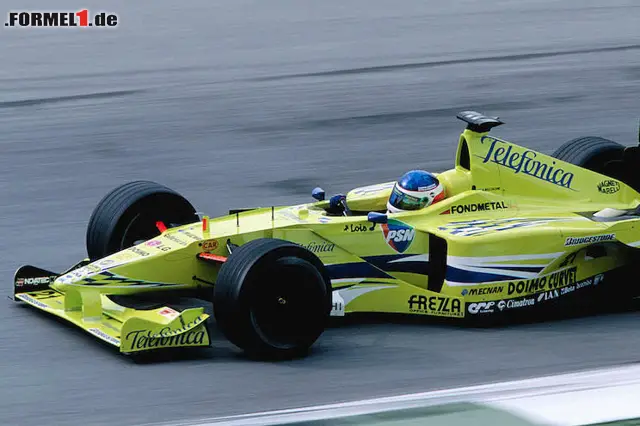
Turbs are simply not as satisfying acoustically. Yes, Porsche’s six-cylinder boxer at Le Mans now has a legendary reputation, but if you ask most people about their favorite engine sound, almost all choose V8, V10, or V12 – or maybe inline eight-cylinder and V16 if they are a bit older.
The deep growl of the incredibly powerful Formula 1 cars of the 1980s evokes nostalgia today but cannot compete with the high frequencies of a larger displacement naturally aspirated engine, which is also louder.
Or to put it another way: Listen to all the cars in the current Hypercar field of the World Endurance Championship (WEC) at the same volume and pick your favorite. I bet your choice will be the Cadillac V8 or the Aston Martin V12.
Sound is hardly a factor
Jake Boxall-Legge
For me, sound is not the be-all and end-all – it hardly plays a role. I prefer it to look like the driver barely has control of the car, rather than holding on in a way unimaginable to us mere mortals.
It should feel like a fighter pilot steering a jet through heavy turbulence, fascinating spectators with bold maneuvers and freezing the blood of passengers in their veins.
The current power units don’t bother me, and I also accept being punished if I forget my earplugs. In the Monaco tunnel, the sound is still deafening, and the cars still roar like a pride of lions chasing a wounded impala.
But if we are going to get louder engine sounds, I don’t understand why everyone is so keen on the bland screech of a V8. Of all the engine sounds Formula 1 has been blessed with over the years, the V8 exudes hardly more charisma than bland food – like chicken korma with dry rice or Coldplay’s music. It is simply boring.
No one liked them when they replaced the V10 engines. While the higher-cylinder engine had various facets in its angelic scream – a bass foundation overlaid by high-frequency shrieks – the V8 cannot offer this depth. The V10 was an opera singer, the V8 was Anthony Kiedis.
And the V12 engines were even better. I recently had the pleasure of experiencing the McLaren test car equipped with a Lamborghini V12 live – that was a completely different, raw dimension.
In its sonorous reverberation were power and brutality, but also beautiful, almost poetic undertones. A V12 provided the Ferrari soundtrack for years and howled like a death fairy searching for her lost child through the park of Monza. That was not noise and not sound: that was music.
Whether you like the sound of the current engines or not – they at least tell a story. Perhaps that of the hunting lions or of a trapped beast roaring laboriously in its pitch-dark cell. A V8 inspires no metaphors in me. It is just loud for the sake of being loud.
Read more Cadillac: 16-year-old talent supports Formula 1 project in the simulator
V8 engines are the right idea, but hasn’t F1 evolved?
Filip Cleeren
I cannot and do not want to outdo Jake’s poetic praise of the V12. I agree with him that this is probably the best engine I have ever heard live. If you have a background in reporting on the 24 Hours of Le Mans, that is the best school to become a kind of engine sound sommelier.
The sweet symphony of frequencies flowing from a V12 is simply much more interesting than the crude roar of a V8.
I understand the argument that one wants a more aggressive and gripping sound than the current muted and tinny-sounding V6 turbo hybrids (even though I have gotten used to them by now). But I did not find the V8 from the pre-2014 era all that intoxicating compared to the bone-shaking scream of the previous V10.
I don’t want to be a spoilsport, but this V8 offensive also brings some side effects that perhaps have not been fully thought through yet. It has been a decade since really loud engines roared in Formula 1.
Formula 1 fails: These rule changes were a flop
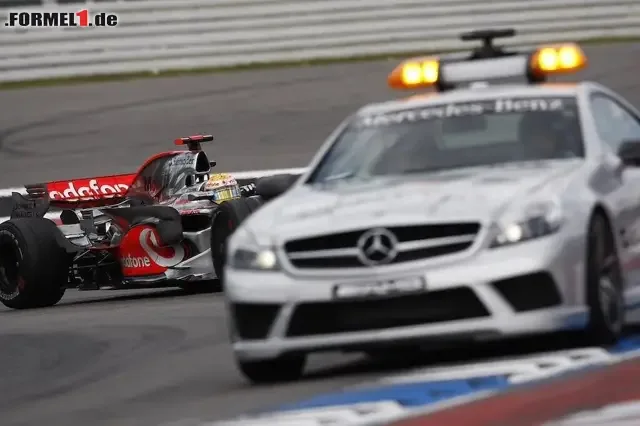
The series is at a very different point today, with a younger, changed fan demographic and more city races that would hardly survive if decibel levels suddenly shot up. I also wonder how many fans explicitly want V8 engines and whether there are reliable studies on this at all.
A return to the better-sounding V10 or V12 engines will definitely not happen just because of their size and lack of series relevance. Nor will Formula 1 say goodbye to street circuits (sorry, dear purists).
So even if V8 naturally aspirated engines seem to be the path Formula 1 decision-makers want to take – and I am not fundamentally against it – I wonder if Formula 1 as a business is ready for the unwanted side effects that will come with it.
The eye eats too – driving physics more important than decibels
Norman Fischer
To put it briefly: The whole discussion about sound is a pseudo-debate. I don’t care at all how loud the engines scream or roar as long as the rest of the package on the racetrack is right.
Noise alone does not make good racing. What Formula 1 really lacks is not the acoustic terror of the old days but the visual brutality.
Of course, a screaming engine can convey the impression of pure violence. But this effect immediately dissipates when we watch the drivers on TV steering cars that drive like on rails with stoic calm and minimal steering movements through the corners.
The current cars are aerodynamic monsters that generate so much grip that the driving challenge becomes almost invisible to the viewer. When I watch, I get the impression that I could do it easily too – but of course, I can’t. But that’s the catch.
I don’t want cars that stick perfectly. I want cars that are beastly and damn hard to tame. I want to see a driver fighting the rear at the corner exit, how the car works over the curbs, and how the pilots push themselves physically and mentally to the limit to keep the beast on the road.
If Formula 1 gives us back this visual battle – this feeling that absolute exceptional talents are operating at the limit of what is physically possible – then there is no need for an artificially cranked-up soundscape anymore. A gripping dance on the volcano captivates even without hearing loss.
Read more Pirelli confirms: No comeback of the C6 tire in the 2027 Formula 1 season