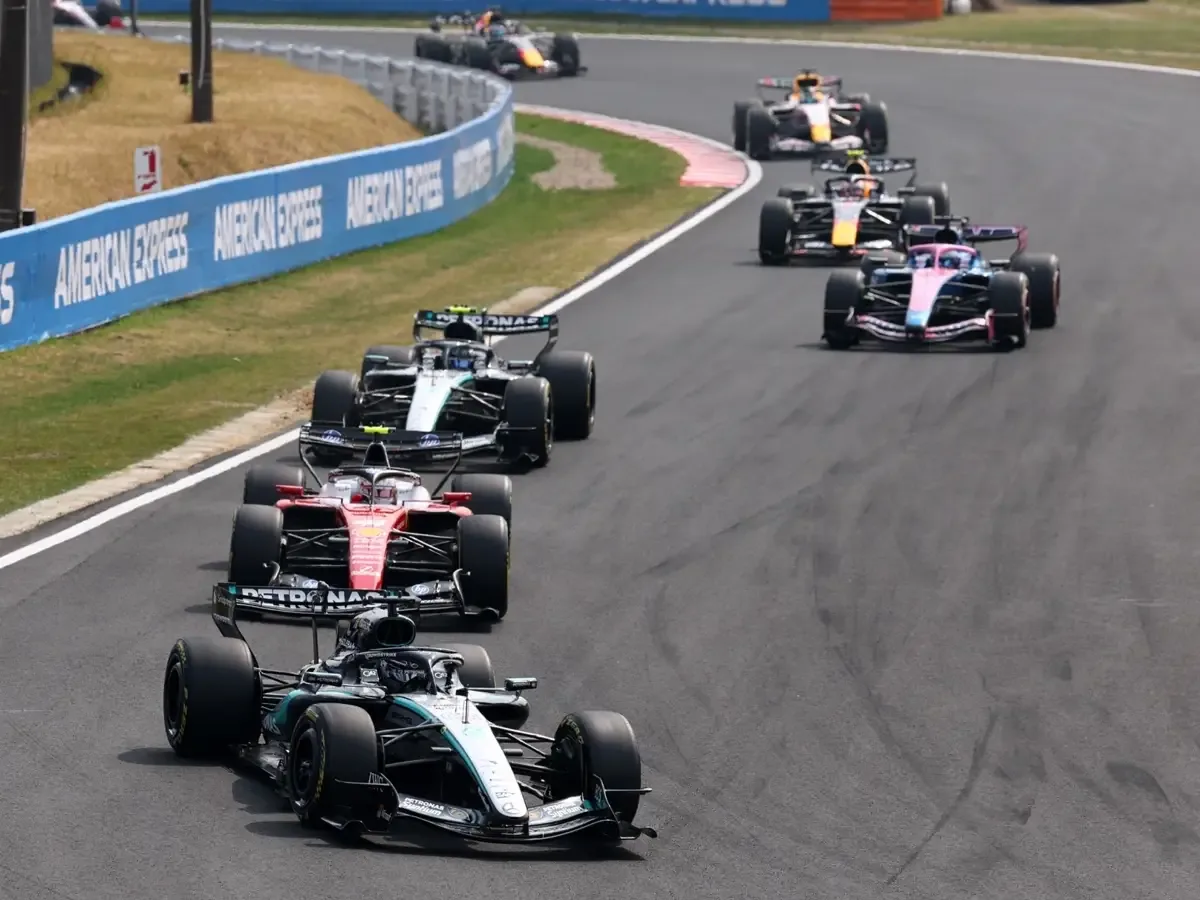
(Motorsport-Total.com) – Ahead of the Formula 1 Miami Grand Prix, the FIA has made targeted optimizations to the 2026 regulations. These primarily focus on improving qualifying, where massive energy management had previously prevented drivers from attacking at full throttle.
Read more Expert sure: Formula 1 knows that the regulations are a flop
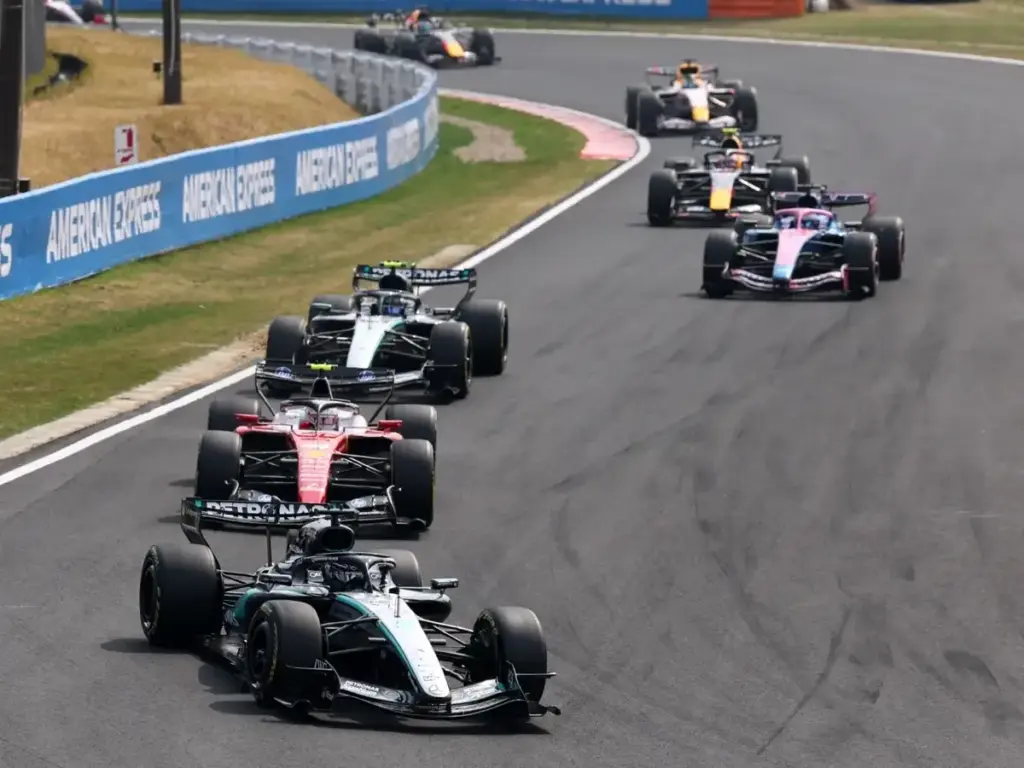
The governing body also reacted to safety concerns raised after the opening races – particularly with regard to large speed differences – and adjusted the starting procedures to minimize the risk of accidents.
As expected, no major changes were made, as the sport’s officials are satisfied with the quality of the races in the early phase of the season – despite some concerns expressed by several drivers and fans on social media.
Will these changes be enough? Our international panel of journalists shares its assessments.
Formula 1 fights symptoms instead of the cause
Jules de Graaf – Motorsport.com Netherlands
If the 2026 regulations already need to be “fixed” before they are properly established, that in itself tells a story – but not necessarily the one it seems at first glance.
The latest round of FIA adjustments is, on paper, exactly how the championship should work: identify early weaknesses, react quickly, and refine rather than panic. In this sense, it is a system that works as intended.
And yet, beneath this logic lies an uncomfortable tension. For while these optimizations may reduce the most visible problems – excessive “lift-and-coast,” extreme approach speeds, and drivers forced to save energy instead of race – they do little to answer the deeper philosophical question at the core of the 2026 concept.
If the cars are fundamentally designed around energy management, the racing action will inevitably revolve around this limitation. You can recalibrate the numbers, but you cannot completely change the behavior they encourage.
That’s why it increasingly feels as if Formula 1 is fighting symptoms rather than the disease itself. The direction – electrification, efficiency, relevance for manufacturers – has always involved compromises, similar to the hybrid transition in 2014, the turbo change in the early 1980s, or the modifications to the engine formula in 1961.
A bumpy initial phase is not unprecedented. But acknowledging that does not automatically make the outcome satisfactory from a sporting perspective.
It is also a matter of perception. When drivers, teams, and fans openly describe the cars in such negative terms so early in a regulation cycle, the narrative quickly solidifies – and narratives are far more difficult to rewrite than rulebooks.
Ultimately, the true judgment will not come from data curves or revised kilowatt figures, but from the cockpit. If drivers still feel they are managing more systems than racing against each other, no amount of fine-tuning will convincingly prove that 2026 has been “cured” – at least for now.
Enough for whom?
Federico Faturos, Motorsport.com Latin America
From Stefano Domenicali’s perspective, based on his comments in an exclusive interview with Motorsport.com last week, the changes announced by the FIA on Monday will likely be sufficient.
I would even go so far as to say that he hopes to draw a line under the negative narrative surrounding the problems of the new rules – regardless of his insistence that the season’s data collected so far is more positive than negative.
Whether they will be enough for the drivers and old-school Formula 1 fans, however, is another matter entirely.
One thing is certain: with the cars returning to the track next month after the enforced April break, what was announced this week appears to be a step in the right direction.
Nobody expected these meetings to produce a revolution, as that would have required hardware changes – which is impossible at this stage. But these adjustments seem like logical corrections within what is realistically feasible, given that the regulations are already in effect.
A few weeks ago, in a previous edition of this format, when asked what Formula 1 should change within the current rules, I wrote that safety must be the top priority – even before qualifying laps, lift-and-coast, and everything else.
It was simply unacceptable for the sport to allow situations like those with Oliver Bearman and Franco Colapinto in Suzuka, which ended with the Haas driver limping after getting out.
In this regard, I particularly welcome the measures to reduce approach speeds between cars, as well as the decisions to mitigate problems at the race start – another key area that needed to be addressed.
All in all, this will probably not satisfy everyone regarding the new era of Formula 1, but it shows that concerns have been heard. Now the changes need a little time to show their true effect on the track.
Safety first – but at what cost?
Ken Tanaka, Motorsport.com Japan
Safety is, of course, of paramount importance. Even in a category as fast as Formula 1, there is no doubt that it must always come first. Therefore, all regulatory changes made in the interest of safety are fully justified.
However, there is one aspect that raises questions. It concerns the adjustments intended to ensure that cars can drive at full throttle in qualifying.
According to the latest changes, the limit for energy recovery per lap will be reduced from 8 MJ to 7 MJ. This effectively means that the amount of available electrical energy per lap is reduced – and that, in turn, means slower lap times. Is that really what we want?
Read more Finally World Champion again? Charles Leclerc believes in Ferrari
It’s worth asking what kind of Formula 1 we want to see. Opinions may differ here. Do we want to see Formula 1 cars constantly driving at full throttle? Or do we want to see faster Formula 1 cars? Personally, I want to see a faster Formula 1. I want to see cars breaking lap records – provided, of course, that safety is not compromised.
Formula 1 drivers who have taken their first two wins consecutively
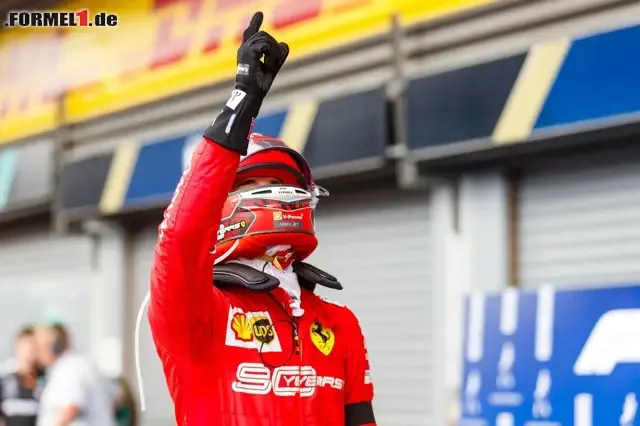
At the Japanese Grand Prix in Suzuka, Andrea Kimi Antonelli drove the fastest Q3 lap with a time of 1:28.778 minutes. That was still 1.8 seconds off the Suzuka track record of 1:26.983 minutes. The pole position time in China showed a similar picture. And that was only in the second or third race under the new regulations – an exceptional situation.
From this perspective, it is fair to say that the new generation of Formula 1 cars has the potential to become extremely fast. With more time, it also seemed likely that qualifying itself would have eventually returned to full-throttle operation even under the original regulations.
In this sense, while the agreement between the FIA, Formula 1, and the teams to adjust the regulations should be respected, questions remain – especially when it comes to qualifying.
F1 needs to define what it wants to be
Michael Banovsky, Motorsport.com Global Edition
No. F1 has created its own problems by insisting, through successive formulas and rule changes, on being seen as the pinnacle of motorsport – but what does that mean today?
It’s not about car parity: boring races and winning streaks still exist in IndyCar and NASCAR. It’s not about abandoning hybridization for “better racing”: I grew up in an era where it was strange if a handful of Formula 1 cars didn’t retire in a cloud of metallic smoke.
The rules are probably mostly fine. I think Formula 1 needs to explain much more transparently what kind of racing it offers fans and what a Grand Prix should be today.
Is it wheel-to-wheel duels like in Mario Kart or watching a few dominant teams? Should races be won by one second or by 20? Formula 1 cannot have it all and never will. It needs to commit to the kind of racing it wants to deliver.
Until that is clarified, we will have the world’s best drivers, teams, and cars chasing a Formula 1 rulebook that is unable to keep pace with our increasingly unrealistic expectations for a Grand Prix.
A rapid change of direction can be destructive
Khaldoun Younes, Motorsport.com Middle East
It’s no secret that – no matter how good the theoretical studies of the regulations may be – the true judgment of their success is what we see on the track.
The 2026 season has brought the most radical change in the sport for a long time, and as expected, the controversy was as great as the change itself: artificial overtakes, “yo-yo racing,” and a decrease in driver control over the car amidst an increase in numerous additional influencing factors.
After pointing the finger at the growing role of electrical energy, a series of consecutive meetings actually took place between the teams, the championship, and the FIA, leading to the now-published adjustments to the current package.
Formula 1 Quiz
Under the flag of which country did the Brabham team start in Formula 1?
Test yourself now in the Formula 1 quiz and compare yourself with other users
As expected, the work focused on the two most important issues: safety and qualifying performance. Despite everything, it seems that a solution to the “fundamental” problem, as Max Verstappen described it, will not be found.
There is a growing feeling that the championship is losing value given the increase in “artificial” overtakes and that the “computer” dictates to the car and driver how the competition should unfold – that is the point Nigel Mansell recently referred to.
The viewpoint now seen in the eyes of many points to the concern of making the competition “superficial.” Such criticism does not come from people who criticize for the sake of criticizing, as Stefano Domenicali recently noted …
Much of this criticism also comes not just from people who don’t know how to drive a car, but from experienced individuals who fully understand what it means to put on a helmet and sit behind the wheel.
Nevertheless, nothing in this life is entirely black or white; on the contrary, there are many shades to every issue. The positive aspect of the matter is that everyone is open to working on a formula that meets the expectations of everyone within the premier class: drivers, teams, and fans.
We must not forget that the championship is like an extremely large ship, and a change of direction does not happen at the speed many expect; on the contrary, a rapid change of direction can be destructive.



Therefore, what is happening now can be read as a step in the right direction, and as always, the judgment on the validity of the changes can only be made on the track itself.
Are these changes completely sufficient? Most likely not… Are they the best that can be done at the moment? Most likely yes…
The first three races were merely a “soft opening,” but the real evaluation of the season begins in Miami!
Read more Helmut Marko: Red Bull is no longer a «One-Man-Show» today