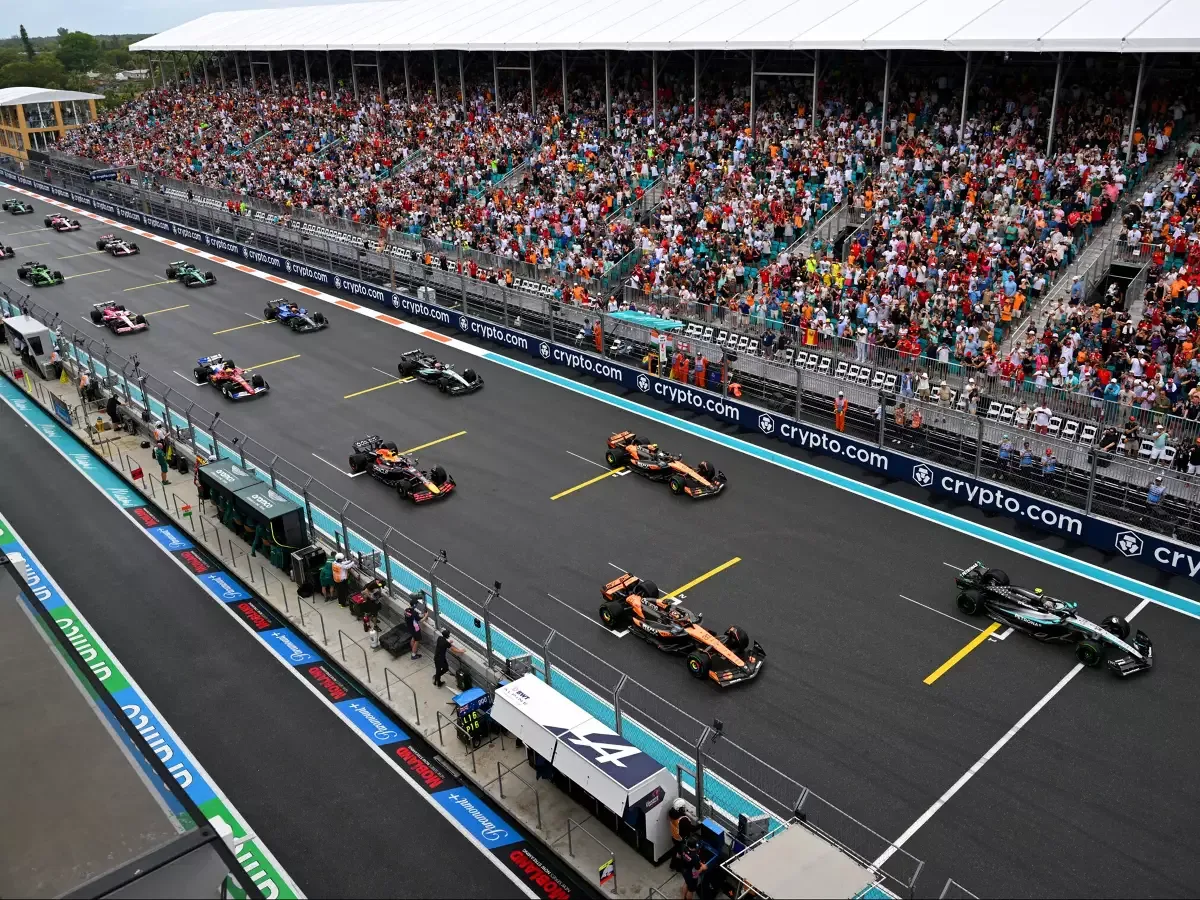
(Motorsport-Total.com) – Formula 1 arrives in Miami with the first adjustments to the 2026 regulations. These were introduced in response to early concerns regarding energy management, race quality, and driver feedback. The changes aim to address some of the quirks observed in the initial races – but how much difference can they really make?
Read more Max Verstappen’s options in Formula 1
Our journalists give their opinions.
A step in the right direction, but not a huge one
Jake Boxall-Legge, Autosport
Miami was not expected to be one of those tracks where it is obvious that energy recovery would be difficult, but the first sector should at least give some clues about the revised regulations and show whether they worked.
But let’s call them what they are: small adjustments. If you are generous, you might call them little more than band-aids designed to take some pressure off Formula 1 and its governing body.
Reducing recovery in qualifying will end lift-and-coast, but overall will lead to slower laps as drivers have less energy available. Still, the change to super-clipping should be positive overall and ensure that recovery does not take place too far outside braking zones.
The change to the allowed energy amount over the lap – where 350 kW may only be used in zones in straight-line mode – should also reduce the need for recovery and lessen differences in approach speed.
All these changes should get the ball rolling in the right direction. If they work better than expected, this could help Formula 1 overcome the teething problems of 2026; if not, it’s back to the drawing board.
It should be noted that I have generally enjoyed the first three races and felt it was a better show than much of what we have had in recent years. But I also understand the sanctity of driving purity, and if there were a way to have it all at once, that would be the utopian ideal of Formula 1.
Such things are, however, rarely the best of both worlds and the worst of none…
Promising corrections, but far from the finished product
Filip Cleeren, Motorsport.com F1 reporter
High expectations inevitably lead to disappointments, right? But the people in the paddock we spoke to, who have a deeper understanding of the impact of the changes, all say that the first refinement of the 2026 regulations is a step in the right direction.
It certainly won’t be perfect, and I want to caution that the real effects will only become visible when Formula 1 travels to Barcelona in June – a track that is significantly more demanding for energy management than the upcoming races.
But if McLaren technical director Mark Temple is right and the need for lift and coast in qualifying is virtually eliminated, then a major annoyance for both fans and drivers is removed. Slightly slower lap times are a small price that hardly anyone will notice anyway.
Formula 1 fails: These rule changes were a flop
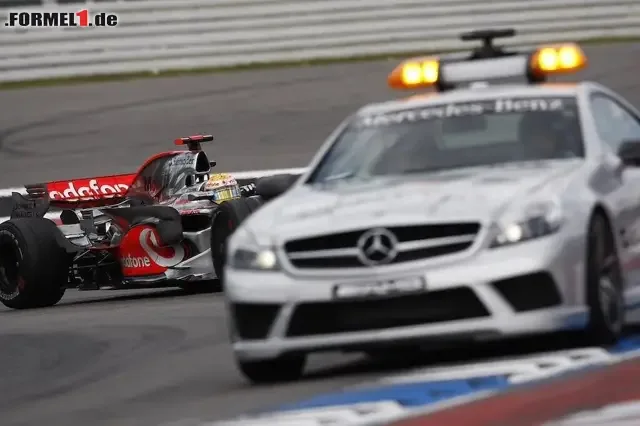
The biggest question mark is how much the lower limit on energy recovery and the more powerful super-clipping will reduce approach speeds in the race, as cars will still run out of energy on the straights to start regeneration against the engine. Hopefully, these speed curves will now be less aggressive.
But Andrea Stella urged caution: more significant improvements will likely require actual hardware changes and not just fiddling with software settings, which is only possible from year to year. So expect this to be just the beginning of a lengthy process to bring the 2026 regulations into an acceptable form.
The only change that matters now is driver feedback
Oleg Karpow, global edition of Motorsport.com
Read more Mekies: McLaren switch for Lambiase an «extraordinary opportunity»
From a competitive standpoint, not much is to be expected. Even if the pecking order shifts in Miami, it will hardly have anything to do with the essentially cosmetic rule adjustments. The cars remain the same, and the changes aim to mitigate some of the unwanted quirks of the first rounds.
Still: since teams had more than a month to analyze data and advance development, some shifts are possible. But if Ferrari and McLaren actually start seriously challenging Mercedes – not just in the first rounds, but in qualifying and over a full race distance – then it is unlikely that this is a direct result of the rule adjustments.
What Formula 1 management and the FIA will really hope for is better feedback from the drivers. That was the driving force behind the criticism of the new rules. Had the drivers been more positive in their media appearances, even many die-hard fans would not have perceived such a big problem.
Formula 1 quiz
How many laps led did Jonathan Palmer drive in Formula 1?
Test yourself now in the Formula 1 quiz and compare yourself with other users
Racing looks good, and there is clearly more action – but it leaves a bitter aftertaste when the drivers themselves say they actually didn’t want to overtake but were practically forced to.
The adjustments are designed to improve qualifying and give drivers more control over what happens on track. That is what matters most right now. For Formula 1 to be attractive to its audience, it must also be attractive to its drivers.
The positive is that the sport is responding to their feedback – whether that will be enough remains to be seen.
The impact on the pecking order could come from elsewhere
Federico Faturos, Motorsport.com Latin America
While the rule adjustments were introduced in Miami to improve the overall package of Formula 1 – especially qualifying performance, while also addressing safety concerns due to different approach speeds – the obvious question is how much they will affect the pecking order established in the first rounds of the season.
The timing of the changes suggests the answer is: not much. The teams have already completed a full preseason program and three Grands Prix with the new and highly complex power units, giving them a considerable data base for their work.
Since the FIA confirmed the revised regulations eleven days before the cars’ first run at the Miami International Autodrome, there was also enough time for simulator preparation.
Equally important is that these changes did not come about overnight. They are the result of weeks of discussions between the FIA, Formula 1 management, teams, and manufacturers. This means it is very likely that teams had already modeled potential scenarios as the direction of development became clearer.
Additionally, there are the extra 30 minutes added to the only practice session in Miami. In a sprint weekend format, every extra minute on track is valuable, and this should give teams a meaningful opportunity to cross-check their simulator insights and go into qualifying with a clear idea of how best to use the revised rules.
It would not be surprising if most of the field quickly finds similar solutions.
This is not to say that there can be no shifts in the 2026 pecking order in Miami. But if there are, the more likely cause is the upgrade packages many teams bring, not the rule adjustments themselves.
In this respect, the most exciting question is whether the picture we have seen up to Japan remains – or whether Miami marks the beginning of something new.
Read more Looking forward to Barcelona: Herta wants to convince Cadillac with pure speed