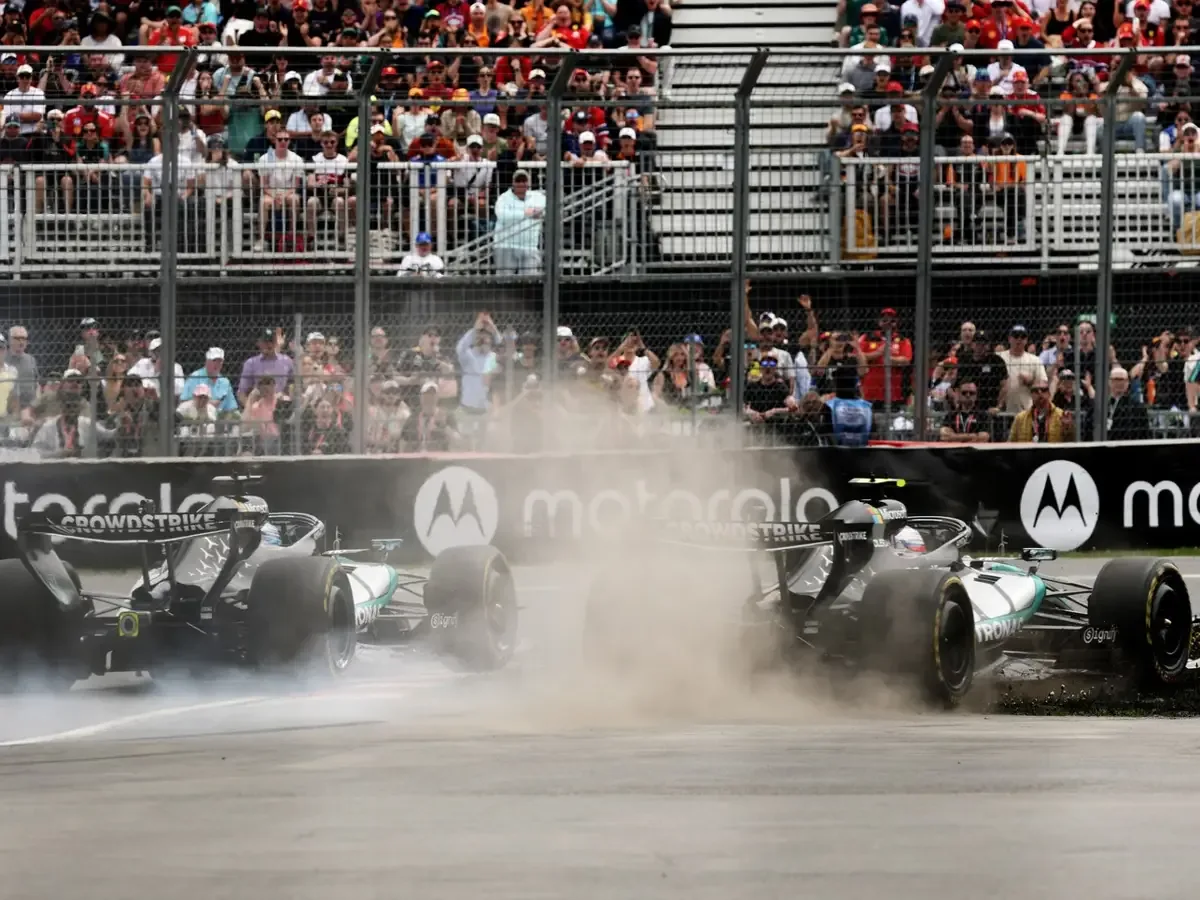
(Motorsport-Total.com) – Although Kimi Antonelli believed that George Russell had forced him off the track in the battle for the lead of the sprint race at the Canadian Grand Prix in turn one, the Formula 1 stewards saw no reason to intervene.
Read more Equal treatment fought for: Hamilton’s special memory of Montreal
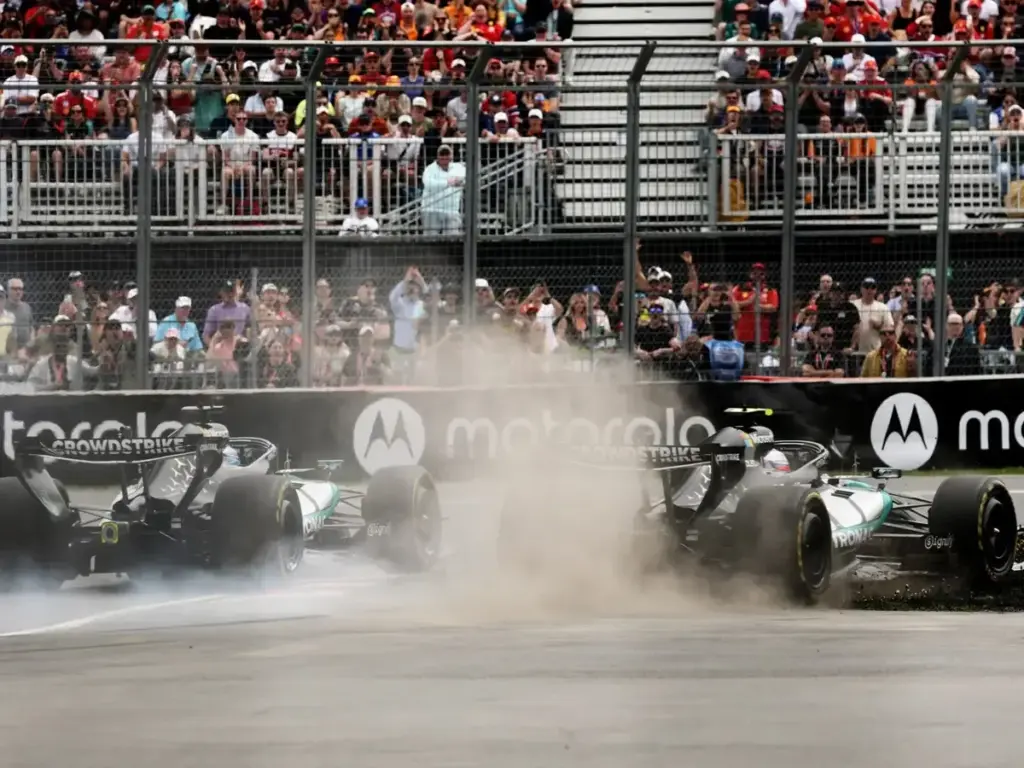
Russell defended his position on the inside of turn one while Antonelli tried to attack on the outside. However, the gap became smaller and smaller, forcing the Italian to move onto the grass to avoid a collision.
Over the radio, Antonelli then made it clear that he believed he was in the right. In his view, he was sufficiently alongside Russell to have a claim to space towards turn two according to Formula 1 driving standards.
What guidelines apply to overtaking maneuvers?
But was his criticism justified? The answer lies in the different rules for overtaking on the inside and outside of a corner.
For an attack on the inside, it is generally sufficient to have the front axle at least level with the opponent’s mirror. The maneuver must also be executed in a controlled manner and remain within track limits. Antonelli based his argument on exactly this point. However, for the assessment of the scene in turn one, the rules for overtaking on the outside are initially decisive.
There the bar is higher: a driver only has a claim to sufficient space if his front axle is ahead of that of the competitor at the apex. The maneuver must also be controlled and feasible within the track limits.
Read more Verstappen successor at Red Bull? Oscar Piastri takes a clear stance
Why the stewards probably saw no rule violation
Antonelli was alongside Russell on the approach to turn one, and at the apex both cars appeared almost level. However, the stewards likely concluded that Antonelli’s front axle was not clearly ahead of Russell’s. GPS data is also said to show that Russell slightly lifted off the throttle to defend his position at the corner entry.
Since turns one and two in Montreal follow immediately one after the other, Antonelli could argue that his attack was already aimed at the inside of turn two. There he might have met the conditions of the corresponding guideline. However, at that point he was already off the track.
Corner combinations are assessed separately
Exactly for such cases, the guidelines contain an additional clarification:
“The above guidelines for the inside and outside can be applied to any element of a corner combination. However, priority is generally given to the first corner element.”
This places the positioning in turn one at the center of the assessment. Since Antonelli apparently did not meet the stricter conditions for an overtaking maneuver on the outside there, the stewards’ decision not to intervene appears to be in line with the applicable regulations.
Read more Canada as a Turning Point? First Tough Duel Between Russell and Antonelli